


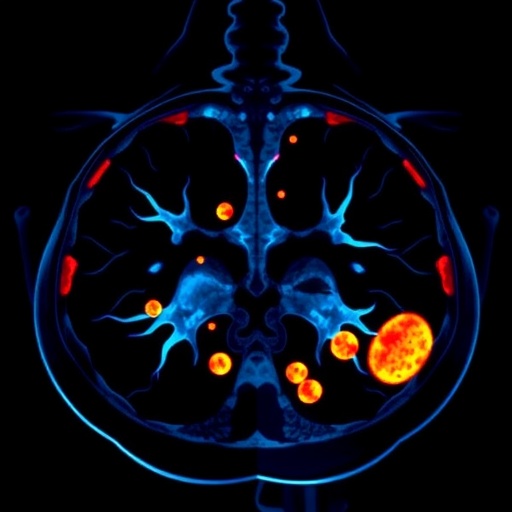
A new Phase 1/2 clinical study is testing whether an immune-targeting drug can make chemotherapy more effective against high-grade leiomyosarcoma, an aggressive cancer arising from smooth muscle cells. The investigation combines ontorpacept, also known as TTI-621, with doxorubicin in patients whose tumors cannot be surgically removed or have spread to other parts of the body. The study, reported by Movva, Allgood, Chugh and colleagues in the British Journal of Cancer, focuses on a strategy designed to release one of cancer’s most important immune brakes.
Leiomyosarcomas can develop in the uterus, blood vessels, gastrointestinal tract and soft tissues. When the disease becomes unresectable or metastatic, treatment options are limited, and doxorubicin remains one of the established chemotherapy drugs used in advanced disease. Although it can damage cancer cells by interfering with DNA replication and repair, its activity is often constrained by drug resistance, tumor heterogeneity and the ability of malignant tissue to suppress immune attack. The combination explored in this study is intended to confront the tumor on both fronts: direct chemotherapy and immune-system activation.
Ontorpacept is a recombinant fusion protein engineered to block signaling through signal regulatory protein alpha, or SIRPα. The molecule contains a modified form of SIRPα linked to a human antibody fragment. This design allows it to bind CD47, a surface protein frequently displayed at high levels by cancer cells, while preventing CD47 from engaging SIRPα on immune cells. The CD47–SIRPα pathway is commonly described as a “don’t eat me” signal because it can stop macrophages, a type of immune cell, from engulfing abnormal cells.
Under normal conditions, CD47–SIRPα signaling helps protect healthy cells from accidental destruction. Cancer can exploit the same system by increasing CD47 expression or using the pathway to avoid immune surveillance. When ontorpacept interrupts the interaction, macrophages may become more capable of recognizing tumor cells as targets for phagocytosis, the process by which they surround, ingest and digest cellular material. This mechanism does not depend solely on the cancer cell’s ability to divide rapidly, giving the approach a potentially different profile from conventional cytotoxic chemotherapy.
The scientific rationale for combining ontorpacept with doxorubicin is based on the possibility that chemotherapy can make tumors more visible to the immune system. Doxorubicin damages DNA through several complementary mechanisms, including inhibition of topoisomerase II and generation of molecular stress that can injure or kill malignant cells. As tumor cells die, they may release antigens and danger signals that alert immune cells. Blocking CD47–SIRPα signaling at the same time could help macrophages respond to that altered tumor environment and remove cancer cells that would otherwise remain protected.
The trial’s Phase 1/2 structure reflects the two-stage priorities of early cancer-drug development. Phase 1 generally examines safety, tolerability, dose selection and the identification of treatment-related toxicities, while Phase 2 explores preliminary signals of antitumor activity in a defined patient population. In a combination study, investigators must also determine whether the new agent changes the safety profile of chemotherapy or introduces immune-related complications. Particular attention is typically given to blood counts, infusion reactions, infections, organ function and other adverse events relevant to both agents.
This distinction is important because a biologically compelling mechanism does not automatically translate into clinical benefit. Tumors can resist macrophage-mediated clearance through other immune checkpoints, physical barriers in the tumor microenvironment or changes in antigen presentation. Leiomyosarcoma is also genetically and biologically diverse, meaning that CD47 expression, macrophage activity and sensitivity to doxorubicin may vary considerably from one patient to another. The Phase 1/2 investigation is therefore intended not only to test the combination, but also to clarify how it behaves in the complex environment of advanced human cancer.
The study adds to a broader effort to develop therapies that engage the innate immune system. Much recent immuno-oncology research has focused on T cells and checkpoint proteins such as PD-1 and PD-L1. Macrophages, however, are abundant in many solid tumors and can either attack cancer or support its growth, depending on the signals they receive. By targeting CD47–SIRPα communication, ontorpacept is designed to shift macrophage behavior toward tumor-cell removal. The approach may be especially relevant in cancers where immune suppression and dense stromal tissue limit the reach of T-cell-based therapies.
For patients with unresectable or metastatic high-grade leiomyosarcoma, new treatment strategies are urgently needed because advanced disease can progress despite surgery, chemotherapy and other systemic treatments. The combination examined in this trial represents a coordinated attempt to intensify therapy without relying on chemotherapy alone. Its ultimate value will depend on the balance between tumor control, treatment tolerability and the durability of any responses. Results from carefully monitored clinical follow-up will be essential for determining whether disrupting the CD47–SIRPα “don’t eat me” signal can become a meaningful addition to the therapeutic options for this rare and difficult cancer.
Cite Scienmag News
Nathaniel Bowman. (August 5, 2026). Early Trial Tests Ontorpacept Plus Doxorubicin for Advanced Leiomyosarcoma. Scienmag. https://scienmag.com/early-trial-tests-ontorpacept-plus-doxorubicin-for-advanced-leiomyosarcoma/
Nathaniel Bowman. "Early Trial Tests Ontorpacept Plus Doxorubicin for Advanced Leiomyosarcoma." Scienmag, 5 August 2026, https://scienmag.com/early-trial-tests-ontorpacept-plus-doxorubicin-for-advanced-leiomyosarcoma/. Accessed 6 September 2026.
Nathaniel Bowman. "Early Trial Tests Ontorpacept Plus Doxorubicin for Advanced Leiomyosarcoma." Scienmag. August 5, 2026. https://scienmag.com/early-trial-tests-ontorpacept-plus-doxorubicin-for-advanced-leiomyosarcoma/


