


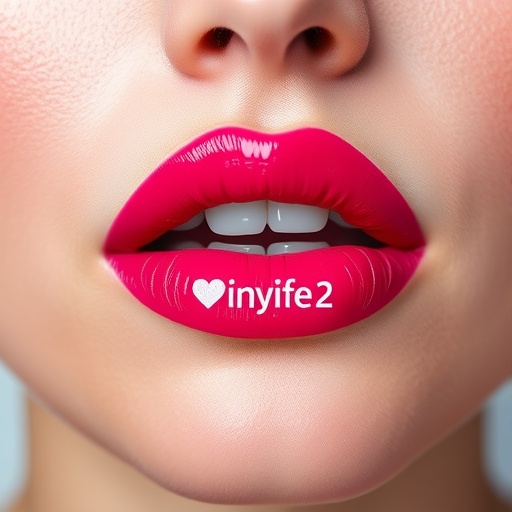
Two peer-reviewed critical reviews have raised concerns about whether current regulations adequately capture how lip products are used and absorbed by the human body. The analyses argue that lipsticks, glosses, balms, oils, masks and stains are still treated largely as ordinary cosmetics applied to intact skin, even though they are routinely licked, swallowed and absorbed through unusually thin tissue. According to the researchers, this creates a dual exposure pathway—through ingestion and through the lips themselves—that existing safety frameworks were not designed to assess.
Published in Integrated Environmental Assessment and Management, the reviews examined cosmetic regulations and testing practices in the United Kingdom, United States, European Union, Canada, China and South Korea. The work was commissioned by the Lip Service Alliance in collaboration with researchers from the University of Birmingham. Rather than concluding that lip products are inherently dangerous, the authors identify what they describe as major evidence gaps in exposure estimates, tissue models and the treatment of ingredients that may be consumed repeatedly over long periods.
The biological structure of the lips is central to the concern. The vermilion, the colored portion of the lips, contains only around three to five layers of protective cells—approximately one-third the thickness of the comparable outer layer of facial skin. It also lacks the oil glands and hair follicles that help support the skin barrier elsewhere on the body. Blood vessels lie relatively close to the surface, while the tissue transitions toward the mucosal lining of the mouth. These features may allow substances to cross the barrier more readily than they would through conventional skin.
Despite those differences, the reviews found no examined regulatory system that specifically requires lip cosmetics to be tested using models designed to reproduce the biology of human lip tissue. In regions such as the UK, European Union and China, absorption estimates may rely on standard skin models with an intact barrier layer. Such models are useful for many topical products, but they may not accurately represent the permeability of the lips. Pharmaceutical research has long used oral and buccal mucosal tissues to deliver medicines into the bloodstream, and studies cited by the reviews have reported substantially greater absorption through mucosal tissue than through ordinary skin for compounds including benzoic acid, caffeine and hydrocortisone.
The exposure calculations used by regulators also appear to lag behind modern patterns of consumption. The European Union assumes that, at the 90th percentile, approximately 0.057 grams of lipstick or lip salve enters the body each day, while the United States references an ingestion value of 87 milligrams per day at the 95th percentile for lipstick. However, the reviews state that these figures originate from studies conducted between 2003 and 2005 and have not been comprehensively updated. Canada, China and South Korea reportedly rely on European estimates rather than measurements from their own populations, meaning that exposure assessments in China, one of the world’s largest cosmetics markets, may be based on two-decade-old data from European users.
More recent research cited in the reviews suggests that some users may consume far larger quantities. A contemporary study reported lip balm consumption of 1,270 milligrams per day at the 95th percentile—around 22 times higher than the European assumption. At that rate, a heavy user could ingest or absorb approximately 463 grams of product in a year, equivalent to more than 90 standard five-gram lip balm tubes. The researchers argue that these assumptions are particularly important because today’s market includes product categories that were uncommon or commercially absent when many regulatory models were developed, including lip oils, overnight masks and long-wearing stains.
The issue is also becoming more visible as lip products are marketed with food-like flavors and names such as birthday cake and watermelon. Some products are promoted to children and teenagers, while social media influencers have performed taste tests in which non-edible formulations are deliberately consumed and reviewed for flavor. In the United States, the reviews cite data indicating that 45 percent of girls aged six to eight already use lipstick or lip gloss. Such trends could increase repeated exposure among young consumers, although the researchers emphasize that the long-term health consequences of these patterns have not been established.
The regulatory contrast with food and medicines is one of the reviews’ most striking findings. Drugs designed for oral-mucosal delivery undergo extensive preclinical and clinical testing, while food additives are assessed against dietary exposure limits. Lip cosmetics can use the same general route of entry without being required to meet equivalent ingestion-based standards. The reviews also discuss reports of microplastics, trace metals and mineral-oil hydrocarbons in lip products. Titanium dioxide, for example, was banned as a food additive in the European Union in 2022 because of concerns about possible DNA damage after ingestion, yet it remains permitted in lip cosmetics without a general concentration limit. The authors say this difference does not prove that lip products cause harm, but it demonstrates that substances may be regulated differently depending on whether a product is legally classified as food, medicine or cosmetics.
The researchers recommend updated, population-specific studies measuring how much lip product people actually use and ingest, along with exposure models that distinguish between swallowing and absorption through lip tissue. They also call for validated non-animal testing using human lip-specific tissue, greater use of oral and buccal mucosa models already established in pharmaceutical science, and regulatory guidance that treats lip products differently from cosmetics applied to less permeable skin. Another proposal is to extend food-grade ingredient principles to all ingredient categories used in lip products when established acceptable daily intake values are available.
The reviews’ authors stress that the findings represent a call for better evidence rather than a blanket warning against lip cosmetics. Their central argument is that the assumptions used to evaluate safety should reflect real-world behavior, modern product design and the distinct anatomy of the lips. As the category expands and consumers—particularly younger users—apply multiple products throughout the day, regulators and manufacturers may face growing pressure to determine whether current testing methods accurately describe cumulative exposure. The Lip Service Alliance is inviting scientists, companies, regulators and universities to contribute to further research aimed at closing that gap.
News Publication Date: 5-Aug-2026
Web References: https://www.lipservicealliance.org/
References: Integrated Environmental Assessment and Management; DOI: 10.1093/inteam/vjag129
Cite Scienmag News
Courtney Benton. (August 5, 2026). Experts uncover global regulatory blind spot in lip cosmetics. Scienmag. https://scienmag.com/experts-uncover-global-regulatory-blind-spot-in-lip-cosmetics/
Courtney Benton. "Experts uncover global regulatory blind spot in lip cosmetics." Scienmag, 5 August 2026, https://scienmag.com/experts-uncover-global-regulatory-blind-spot-in-lip-cosmetics/. Accessed 6 September 2026.
Courtney Benton. "Experts uncover global regulatory blind spot in lip cosmetics." Scienmag. August 5, 2026. https://scienmag.com/experts-uncover-global-regulatory-blind-spot-in-lip-cosmetics/


