


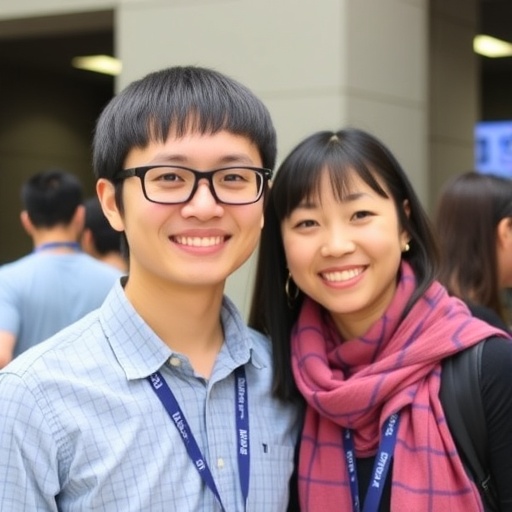
Bo Han, an associate professor of computer science in George Mason University’s College of Engineering and Computing, has received a $15,000 grant from the National Science Foundation to support student travel to the 2026 Association for Computing Machinery International Conference on Mobile Computing and Networking, known as ACM MobiCom. The award is designed to help students participate in one of the world’s most influential forums for research on the technologies that keep modern mobile and wireless systems connected.
ACM MobiCom will take place from Oct. 26 through Oct. 30, 2026, in Austin, Texas. The conference brings together researchers, engineers, developers, and students working on mobile computing, wireless communications, networked systems, edge computing, and related fields. Its research addresses the infrastructure behind smartphones, connected vehicles, wearable devices, industrial sensors, public wireless networks, and the rapidly expanding Internet of Things.
Mobile computing is often experienced as a seamless service: a video loads, a navigation app calculates a route, or a sensor transmits data without users needing to consider the complex systems involved. In reality, these actions depend on an intricate chain of technologies, including radio-frequency communication, network protocols, distributed software, cloud platforms, and increasingly powerful devices operating at the network’s edge. Research presented at MobiCom focuses on making these systems faster, more reliable, energy-efficient, secure, and capable of serving billions of devices simultaneously.
Student travel grants can have an impact that extends well beyond attendance at a single event. For emerging researchers, an international technical conference offers a rare opportunity to present work, receive direct feedback from specialists, learn about new methods, and identify unanswered questions that may shape future projects. It also allows students to build professional relationships with researchers and technology companies developing the next generation of communication systems.
The NSF funding began in July 2026 and will continue through late June 2027. During that period, the award will support student participation connected to the 2026 conference. Although the announcement does not specify the number of students who will receive assistance or the individual expenses covered, travel support generally helps reduce barriers associated with transportation, lodging, registration, and other costs that can prevent students from attending major research meetings.
Access is particularly important in fields such as mobile networking, where technical progress depends on collaboration across disciplines. A new wireless protocol, for example, may require expertise in signal processing, computer architecture, cybersecurity, artificial intelligence, operating systems, and human-centered design. Students who attend MobiCom can encounter research that connects these areas, including systems that use machine learning to manage network traffic, low-power methods for extending battery life, and techniques for coordinating devices in crowded or rapidly changing environments.
The timing of the grant also reflects the accelerating importance of mobile and ubiquitous computing. Wireless systems are being asked to support increasingly demanding applications, from real-time augmented reality and autonomous transportation to remote healthcare and industrial automation. These applications require networks with low latency, high reliability, and the ability to adapt instantly to changing conditions. A delay of only a few milliseconds may be inconsequential for a webpage but critical for a robotic system or an emergency response platform.
For students at George Mason University, participation in ACM MobiCom can connect classroom knowledge with the international research community. Exposure to peer-reviewed studies and live technical discussions can help students understand how ideas move from theory to prototypes, experiments, and deployable systems. It can also encourage them to pursue graduate research, internships, entrepreneurship, and careers in the telecommunications, semiconductor, cloud-computing, and software industries.
George Mason University is Virginia’s largest public research university, enrolling more than 40,000 students from all 50 states and 130 countries. Located near Washington, D.C., the university has emphasized innovation, entrepreneurship, accessibility, and research growth throughout its development. The NSF award to support student travel adds to that broader mission by helping students take part in a global scientific conversation about the technologies increasingly woven into everyday life.
Web References: George Mason University, GMU.EDU; Mason Now: Power the Possible, Mason Now.
References: National Science Foundation; Association for Computing Machinery International Conference on Mobile Computing and Networking (ACM MobiCom); George Mason University.
Keywords
Computer science, mobile computing, wireless networking, ACM MobiCom, National Science Foundation, student travel, George Mason University, networked systems, wireless communications, engineering.
Cite Scienmag News
Denise Maddox. (August 5, 2026). Han Wins Travel Grant Supporting Student Attendance at ACM MobiCom. Scienmag. https://scienmag.com/han-wins-travel-grant-supporting-student-attendance-at-acm-mobicom/
Denise Maddox. "Han Wins Travel Grant Supporting Student Attendance at ACM MobiCom." Scienmag, 5 August 2026, https://scienmag.com/han-wins-travel-grant-supporting-student-attendance-at-acm-mobicom/. Accessed 3 September 2026.
Denise Maddox. "Han Wins Travel Grant Supporting Student Attendance at ACM MobiCom." Scienmag. August 5, 2026. https://scienmag.com/han-wins-travel-grant-supporting-student-attendance-at-acm-mobicom/


