


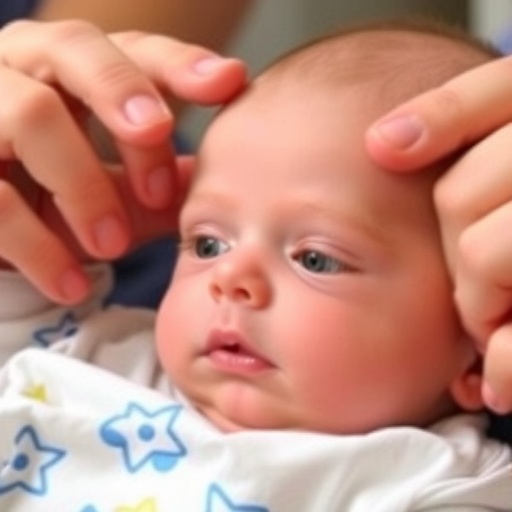
A large U.S. childhood health study has found no evidence that circumcision performed shortly after birth increases a boy’s likelihood of being diagnosed with autism. The analysis, led by researchers at the Johns Hopkins Bloomberg School of Public Health, examined nearly 3,000 boys enrolled in the National Institutes of Health-supported Environmental influences on Child Health Outcomes (ECHO) Cohort study. Its findings challenge earlier observational reports that had suggested a possible connection between neonatal circumcision and autism.
The study, published online August 3 in JAMA Pediatrics, analyzed health and developmental information from 2,771 boys recruited at 14 ECHO research sites across the United States. Approximately 66% of the children—1,840 boys—had been circumcised before discharge from the maternity hospital. The researchers identified 192 boys with a documented or parent-reported autism diagnosis by a mean age of 3.8 years, representing roughly 7% of the cohort.
At first glance, the unadjusted numbers appeared to show a lower autism diagnosis rate among circumcised boys. Autism was reported in 108 of the 1,840 boys who underwent neonatal circumcision, or approximately 6%. Among the 931 uncircumcised boys, 84 received an autism diagnosis, equivalent to about 9%. However, raw differences between groups do not establish that circumcision protects against autism or that the absence of circumcision increases risk. Children in observational studies may differ in many other ways that influence diagnosis and healthcare access.
To account for these differences, the investigators used statistical models that adjusted for potential confounding variables, including parental age and family history of autism. Confounding occurs when a factor is associated with both the exposure being studied and the outcome, creating a misleading apparent relationship. After these adjustments, the researchers found no statistically significant association between neonatal circumcision and autism diagnosis.
The new analysis arrives more than a decade after two observational studies, published in 2013 and 2015, raised the possibility of a circumcision-autism relationship. Those reports received renewed attention after public comments by government officials revived discussion of the issue. The Johns Hopkins team conducted the ECHO analysis because the cohort contained detailed information on early-life medical procedures, family characteristics, and child development that could provide an independent assessment.
“Parents have been concerned about this potential circumcision-autism connection, but hopefully these findings may help allay their fears,” said senior author Monica McGrath, ScD, MHS, a research professor in the Bloomberg School’s Department of Epidemiology and director of the ECHO Data Analysis Center. The study does not determine whether circumcision is beneficial or harmful overall; rather, it addresses a specific question about whether the procedure is associated with later autism diagnosis.
Autism is a neurodevelopmental condition involving differences in social communication, behavior, sensory processing, and patterns of restricted or repetitive interests. Its causes are complex and are thought to involve interactions among genetic susceptibility and multiple developmental or environmental influences. The study’s findings therefore cannot be used to explain the rise in recorded autism diagnoses in the United States, nor can they establish that any single early-life procedure is responsible for changes in prevalence.
The researchers also attempted to examine whether acetaminophen administered during the neonatal period might be relevant to the question, since the medication has been included in some public discussions about autism risk. Fewer than 5% of the boys had documented neonatal exposure, however, leaving too few exposed children for a reliable statistical analysis. The investigators concluded that the available data could not meaningfully assess a possible association between early acetaminophen exposure and autism.
Autism identification has increased substantially in the United States over the past several decades. Centers for Disease Control and Prevention estimates indicate that approximately one in 150 children had been identified with autism in 2000, compared with one in 31 eight-year-olds in 2022. Researchers caution that these figures may reflect a combination of factors, including broader diagnostic criteria, improved screening, greater awareness, and increased access to evaluation, in addition to any changes in underlying prevalence. Circumcision rates, meanwhile, have declined in the United States, but the opposite movement of these trends does not demonstrate a causal relationship.
McGrath and colleagues emphasize that common medical procedures should continue to be evaluated carefully using well-designed studies. Their ECHO analysis provides reassurance that, within this cohort, neonatal circumcision was not linked to a higher risk of autism diagnosis after accounting for important family and demographic factors. The team is continuing to investigate other early-life exposures and developmental influences that may help clarify why autism diagnoses have become more common and how genetic and environmental factors shape childhood health.
News Publication Date: August 3
Web References: https://jamanetwork.com/journals/jamapediatrics/fullarticle/2852526
References: McGrath M, Li X, Jacobson L, et al., “Neonatal Medical Male Circumcision and Child Autism Diagnosis,” JAMA Pediatrics. ECHO Cohort Consortium. Supported by the National Institutes of Health.
Cite Scienmag News
Harold Sullivan. (August 5, 2026). Study Finds Newborn Circumcision Does Not Increase Autism Risk. Scienmag. https://scienmag.com/study-finds-newborn-circumcision-does-not-increase-autism-risk/
Harold Sullivan. "Study Finds Newborn Circumcision Does Not Increase Autism Risk." Scienmag, 5 August 2026, https://scienmag.com/study-finds-newborn-circumcision-does-not-increase-autism-risk/. Accessed 5 September 2026.
Harold Sullivan. "Study Finds Newborn Circumcision Does Not Increase Autism Risk." Scienmag. August 5, 2026. https://scienmag.com/study-finds-newborn-circumcision-does-not-increase-autism-risk/


