


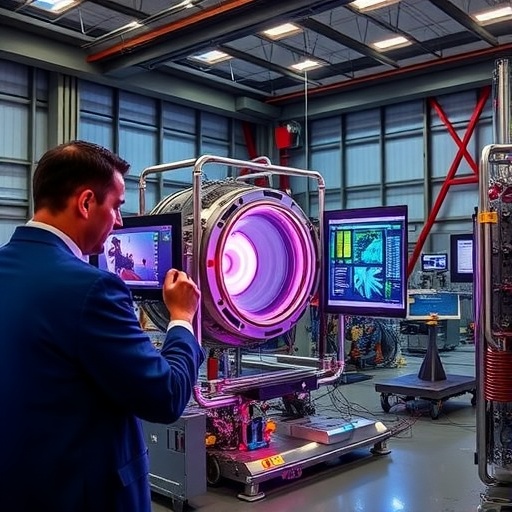
Germany has taken a major step toward building its first fusion reactor, selecting the Karlsruhe Institute of Technology (KIT) as the site of one of three national research hubs created under the Federal Government’s Fusion Action Plan. The decision, announced by the Federal Ministry of Research, Technology and Space on July 29, 2026, is intended to unite universities, research institutions and industry around one of the most difficult engineering challenges in modern science: turning fusion energy into a dependable source of electricity.
KIT’s hub will concentrate on the technologies required to make a fusion power plant function continuously rather than merely produce brief experimental bursts of energy. Its research will target the fusion fuel cycle, materials capable of surviving extreme conditions and the complex systems needed to integrate these technologies inside a working reactor. More than 30 partners are expected to participate, including universities, non-university research organizations and companies developing both magnetic and laser-based fusion systems.
The announcement positions Karlsruhe at the center of Germany’s effort to accelerate fusion research from laboratory experiments toward industrial deployment. Baden-Württemberg Minister for Science, Research and the Arts Petra Olschowski said the decision would strengthen both German fusion research and the state’s reputation as a center of science and innovation. She highlighted two areas that could determine how quickly fusion enters the future energy system: materials that can withstand the reactor environment and a safe, sustainable fuel cycle capable of supplying the isotope needed for the reaction.
Fusion power is based on combining light atomic nuclei to release energy, the same fundamental process that powers the Sun. Most planned terrestrial reactors will use deuterium and tritium, two heavy forms of hydrogen. When heated to temperatures above 100 million degrees Celsius, the fuel becomes plasma, an electrically charged state in which the nuclei can collide and fuse. Because no solid material can directly contain plasma at such temperatures, magnetic-confinement reactors use powerful magnetic fields to suspend it inside a vacuum chamber, while laser-fusion concepts compress tiny fuel capsules with intense pulses of light.
The Karlsruhe hub will address a problem that is central to both the physics and economics of fusion: tritium supply. Tritium is radioactive and occurs only in tiny quantities in nature, so a commercial reactor would need to produce much of its own fuel. This could be achieved with a breeder blanket surrounding the fusion chamber. The blanket would contain lithium-based materials that absorb neutrons produced by the fusion reaction and transform them into new tritium. It would also be required to capture the released heat and transfer it to a power-conversion system, making the blanket simultaneously a fuel-producing, shielding and energy-harvesting component.
Developing such a system is exceptionally demanding. Fusion neutrons carry substantial energy and can penetrate deep into surrounding structures, displacing atoms and gradually damaging metals and ceramics. Reactor components must also tolerate intense heat, mechanical stresses, radioactive activation and long operating periods with limited maintenance. KIT researchers are working on advanced materials and breeder-blanket concepts designed to remain reliable under these conditions, while also developing technologies for the safe handling, purification and recycling of tritium. Controlling the fuel is essential because tritium can diffuse through materials and must be managed within tightly regulated systems.
The hub will also connect fusion research with the technologies needed for continuous plant operation. KIT is developing high-frequency systems for heating plasma, as well as components intended to function reliably over extended periods. In an experimental reactor, a system may operate successfully for seconds or minutes; a power plant, by contrast, must deliver energy for long durations while managing heat loads, neutron damage, fuel circulation and maintenance. Researchers say these elements must be designed together from the beginning, because a reactor assembled from individually successful components could still fail if the systems cannot operate as an integrated whole.
Industry will play a central role in the Karlsruhe initiative. The hub is expected to bring together the magnetic-fusion companies Proxima Fusion and Gauss Fusion with laser-fusion companies Focused Energy and Marvel Fusion. Their participation reflects the widening international race to commercialize fusion, in which private firms are attempting to shorten development timelines and create supply chains for specialized magnets, lasers, reactor materials, diagnostics and fuel-cycle equipment. By linking industrial partners with large-scale research facilities and universities, KIT aims to move discoveries more rapidly from scientific prototypes into manufacturable technologies.
KIT President Jan S. Hesthaven described the institute’s existing expertise and infrastructure as a strong foundation for the new program, while Christoph Kirchlechner, speaker of KIT’s Fusion Program, said the objective was to make fusion usable in practice as soon as possible without compromising safety or economic viability. The three-hub structure will divide Germany’s national effort across magnetic confinement, laser fusion and the enabling technologies required inside the power plant. Together, the programs are intended to address not only how to ignite fusion, but how to sustain it, fuel it, contain its radiation and convert its energy into electricity.
The road to a fusion plant remains long, and major scientific and technical uncertainties still have to be resolved before electricity can be supplied reliably to the grid. Yet the new Karlsruhe hub signals a shift in emphasis from proving that fusion reactions are possible to developing the industrial infrastructure that could make them practical. KIT plans to combine fundamental research, specialized testing facilities and training for experts who can work with complex systems such as tritium. If successful, the effort could help establish fusion as a long-term complement to renewable energy, offering a low-carbon power source with a fuel supply derived from widely available materials and seawater.
News Publication Date: July 29, 2026
Web References: https://www.fusion.kit.edu/english/280.php; http://www.energy.kit.edu/index.php
References: Karlsruhe Institute of Technology (KIT), Fusion Action Plan research hub announcement; ITER, fusion reactor technology and plasma illustration.
Cite Scienmag News
Courtney Benton. (August 4, 2026). KIT emerges as a research hub for fusion technology. Scienmag. https://scienmag.com/kit-emerges-as-a-research-hub-for-fusion-technology/
Courtney Benton. "KIT emerges as a research hub for fusion technology." Scienmag, 4 August 2026, https://scienmag.com/kit-emerges-as-a-research-hub-for-fusion-technology/. Accessed 3 September 2026.
Courtney Benton. "KIT emerges as a research hub for fusion technology." Scienmag. August 4, 2026. https://scienmag.com/kit-emerges-as-a-research-hub-for-fusion-technology/


