


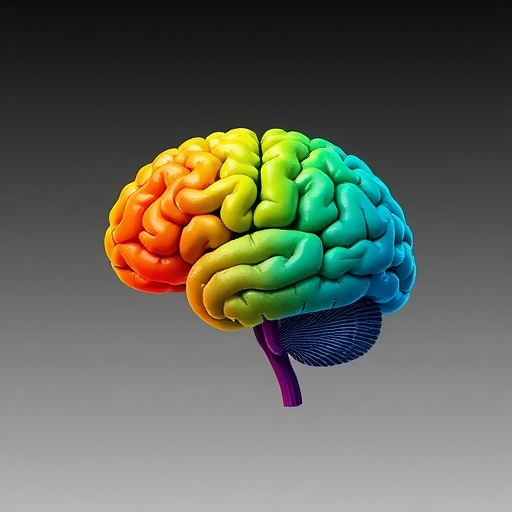
A long-standing assumption about intelligence is being challenged by a new perspective in neuroscience: the ability to combine familiar elements into novel, meaningful structures may not belong exclusively to humans. In a paper published in Nature Neuroscience, Riveland, Pouget and Driscoll argue that compositionality—the capacity to construct complex representations from simpler parts—should be understood not as an all-or-nothing trait, but as a continuum shared in different forms by biological brains and artificial systems.
Compositionality is most obvious in language. A limited vocabulary can generate an effectively unlimited number of sentences because words are assembled according to grammatical rules. The meaning of a sentence depends not only on the words it contains, but also on how those words are combined. This ability allows people to understand entirely new statements, follow unfamiliar instructions and apply old knowledge to new situations. For decades, researchers have treated this systematic flexibility as a defining feature of human cognition and a central ingredient of general intelligence.
The new analysis questions whether compositional thought requires an explicit symbolic architecture. Traditional theories often describe intelligent reasoning as the manipulation of discrete symbols according to formal rules, much like operations performed by a computer program. Under that view, a system must represent objects, concepts or actions as separate symbolic units before it can recombine them. But modern artificial intelligence has complicated this picture. Large language models, trained on enormous datasets and built from neural networks, can produce strikingly novel combinations without being given an explicit grammar or a manually programmed symbolic system.
These models do not simply retrieve sentences from memory. Their behavior suggests that statistical learning across vast numbers of examples can create internal representations that support generalization. A language model may respond appropriately to a combination of words, concepts or instructions that it has never encountered in precisely that form. The researchers emphasize that this does not settle the question of how compositionality works, but it raises a crucial possibility: some compositional behavior may emerge from scale, learning and distributed representations rather than from clearly identifiable symbolic components.
Neuroscience is revealing comparable complexity in animal brains. Studies of animals performing tasks that require flexible reasoning have found evidence for compositional neural codes. In such codes, separate features of a situation—such as an object’s identity, its location, an action or a goal—can be represented in ways that allow them to be recombined when circumstances change. An animal that has learned what an object is and where an action is useful may be able to apply that knowledge to a new combination, even without having experienced the exact situation before.
The technical challenge is determining how neural circuits achieve this flexibility. Biological neurons rarely function as isolated symbols. Instead, information is encoded through patterns of activity distributed across populations of cells. A concept may be represented by the coordinated firing of many neurons, with the same neural population participating in multiple tasks. Compositional computation can therefore arise when these activity patterns are organized so that particular features remain sufficiently stable while other features can be recombined. The result is a neural system that can preserve structure without storing every possible combination separately.
The authors propose studying these mechanisms through a “compositionality continuum,” defined by two interacting properties: the expressivity of computation-specific building blocks and the complexity of the rules used to recombine them. At one end, a system might rely on highly specialized components combined through simple operations. At the other, it might use broad, flexible representations whose interactions are learned through complex distributed dynamics. Between these extremes lies a wide range of possible biological and artificial implementations.
This framework could reshape how researchers compare brains with machine-learning systems. Rather than asking whether an animal, neural network or language model is compositional, scientists could ask what kind of compositional mechanism it uses. Does the system contain reusable representations? Can it apply learned relationships to unfamiliar combinations? Are its recombination rules explicit, implicit or distributed across many units? And how much performance depends on the architecture itself compared with the quantity and diversity of training data?
Answering those questions will require experiments that connect behavior to neural computation. High-density recordings from animals engaged in compositional tasks can reveal how populations of neurons represent individual elements and how those representations change when elements are combined. At the same time, reverse engineering artificial neural networks can identify the internal circuits and activity patterns responsible for flexible behavior. Comparing the two may show whether similar computational principles appear in systems built from biological neurons and systems built from mathematical units.
The debate has implications far beyond language or artificial intelligence. If general intelligence depends on explicit symbolic compositionality, researchers may need to design machines with more structured internal operations. If sophisticated compositional behavior can emerge from large-scale learning and distributed neural dynamics, then increasing model capacity and improving experience may be sufficient to produce abilities once thought to require symbolic reasoning. The proposed continuum does not choose between these possibilities. Instead, it offers a way to measure them, turning a philosophical question about intelligence into a testable problem in neuroscience and machine learning.
Cite Scienmag News
Cassandra Pierce. (August 4, 2026). Compositionality Continuum Offers Framework for Studying Intelligence’s Neural Basis. Scienmag. https://scienmag.com/compositionality-continuum-offers-framework-for-studying-intelligences-neural-basis/
Cassandra Pierce. "Compositionality Continuum Offers Framework for Studying Intelligence’s Neural Basis." Scienmag, 4 August 2026, https://scienmag.com/compositionality-continuum-offers-framework-for-studying-intelligences-neural-basis/. Accessed 4 September 2026.
Cassandra Pierce. "Compositionality Continuum Offers Framework for Studying Intelligence’s Neural Basis." Scienmag. August 4, 2026. https://scienmag.com/compositionality-continuum-offers-framework-for-studying-intelligences-neural-basis/


