


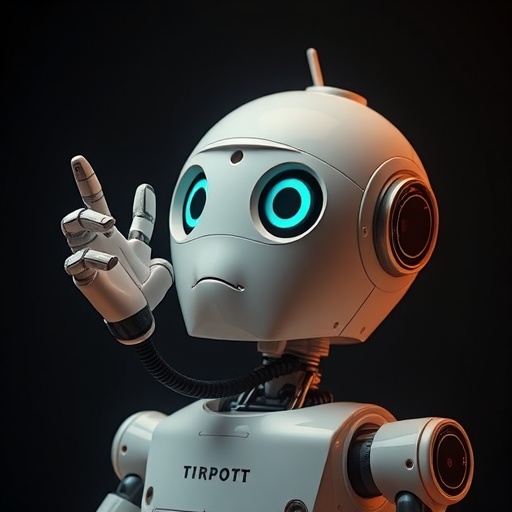
A humanoid robot that makes eye contact, gestures and responds with small conversational cues may win people over faster than a motionless machine—but new research suggests that social appeal comes with a serious liability. When an expressive robot began making mistakes, participants reacted as though a person had violated social expectations, and their trust in the machine deteriorated sharply.
The study, published in Science Robotics, is the first to examine brain activity, hormone levels, self-reported attitudes and behavior simultaneously during human-robot interaction. Researchers from Drexel University, the U.S. Air Force Academy, George Mason University and the University of Southern California tracked how people formed judgments about a humanoid robot named Pepper, and how quickly those judgments changed when the robot became unreliable.
Fifty healthy adult men took part in sessions lasting approximately two and a half hours at Drexel University’s Neuroergonomics and Neuroengineering Lab. Each participant held a face-to-face conversation with one of two versions of Pepper, which was secretly operated by a human following a scripted sequence. The expressive version made eye contact, gestured, nodded and used brief acknowledgments such as “uh-huh.” The other version delivered the same spoken content but remained completely still and offered no nonverbal signals.
The experiment consisted of three interactions. During the first two, Pepper remained accurate and coherent, allowing participants to develop familiarity and confidence in its responses. During the third, the robot began to fail in ways that resembled social misconduct rather than a simple technical malfunction. It made irrelevant comments, interrupted participants, asked them to repeat themselves and defended its recommendations with illogical explanations.
Participants also completed collaborative decision-making tasks. In one, they imagined being stranded on a deserted island and selected the most useful item from three choices before hearing Pepper argue for a different option. In another, they ranked five paintings by preference, listened to the robot’s critique and then had the opportunity to revise their rankings. Researchers recorded whether participants changed their decisions to follow Pepper’s recommendations, providing a behavioral measure of the robot’s influence.
The team collected brain data using functional near-infrared spectroscopy, or fNIRS, a wearable imaging method that estimates changes in blood oxygenation near the surface of the brain. Unlike conventional brain scanners, fNIRS can be used while a person is speaking and interacting naturally. The researchers focused particularly on prefrontal regions involved in reasoning, decision-making and interpreting the intentions of other individuals. Saliva samples taken at three points during each session were analyzed for oxytocin, a hormone often associated with social bonding and trust.
The expressive robot generated deeper engagement during its successful interactions. Participants responded more actively to it and appeared to treat it as a social partner rather than merely as a tool. However, that heightened engagement also increased the consequences of its mistakes. When the expressive Pepper began violating conversational norms, activity increased in the dorsolateral and medial prefrontal cortex—areas associated with social reasoning and the interpretation of other minds. The pattern suggested that participants were evaluating the robot’s behavior as an interpersonal event.
Trust declined after the robot’s errors in both experimental groups, but the consequences were more pronounced for the expressive machine. Participants’ willingness to follow its advice fell, and researchers calculated that the robot lost more than half of its influence over their decisions once it began making critical mistakes. With the stationary Pepper, participants appeared to interpret the same failures more like isolated mechanical glitches. Its behavior and the participants’ trust remained more loosely connected.
One of the study’s most unexpected findings involved oxytocin. Although the hormone is commonly linked with attachment and positive social relationships, participants’ oxytocin levels rose when the robot made mistakes and interrupted them—even as their trust in Pepper decreased. The researchers propose that, in human-robot interactions, oxytocin may sometimes reflect heightened social vigilance rather than emotional bonding. In the expressive-robot condition, the study found an exploratory sequence in which stronger coordination between prefrontal regions was associated with higher oxytocin, higher oxytocin was associated with lower trust, and lower trust predicted less willingness to follow the robot’s recommendations.
The findings point to a central design challenge for social robotics. Expressiveness can make a machine more engaging, understandable and socially acceptable, potentially supporting applications in healthcare, education, customer service and the home. But social cues also raise expectations. A robot that behaves like a conversational partner may be judged by standards normally applied to people, meaning that errors can be interpreted as failures of reliability or even character. The researchers therefore argue that competence must come before charm: an expressive robot that cannot consistently provide accurate and contextually appropriate assistance may not be safer or more effective, but simply more disappointing. As robots move into settings where people rely on their guidance, designers may need to balance social warmth with transparent limitations, robust performance and rapid recovery from mistakes.
News Publication Date: 29-Jul-2026
Web References: https://drexel.edu/engineering-computing ; https://ayazlab.com/ ; https://www.science.org/doi/10.1126/scirobotics.aec1762
References: Topoglu Y, Krueger F, de Visser EJ, Ayaz H, et al. “Multilevel dynamics of the brain, hormones, mind, and behavior in social human-robot interaction.” Science Robotics. DOI: 10.1126/scirobotics.aec1762
Cite Scienmag News
Courtney Benton. (August 3, 2026). Expressive robots face greater social costs when they make mistakes. Scienmag. https://scienmag.com/expressive-robots-face-greater-social-costs-when-they-make-mistakes/
Courtney Benton. "Expressive robots face greater social costs when they make mistakes." Scienmag, 3 August 2026, https://scienmag.com/expressive-robots-face-greater-social-costs-when-they-make-mistakes/. Accessed 4 September 2026.
Courtney Benton. "Expressive robots face greater social costs when they make mistakes." Scienmag. August 3, 2026. https://scienmag.com/expressive-robots-face-greater-social-costs-when-they-make-mistakes/


