


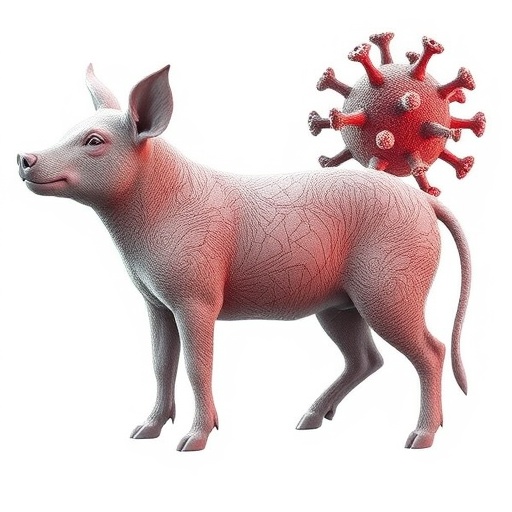
Porcine astrovirus 4 is emerging as a more genetically complex virus than its name might suggest, according to a study published in npj Viruses. Researchers led by V. Bamrung, P.C. Gauger and M.C. Rahe report that the virus is divided into distinct respiratory and gastrointestinal clades, or genetically related lineages, indicating that porcine astrovirus 4 may circulate through separate evolutionary pathways in different parts of the pig.
Astroviruses are small, non-enveloped viruses with single-stranded, positive-sense RNA genomes. In pigs, astrovirus infections have traditionally been associated with the intestinal tract, where they may be detected in fecal samples and linked to enteric disease. However, the identification of astrovirus genetic material in respiratory tissues has challenged the assumption that these viruses are restricted to the gut. The new study adds evidence that porcine astrovirus 4 may include lineages adapted to different anatomical environments.
The researchers’ central finding is the separation of porcine astrovirus 4 sequences into two major genetic groups. One clade is associated primarily with respiratory samples, while the other is linked predominantly to gastrointestinal material. A clade is a group of organisms or viruses that share a common evolutionary history, and the presence of distinct clades suggests that viral populations may be shaped by the tissues they infect, the routes through which they spread or the host conditions they encounter.
This distinction is important because the respiratory and gastrointestinal systems impose different biological pressures on a virus. A respiratory virus must remain stable in airway secretions, interact with cells lining the nasal passages or lungs and contend with local immune defenses. In contrast, an enteric virus must tolerate passage through the digestive tract and successfully replicate in intestinal cells. Genetic changes that improve viral fitness in one environment may not provide the same advantage in another.
The study describes genetic differences between the two porcine astrovirus 4 groups, although the broader significance of individual mutations will require additional experimental work. Astrovirus genomes typically contain regions encoding structural proteins, which form the viral particle, and nonstructural proteins involved in genome replication and processing. Changes in either region could influence how efficiently a virus enters cells, copies its RNA, escapes immune detection or spreads between animals.
The findings also highlight the limitations of relying on a single sample type when monitoring animal viruses. If respiratory and gastrointestinal clades are distributed differently, surveillance based only on fecal material could overlook viruses circulating in the airways. Conversely, respiratory sampling alone might miss genetically distinct enteric populations. A more complete picture of porcine astrovirus diversity may therefore require coordinated testing of nasal, respiratory and intestinal specimens.
For the swine industry, the distinction could have practical implications. Respiratory and gastrointestinal disease are major concerns in intensive pig production, where animals are housed in close proximity and may be exposed to multiple pathogens at the same time. Astrovirus infections can occur alongside other viral or bacterial agents, making it difficult to determine their individual contribution to disease. Recognizing that porcine astrovirus 4 includes tissue-associated genetic lineages may help researchers interpret diagnostic results more accurately.
The work also raises questions about how these lineages evolve and move through pig populations. The genetic separation observed by the authors could reflect long-term adaptation to different tissues, repeated transmission within distinct production systems or independent evolutionary changes arising in geographically separated groups. Determining which explanation is correct will require broader sampling across farms, regions and time periods, together with genomic analysis that can reconstruct transmission patterns.
Genomic surveillance will be particularly valuable because RNA viruses can accumulate mutations relatively quickly. Sequencing complete or near-complete viral genomes can reveal whether respiratory and gastrointestinal viruses remain stable over time or continue to diverge. It can also identify possible recombination events, in which related viruses exchange genetic material, potentially generating new combinations of traits. Such analyses could clarify whether the two porcine astrovirus 4 clades differ only in sequence or also in infectivity, tissue preference and disease potential.
The study presents porcine astrovirus 4 as a virus whose biology cannot be understood solely through detection or classification. Its division into respiratory and gastrointestinal clades suggests that tissue distribution and genetic evolution are closely connected. Further research will need to determine whether the genetic differences identified by Bamrung and colleagues correspond to measurable differences in replication or clinical outcomes. For now, the findings provide a sharper framework for investigating an understudied group of viruses and reinforce the importance of examining both the genome and the biological context in which a virus is found.
Cite Scienmag News
Juliet Wilcox. (August 1, 2026). Divergent Porcine Astrovirus 4 Forms Distinct Respiratory and Gastrointestinal Genetic Clades. Scienmag. https://scienmag.com/divergent-porcine-astrovirus-4-forms-distinct-respiratory-and-gastrointestinal-genetic-clades/
Juliet Wilcox. "Divergent Porcine Astrovirus 4 Forms Distinct Respiratory and Gastrointestinal Genetic Clades." Scienmag, 1 August 2026, https://scienmag.com/divergent-porcine-astrovirus-4-forms-distinct-respiratory-and-gastrointestinal-genetic-clades/. Accessed 4 September 2026.
Juliet Wilcox. "Divergent Porcine Astrovirus 4 Forms Distinct Respiratory and Gastrointestinal Genetic Clades." Scienmag. August 1, 2026. https://scienmag.com/divergent-porcine-astrovirus-4-forms-distinct-respiratory-and-gastrointestinal-genetic-clades/


