


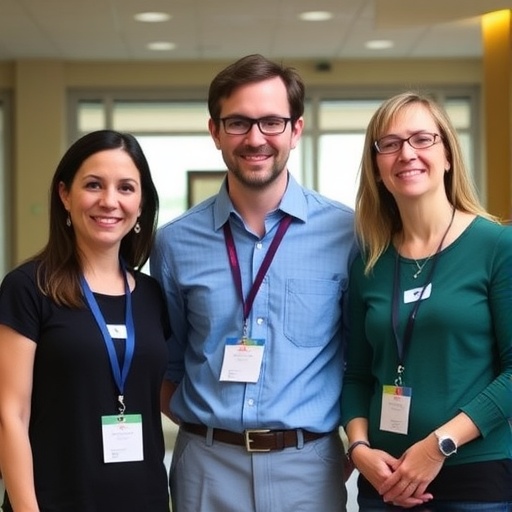
(Boston)—Chandramouli “Chand” Chandrasekaran, PhD, an assistant professor whose appointments span anatomy and neurobiology at Boston University Chobanian & Avedisian School of Medicine and psychological and brain sciences at the University’s College of Arts and Sciences, has received a Faculty Early Career Development Program, or CAREER, award from the National Science Foundation. The award provides at least $400,000 over five years, supporting a research and education program focused on one of the brain’s most fundamental challenges: transforming sensory information and situational context into timely, purposeful behavior.
The NSF CAREER award is regarded as the agency’s most prestigious honor for early-career faculty. It is designed for researchers who demonstrate exceptional potential in both research and education and who can serve as academic role models within their institutions and communities. Awardees are selected across a wide range of scientific disciplines, with emphasis placed on the originality of their research, the significance of the questions they address, and their ability to connect discovery with teaching and public engagement. For Chandrasekaran, the award will provide a platform to investigate how neural circuits evaluate incoming information before selecting and executing an action.
At the center of his research is a problem that appears simple in daily life but is extraordinarily complex in the brain. Consider a driver approaching an intersection: visual signals indicate the color of a traffic light, sounds may provide information about nearby vehicles or pedestrians, and memory and expectations establish the broader context. The brain must combine these sources, determine what matters, estimate when an action should occur, and generate an appropriate movement. Chandrasekaran’s work examines how this process unfolds, including how the nervous system decides whether to turn left or right, accelerate, stop, or wait when conditions change.
The research program combines electrophysiology, behavioral analysis, optogenetics, and computational modeling. Electrophysiological techniques allow researchers to record the electrical activity of neurons as animals perceive sensory cues, interpret context, and make decisions. Behavioral experiments reveal how those neural signals relate to choices, reaction times, learning, and movement. Optogenetics provides a way to test causality by using light-sensitive proteins to activate or inhibit precisely defined populations of neurons. Computational methods then help translate complex patterns of activity into models of how the brain represents evidence, weighs competing possibilities, and transforms decisions into coordinated motor commands.
This approach is particularly important because sensory processing and decision-making are not separate stages that operate independently. The significance of a visual or auditory signal depends on the circumstances in which it appears. A sound that signals danger in one environment may be irrelevant in another, while the same visual cue can prompt different behaviors depending on an individual’s goals or prior experience. Chandrasekaran’s research seeks to clarify how neural systems integrate sensory evidence with context, allowing the brain to distinguish between information that requires immediate action and information that can be ignored.
His interest in this question developed through an international and interdisciplinary scientific training path. Chandrasekaran earned a master’s degree in neural and behavioral sciences through the International Max Planck Research School at the University of Tübingen in Germany. He later completed his PhD at Princeton University under the mentorship of Asif Ghazanfar, PhD. During his doctoral work, he investigated multisensory integration, the process by which the brain combines information arriving through different senses, such as sight and hearing, to form a more reliable interpretation of the world.
Multisensory integration is a central feature of perception and behavior. Visual and auditory signals often reach the brain at different speeds and may vary in reliability, yet the nervous system must merge them into a coherent estimate of what is happening. Chandrasekaran’s earlier work examined the neural mechanisms that support this integration, providing a foundation for his current focus on how combined sensory information guides decisions and action. The questions are relevant not only to basic neuroscience but also to conditions in which perception, attention, decision-making, or movement is disrupted.
Following his doctoral training, Chandrasekaran became a postdoctoral fellow with the late Krishna Shenoy, PhD, at Stanford University. There, he developed computational and experimental approaches to studying how the brain makes decisions and controls everyday movements. His work at Boston University builds on that foundation by examining the dynamic relationship between sensory signals, internal context, neural computation, and behavior. Through the NSF-supported program, he will pursue a more detailed account of how the brain selects the right action at the right moment—a process that underlies everything from navigating an intersection to responding to unexpected events. The award also reflects the broader goal of training students to connect rigorous experimentation with quantitative models of brain function.
References: National Science Foundation CAREER award program; Boston University Chobanian & Avedisian School of Medicine announcement.
Cite Scienmag News
Cassandra Pierce. (August 1, 2026). BU Researcher Receives Prestigious CAREER Award. Scienmag. https://scienmag.com/bu-researcher-receives-prestigious-career-award/
Cassandra Pierce. "BU Researcher Receives Prestigious CAREER Award." Scienmag, 1 August 2026, https://scienmag.com/bu-researcher-receives-prestigious-career-award/. Accessed 3 September 2026.
Cassandra Pierce. "BU Researcher Receives Prestigious CAREER Award." Scienmag. August 1, 2026. https://scienmag.com/bu-researcher-receives-prestigious-career-award/


