


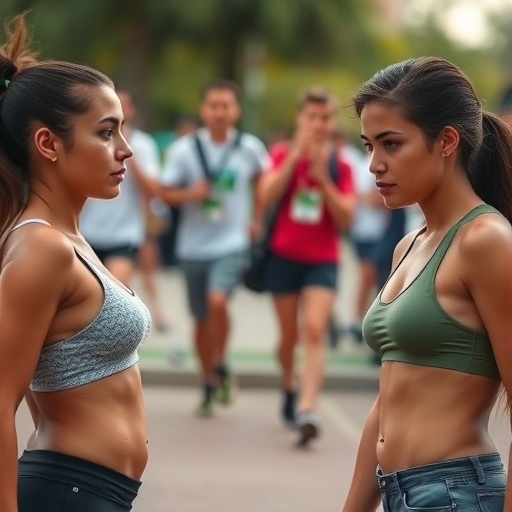
A decade-long study in São Paulo has revealed that leisure-time exercise is becoming increasingly divided along lines of race, gender, and education. While highly educated white men reported substantially higher levels of recreational physical activity over time, women from racial minority groups with fewer years of schooling consistently recorded the lowest participation rates. The findings suggest that exercise is not simply a matter of personal motivation or willpower, but is strongly shaped by social conditions, neighborhood environments, safety, income, and access to public spaces.
The study, published in the International Journal of Behavioral Nutrition and Physical Activity, followed 978 residents of São Paulo between 2014 and 2024. Researchers collected information during three assessment periods: 2014–2015, 2020–2021, and 2023–2024. The investigation was led by researchers associated with the University of São Paulo, including Andreia Alexandra Machado Miranda of the Center for Epidemiological Research in Nutrition and Health and Alex Antonio Florindo of the School of Arts, Sciences, and Humanities.
Rather than examining social characteristics separately, the researchers used an intersectional approach. This method considers how multiple aspects of identity and social position—such as sex, race or skin color, and educational attainment—combine to influence people’s opportunities and experiences. To quantify these overlapping disadvantages, the team applied a Multiple Jeopardy Index, with scores ranging from zero, representing the least vulnerable group, to four, representing the most vulnerable.
The contrast between the most and least advantaged groups became more pronounced during the study. At the beginning, 51% of highly educated white men reported engaging in physical activity during leisure time, compared with 29% of Black, Brown, Asian, or Indigenous women with lower levels of education. By the third assessment, participation had increased to 65% among the more advantaged group and 39% among the most vulnerable. Although both groups became more active, the difference between them widened from 22 to 26 percentage points.
The researchers argue that the pattern reflects structural barriers rather than a simple difference in interest. Women often perform a disproportionate share of unpaid domestic and caregiving work, leaving less time for sports or exercise. They may also earn lower wages and have fewer resources for gym memberships, organized sports, or transportation to recreational facilities. In many neighborhoods, particularly on the outskirts of São Paulo, poorly lit streets, limited green space, inadequate infrastructure, and concerns about personal safety further restrict access to outdoor activity.
“These inequalities persisted and the gap between groups widened over ten years,” Miranda said. “Leisure-time physical activity remains a privilege of the most socially advantaged groups.” The researchers emphasize that public health strategies focused only on individual behavior are unlikely to close this gap. Their analysis is based on an ecological model of physical activity, which recognizes that behavior is influenced by social support, family circumstances, the built environment, transportation systems, and government policy as well as personal preference.
The study also examined walking as a form of transportation, particularly walking associated with commuting. In contrast to leisure-time exercise, transport-related physical activity showed no statistically significant relationship with the social vulnerability index. Overall, the proportion of participants who walked for transportation rose from 61.8% in the first assessment to 71.6% in the third. This form of activity was most common among young Black or mixed-race men with a high school education.
The difference may reflect the role of necessity in everyday mobility. Walking to work or to public transport is often determined by household income, access to vehicles, public transit routes, and the location of employment rather than by a deliberate decision to exercise. Neighborhood design can also influence whether walking is practical and safe. Because commuting is built into daily routines, the researchers suggest that policies improving sidewalks, public transit connections, street lighting, and pedestrian safety could increase physical activity without requiring people to find additional leisure time.
The findings have significance beyond São Paulo. The World Health Organization recommends that adults complete 150 to 300 minutes of moderate-intensity physical activity or 75 to 150 minutes of vigorous-intensity activity each week. Yet an estimated 1.8 billion adults—nearly one-third of the global adult population—failed to meet those recommendations in 2022. Physical inactivity is associated with higher risks of cardiovascular disease, stroke, diabetes, unhealthy weight gain, and other chronic conditions, while sedentary lifestyles are linked to approximately five million deaths each year.
Brazil faces the same challenge. Data from the Ministry of Health’s 2024 VIGITEL surveillance system indicate that 42.3% of adults achieved at least 150 minutes of moderate physical activity per week. The proportion was 47.7% among men and 37.9% among women. Brazil aims to raise the national figure to 50.7% by 2030, but the São Paulo study indicates that progress will depend on addressing unequal access to opportunities for movement. The researchers point to measures such as expanding safe public spaces, improving infrastructure in vulnerable districts, supporting active transportation, and investing in cycling networks. Previous research by Florindo’s group found that having a bike lane within 500 meters of a residence significantly increased the likelihood that residents would cycle. The new study concludes that health promotion will be most effective when urban planning and social policy are designed to prioritize people facing the greatest barriers to physical activity.
News Publication Date: 5 May 2026
Web References: https://doi.org/10.1186/s12966-026-01900-5; https://www.agencia.fapesp.br/en
References: International Journal of Behavioral Nutrition and Physical Activity, DOI: 10.1186/s12966-026-01900-5.
Cite Scienmag News
Courtney Benton. (August 1, 2026). Study finds social inequality worsens barriers to physical activity. Scienmag. https://scienmag.com/study-finds-social-inequality-worsens-barriers-to-physical-activity/
Courtney Benton. "Study finds social inequality worsens barriers to physical activity." Scienmag, 1 August 2026, https://scienmag.com/study-finds-social-inequality-worsens-barriers-to-physical-activity/. Accessed 4 September 2026.
Courtney Benton. "Study finds social inequality worsens barriers to physical activity." Scienmag. August 1, 2026. https://scienmag.com/study-finds-social-inequality-worsens-barriers-to-physical-activity/


