

Wednesday, July 29, 2026
Science
No Result
View All Result
  • Login
  • HOME
  • SCIENCE NEWS
  • CONTACT US
  • HOME
  • SCIENCE NEWS
  • CONTACT US
No Result
View All Result
Scienmag
No Result
View All Result
Home Science News Agriculture

How bats tolerate viruses: Tulane study sheds light on one of nature’s biggest immune mysteries

July 29, 2026
in Agriculture
Reading Time: 5 mins read
0
How bats tolerate viruses: Tulane study sheds light on one of nature’s biggest immune mysteries

How bats tolerate viruses: Tulane study sheds light on one of nature’s biggest immune mysteries

65
SHARES
587
VIEWS
Share on FacebookShare on Twitter
ADVERTISEMENT
How bats tolerate viruses: Tulane study sheds light on one of nature’s biggest immune mysteries
image: Hannah Frank, associate professor of ecology and evolutionary biology at Tulane University School of Science and Engineering, led a study that discovered a previously unknown antibody system in bats that could offer new clues about how they coexist with viruses without becoming seriously ill.

view more 

Credit: Kenny Lass/Tulane University

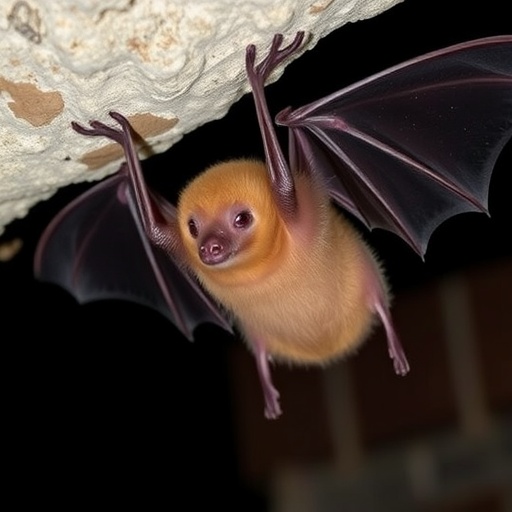
It is a mystery that has puzzled scientists for years. How can the world’s only winged mammals carry viruses that cause severe disease while rarely becoming seriously ill themselves?

Now researchers at Tulane University, with collaborators at Stanford University and the Centers for Disease Control, may have found a reason.

In a study published in Science Advances, the research team found that the world’s largest family of bats has two distinct copies of the genes that produce antibodies, the specialized proteins that help the immune system recognize and fight infections. Every other known mammal has only one such set. The discovery opens new avenues for understanding the evolution of immunity and how animals respond to disease.

“We’ve never seen anything like this in a mammal before,” said Hannah Frank, associate professor of ecology and evolutionary biology at Tulane University School of Science and Engineering and corresponding author of the study. “This completely changes our understanding of how mammalian immune systems can be organized and raises exciting new questions about why bats have been so evolutionarily successful and how they respond to viruses.”

The discovery was made in vesper bats, which includes more than 500 species found on every continent except Antarctica. Their remarkable evolutionary success has long intrigued scientists, and this newly discovered antibody system may offer one explanation.

Antibodies are Y-shaped proteins made of two heavy protein chains and two light protein chains. In humans and every other known mammal, those heavy chains are built from a single set of genes. Frank and her collaborators discovered that vesper bats instead possess two separate heavy-chain gene systems, giving them an entirely new way to generate antibody diversity. 

While researchers have traditionally focused on bats’ innate immune systems, Frank said this study highlights the importance of looking more closely at their adaptive immune system— the part responsible for producing antibodies.

“We think this discovery is an important piece of the puzzle,” Frank said. “It doesn’t fully explain why bats are such effective viral reservoirs, but it reveals a level of immune variety we didn’t know existed and gives us an entirely new direction to explore.”

Bats are critical pollinators, seed dispersers and natural pest controllers but also serve as natural hosts for many viruses, Frank said. Understanding how they coexist with those viruses without becoming ill may eventually help scientists better understand immune responses across species and improve strategies for preventing disease spillover.

“We’ve learned an enormous amount about immunity by studying humans and laboratory mice,” Frank said. “But the natural world is far more varied than that. Every time we study a species that has evolved differently, we have the opportunity to discover something entirely new.”


Journal

Science Advances

DOI

10.1126/sciadv.aeb6714

Article Title

Immunoglobulin Heavy Chain Locus Duplication in Bats

Article Publication Date

29-Jul-2026

Media Contact

Stacey Jenkins

Tulane University

sjenkins5@tulane.edu

Office: 504-247-1420

Journal
Science Advances
DOI
10.1126/sciadv.aeb6714

Journal

Science Advances

DOI

10.1126/sciadv.aeb6714

Article Title

Immunoglobulin Heavy Chain Locus Duplication in Bats

Article Publication Date

29-Jul-2026

Tags


  • /Life sciences/Immunology

  • /Life sciences/Immunology/Immune response

  • /Life sciences/Immunology/Immune system

  • /Life sciences/Immunology/Immunity

  • /Life sciences/Immunology/Immune cells

  • /Life sciences/Immunology/Antibodies

  • /Life sciences

  • /Life sciences/Developmental biology

  • /Life sciences/Evolutionary biology

  • /Life sciences/Microbiology/Microorganisms/Viruses

  • /Life sciences/Microbiology/Virology

  • /Life sciences/Microbiology/Microorganisms

  • /Life sciences/Microbiology

  • /Life sciences/Organismal biology/Animals

  • /Life sciences/Organismal biology/Animals/Vertebrates

  • /Life sciences/Organismal biology/Animals/Vertebrates/Mammals

  • /Life sciences/Organismal biology/Biological systematics

  • /Applied sciences and engineering/Agriculture

  • /Applied sciences and engineering/Agriculture/Pest control

  • /Life sciences/Plant sciences/Plant physiology/Plant reproduction/Pollination/Pollinators

  • /Life sciences/Plant sciences/Plant physiology/Plant reproduction/Pollination/Animal pollination
Tags: bat antibody discoverybat immune response mechanismsbat immune systembat-virus coexistencebats and emerging infectious diseasesbats and virusesimmune adaptations in batsimplications for human disease preventionnovel antibody systems in batsTulane University research on batsvirus tolerance in batszoonotic disease prevention
Share26Tweet16
Previous Post

Just launched: VALOR’s open-access knowledge hub for pollinator conservation

Next Post

Preferences for cooperative, strategic, and story-driven video games are associated with a higher risk of hikikomori

Related Posts

AI may help repair agriculture’s broken nitrogen cycle
Agriculture

AI may help repair agriculture’s broken nitrogen cycle

July 29, 2026
Gene Discovery May Speed Avocado Breeding, Cutting Years Off Timelines
Agriculture

Gene Discovery May Speed Avocado Breeding, Cutting Years Off Timelines

July 29, 2026
Stress-Response Gene Boosts Salvia miltiorrhiza Salt Tolerance and Medicinal Yield
Agriculture

Stress-Response Gene Boosts Salvia miltiorrhiza Salt Tolerance and Medicinal Yield

July 28, 2026
Study Reveals How Plants Detect When to Grow or Pause
Agriculture

Study Reveals How Plants Detect When to Grow or Pause

July 28, 2026
AI Model Speeds Scientific Discovery in Soil Carbon Research
Agriculture

AI Model Speeds Scientific Discovery in Soil Carbon Research

July 28, 2026
Industrial Poultry Farming Speeds Spread of Major Foodborne Disease
Agriculture

Industrial Poultry Farming Speeds Spread of Major Foodborne Disease

July 27, 2026
Next Post
Preferences for cooperative, strategic, and story-driven video games are associated with a higher risk of hikikomori

Preferences for cooperative, strategic, and story-driven video games are associated with a higher risk of hikikomori

  • Mothers who receive childcare support from maternal grandparents show more

    Mothers who receive childcare support from maternal grandparents show more parental warmth, finds NTU Singapore study

    27656 shares
    Share 11059 Tweet 6912
  • University of Seville Breaks 120-Year-Old Mystery, Revises a Key Einstein Concept

    1061 shares
    Share 424 Tweet 265
  • Bee body mass, pathogens and local climate influence heat tolerance

    682 shares
    Share 273 Tweet 171
  • Researchers record first-ever images and data of a shark experiencing a boat strike

    546 shares
    Share 218 Tweet 137
  • Groundbreaking Clinical Trial Reveals Lubiprostone Enhances Kidney Function

    531 shares
    Share 212 Tweet 133
Science

Embark on a thrilling journey of discovery with Scienmag.com—your ultimate source for cutting-edge breakthroughs. Immerse yourself in a world where curiosity knows no limits and tomorrow’s possibilities become today’s reality!

RECENT NEWS

  • Accelerating solid-state battery research and innovation: new open-access database
  • Cardiovascular health across the life course for individuals with breast cancer
  • Flexible DNA transforms protein crystallization
  • Research study investigates how maternal viral infections shape lifelong immune health in offspring

Categories

  • Agriculture
  • Anthropology
  • Archaeology
  • Athmospheric
  • Biology
  • Biotechnology
  • Blog
  • Bussines
  • Cancer
  • Chemistry
  • Climate
  • Earth Science
  • Editorial Policy
  • Marine
  • Mathematics
  • Medicine
  • Pediatry
  • Policy
  • Psychology & Psychiatry
  • Science Education
  • Social Science
  • Space
  • Technology and Engineering

Subscribe to Blog via Email

Enter your email address to subscribe to this blog and receive notifications of new posts by email.

Join 5,147 other subscribers

© 2025 Scienmag - Science Magazine

Welcome Back!

Login to your account below

Forgotten Password?

Retrieve your password

Please enter your username or email address to reset your password.

Log In
No Result
View All Result
  • HOME
  • SCIENCE NEWS
  • CONTACT US

© 2025 Scienmag - Science Magazine

Discover more from Science

Subscribe now to keep reading and get access to the full archive.

Continue reading
