

Wednesday, July 29, 2026
Science
No Result
View All Result
  • Login
  • HOME
  • SCIENCE NEWS
  • CONTACT US
  • HOME
  • SCIENCE NEWS
  • CONTACT US
No Result
View All Result
Scienmag
No Result
View All Result
Home Science News Psychology & Psychiatry

Peripheral Blood Mononuclear Cell Deformability Reduced in Major Depressive Disorder

July 29, 2026
in Psychology & Psychiatry
Reading Time: 2 mins read
0
Peripheral Blood Mononuclear Cell Deformability Reduced in Major Depressive Disorder

Peripheral Blood Mononuclear Cell Deformability Reduced in Major Depressive Disorder

65
SHARES
587
VIEWS
Share on FacebookShare on Twitter
ADVERTISEMENT

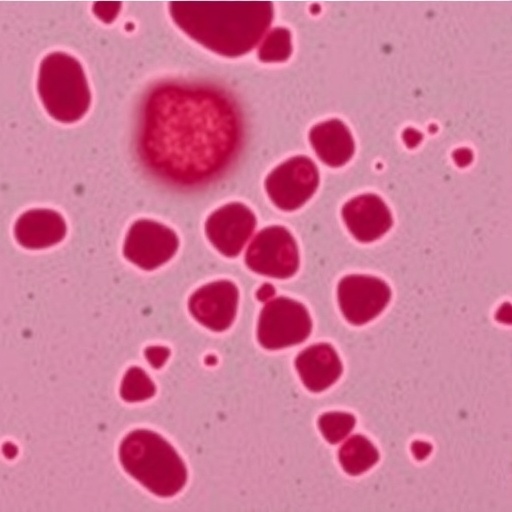
A new study reports that the physical “flexibility” of immune cells is measurably altered in people with major depressive disorder (MDD). Using mechanical tests on peripheral blood mononuclear cells (PBMCs)—a mixed population of immune cells that includes lymphocytes and monocytes—researchers found that cells from individuals with MDD deform less than those from healthy participants. The findings add a new layer to how depression may involve more than mood and cognition, potentially extending into cellular-level biophysics.

In the experiments, investigators quantified how well cells could change shape under controlled physical stress. Cell deformability is an important determinant of how immune cells navigate through tight vascular spaces, migrate to tissues, and respond to inflammation. When this mechanical property is reduced, it can, in principle, influence how efficiently cells traffic through the body and how strongly they interact with their microenvironment.

The results suggest that MDD is associated with a systemic change in cell mechanics, not merely a neural signature. While depression has long been linked to immune signaling and inflammation, mechanical alterations could represent an additional pathway by which inflammatory states or stress-related biology affect disease processes.

The study’s approach focuses on the biophysical phenotype of PBMCs. Rather than inferring immune activity indirectly, it measures how cells behave when squeezed and forced to adopt new shapes. Such direct characterization helps researchers connect psychiatric diagnosis to measurable cellular behavior.

Researchers also frame the work within the broader concept of “mechanotransduction,” where cells sense and respond to physical cues. If depressive states shift the cytoskeleton, membrane properties, or cellular stiffness, the downstream consequences could include altered immune-cell movement and altered signaling dynamics.

Notably, the work does not claim that reduced deformability alone explains depression. Instead, it proposes a reproducible cellular marker that may correlate with or contribute to the disorder’s biology. Future studies will be needed to determine whether changes in deformability track symptom severity, treatment response, or specific clinical subtypes.

The paper, published in Translational Psychiatry, is authored by Kwapich and colleagues, and appears with the DOI 10.1038/s41398-026-04225-w. By bringing rigorous cell mechanics into psychiatric research, the study opens new possibilities for biomarkers that could complement traditional clinical assessments.

Subject of Research: Major depressive disorder and immune-cell biomechanics
Article Title: Cell deformability of peripheral blood mononuclear cells is reduced in individuals with major depressive disorder.
Article References: Kwapich, L., Neckernuss, T., Geiger, D. et al. Translational Psychiatry 16, 375 (2026). https://doi.org/10.1038/s41398-026-04225-w
Image Credits: AI Generated
DOI: 10.1038/s41398-026-04225-w

Tags: biophysical markers of immune cell function in mental healthcell shape flexibility and stress response in MDDcellular biophysics and depression-related immune dysregulationimmune cell biomechanics in major depressive disorderimpact of cell deformability on immune cell migration in depressioninflammation and immune cell mechanics in depressive disordersmechanical properties of PBMCsperipheral blood mononuclear cell deformability in depressionrole of immune cell microenvironment in depression pathophysiologysystemic immune cell alterations in depression
Share26Tweet16
Previous Post

Subtropical Gyre Expansion Drives Southern Ocean Salinity Up, Defying Predictions

Next Post

How Organisms Balance Memory, Thought, and Sensing Costs

Related Posts

Temporal Interference Stimulation Advances Noninvasive Deep Brain Stimulation Paradigm
Psychology & Psychiatry

Temporal Interference Stimulation Advances Noninvasive Deep Brain Stimulation Paradigm

July 29, 2026
Cholinergic Basal Forebrain Control of Glymphatic Flow May Affect Depression
Psychology & Psychiatry

Cholinergic Basal Forebrain Control of Glymphatic Flow May Affect Depression

July 28, 2026
Mechanisms Connecting Gut Microbiome to Causality in Psychiatric Disorders
Psychology & Psychiatry

Mechanisms Connecting Gut Microbiome to Causality in Psychiatric Disorders

July 28, 2026
Study Uncovers Neuroinflammation Mechanisms, Biomarkers, and Treatments for Long COVID
Psychology & Psychiatry

Study Uncovers Neuroinflammation Mechanisms, Biomarkers, and Treatments for Long COVID

July 28, 2026
Single-Cell Transcriptomics Reveals Cerebral Cortex Adaptations to High Altitude in Pigs
Psychology & Psychiatry

Single-Cell Transcriptomics Reveals Cerebral Cortex Adaptations to High Altitude in Pigs

July 28, 2026
High IQ and ADHD show separable patterns of inattention and impulsivity
Psychology & Psychiatry

High IQ and ADHD show separable patterns of inattention and impulsivity

July 28, 2026
Next Post
How Organisms Balance Memory, Thought, and Sensing Costs

How Organisms Balance Memory, Thought, and Sensing Costs

  • Mothers who receive childcare support from maternal grandparents show more

    Mothers who receive childcare support from maternal grandparents show more parental warmth, finds NTU Singapore study

    27656 shares
    Share 11059 Tweet 6912
  • University of Seville Breaks 120-Year-Old Mystery, Revises a Key Einstein Concept

    1061 shares
    Share 424 Tweet 265
  • Bee body mass, pathogens and local climate influence heat tolerance

    682 shares
    Share 273 Tweet 171
  • Researchers record first-ever images and data of a shark experiencing a boat strike

    546 shares
    Share 218 Tweet 137
  • Groundbreaking Clinical Trial Reveals Lubiprostone Enhances Kidney Function

    531 shares
    Share 212 Tweet 133
Science

Embark on a thrilling journey of discovery with Scienmag.com—your ultimate source for cutting-edge breakthroughs. Immerse yourself in a world where curiosity knows no limits and tomorrow’s possibilities become today’s reality!

RECENT NEWS

  • EEG Modeling Predicts Conversion and Reveals Diverse Outcomes in Isolated REM Sleep Disorder
  • Shrub-driven vertical coupling shaped Holocene ecosystem variability and transitions
  • KAIST AI Uncovers Its Hidden Weaknesses, Making Generative Models Safer
  • Framework predicts how temperature affects toxic VOC emissions from paint sludge

Categories

  • Agriculture
  • Anthropology
  • Archaeology
  • Athmospheric
  • Biology
  • Biotechnology
  • Blog
  • Bussines
  • Cancer
  • Chemistry
  • Climate
  • Earth Science
  • Editorial Policy
  • Marine
  • Mathematics
  • Medicine
  • Pediatry
  • Policy
  • Psychology & Psychiatry
  • Science Education
  • Social Science
  • Space
  • Technology and Engineering

Subscribe to Blog via Email

Enter your email address to subscribe to this blog and receive notifications of new posts by email.

Join 5,147 other subscribers

© 2025 Scienmag - Science Magazine

Welcome Back!

Login to your account below

Forgotten Password?

Retrieve your password

Please enter your username or email address to reset your password.

Log In
No Result
View All Result
  • HOME
  • SCIENCE NEWS
  • CONTACT US

© 2025 Scienmag - Science Magazine

Discover more from Science

Subscribe now to keep reading and get access to the full archive.

Continue reading
