


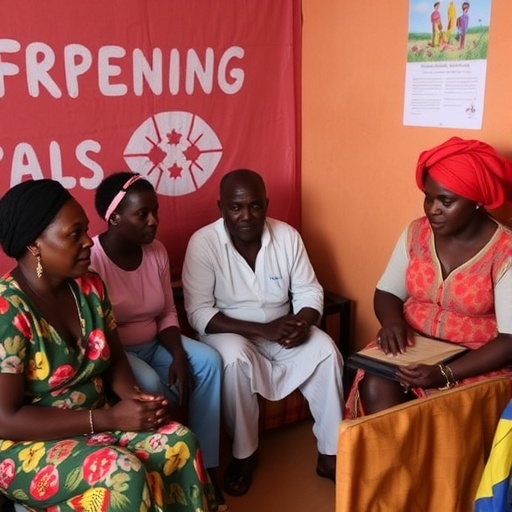
A sharp interruption in U.S. funding for global HIV programs in January 2025 quickly changed the flow of care across East Africa, according to a new analysis led by researchers at UC San Francisco. Using patient-level records from HIV clinics, the study captures what many health systems fear but rarely measure in real time: how quickly enrollment can collapse when financing is paused.
The results draw on data from clinics in Kenya, Uganda, and Tanzania during the first five weeks after the withdrawal. The team compared that window with the same period in 2024, creating a near-immediate “before-and-after” view of service disruption.
Across the region, new patient enrollment fell by 59%. Viral load testing—central for monitoring treatment effectiveness and detecting failures early—dropped by 33%. These changes indicate that the burden of disrupted programs first appeared not as loss of ongoing therapy, but as a bottleneck preventing new patients from entering care.
Importantly, the researchers report that treatment for people already established in care did not immediately unravel. Instead, clinics maintained continuity through dedicated providers, including many who worked without compensation when partner support tightened. The distinction matters: systems can hold steady for months for existing patients while access for new patients steadily worsens.
To generate this evidence, the study leveraged the IeDEA consortium, an NIH-funded regional network that has tracked HIV care for nearly two decades. Nearly 103,000 people contributed patient-level data from 189 clinics, allowing the investigators to quantify changes with clinic- and patient-level granularity.
The impact was uneven. Young people and men—groups already less likely to access HIV care—saw the steepest declines in enrollment and monitoring. Women, particularly those who are pregnant, typically encounter more frequent health-system touchpoints, which may explain relative resilience.
The study frames the pause as a policy-driven shock with measurable clinical consequences. While some lifesaving HIV services were later exempted, prevention and support components remained constrained, raising concerns about downstream effects beyond the initial weeks.
The researchers presented these findings at the International AIDS Society Conference in Rio de Janeiro, Brazil, underscoring the urgency of maintaining stable financing for diagnostics, linkage to care, and prevention services.
Cite Scienmag News
Courtney Benton. (July 28, 2026). US HIV Funding Cuts Rapidly Disrupted HIV Care Across East Africa. Scienmag. https://scienmag.com/us-hiv-funding-cuts-rapidly-disrupted-hiv-care-across-east-africa/
Courtney Benton. "US HIV Funding Cuts Rapidly Disrupted HIV Care Across East Africa." Scienmag, 28 July 2026, https://scienmag.com/us-hiv-funding-cuts-rapidly-disrupted-hiv-care-across-east-africa/. Accessed 5 September 2026.
Courtney Benton. "US HIV Funding Cuts Rapidly Disrupted HIV Care Across East Africa." Scienmag. July 28, 2026. https://scienmag.com/us-hiv-funding-cuts-rapidly-disrupted-hiv-care-across-east-africa/


