

Tuesday, July 28, 2026
Science
No Result
View All Result
  • Login
  • HOME
  • SCIENCE NEWS
  • CONTACT US
  • HOME
  • SCIENCE NEWS
  • CONTACT US
No Result
View All Result
Scienmag
No Result
View All Result
Home Science News Chemistry

Astronomers Present Strongest Evidence Yet That Betelgeuse Has a Companion

July 28, 2026
in Chemistry
Reading Time: 2 mins read
0
Astronomers Present Strongest Evidence Yet That Betelgeuse Has a Companion

Astronomers Present Strongest Evidence Yet That Betelgeuse Has a Companion

65
SHARES
587
VIEWS
Share on FacebookShare on Twitter
ADVERTISEMENT

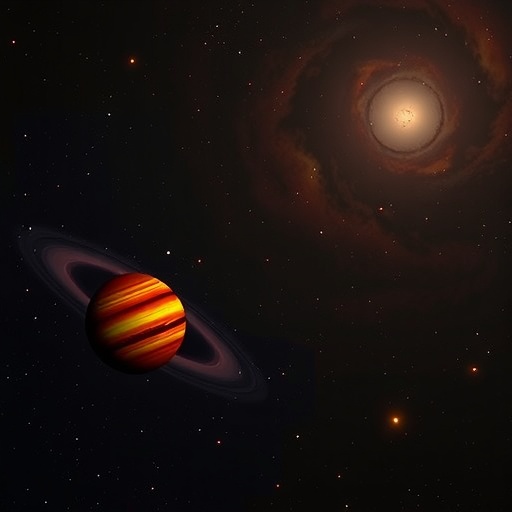
At last, astronomers have obtained strong, direct evidence that Betelgeuse—the iconic red supergiant in Orion—is accompanied by a faint stellar companion. Using the European Southern Observatory’s Very Large Telescope (VLT), a team led by French researcher Miguel Montargès captured what is likely the clearest image yet of Betelgeuse B, the star predicted to orbit Betelgeuse for decades.

For hundreds of years, Betelgeuse has been monitored because its brightness varies in a periodic pattern. While those changes were once suspected to reflect the influence of a nearby companion, earlier searches failed to deliver convincing proof. In 2024, however, two separate studies refined the expected orbit and pointed to a rare window in December, when the companion would appear farthest from Betelgeuse as seen from Earth—making it more detectable.

Montargès and colleagues acted on that forecast. They used ESO’s VLT in December 2024 and spent months processing the data with advanced image-reconstruction techniques designed to separate faint objects from a bright source. The result is a processed view in which Betelgeuse is effectively removed, revealing a signal consistent with Betelgeuse B.

The team’s analysis indicates that the companion is more massive than earlier estimates suggested. Rather than being close to the Sun’s mass, Betelgeuse B appears to have roughly two to three times the Sun’s mass. “Because it is more massive than predicted, we see it,” Montargès noted, emphasizing how unexpected the discovery remains despite the target being well studied.

Betelgeuse B was detected through direct imaging, meaning the companion’s own light was captured rather than inferred indirectly. Observations were made with SPHERE, an instrument on the VLT optimized for high-contrast imaging and capable of working in the glare-dominated environments around bright stars.

A prior tentative sighting of the companion had been reported using the Gemini North Telescope, but the VLT/SPHERE data provide the strongest evidence to date. Co-author Anthony Boccaletti highlighted how tools originally developed to find exoplanets can also reveal companions orbiting massive, evolved stars like Betelgeuse.

The discovery also arrives with scientific urgency. Betelgeuse is an evolved supergiant expected to end its life in a supernova. The possibility of a companion raises a new question: whether Betelgeuse B will influence the red supergiant’s evolution and ultimately the nature of its impending explosion.

To confirm the companion’s reality beyond doubt, astronomers plan to observe it again as the orbit places it on the opposite side of Betelgeuse. With only limited orbital phase remaining, the team expects the next observations to further validate the detection and sharpen the system’s parameters.

Subject of Research: Betelgeuse’s companion star (Betelgeuse B) and its influence on the evolution of a red supergiant
Article Title: VLT/SPHERE images the candidate companion of Betelgeuse
News Publication Date: Not provided in the provided text
Web References: https://www.eso.org/public/archives/releases/sciencepapers/eso2611/eso2611a.pdf
References: https://iopscience.iop.org/article/10.3847/1538-4357/ad93c8 ; https://iopscience.iop.org/article/10.3847/1538-4357/ad87f4 ; https://iopscience.iop.org/article/10.3847/2041-8213/adeaaf ; https://www.nature.com/articles/s41586-021-03546-8
Image Credits: Credit: ESO/M. Montargès et al. Background: N. Rissinger (skysurvey.org)

Keywords

Binary stars, Observational astrophysics, Stellar physics, Stellar dynamics

Tags: advanced image reconstruction in astronomyBetelgeuse B star orbitBetelgeuse brightness variabilityBetelgeuse stellar companion detectiondirect imaging of Betelgeuse partnerEuropean Southern Observatory VLT imagingimpact of stellar companions on supergiant evolutionOrion constellation star systemrare observational window December 2024red supergiant star binary systemstar companionship confirmationstellar mass estimation of Betelgeuse B
Share26Tweet16
Previous Post

Fathers’ Ultra-Processed Food Intake May Affect Babies’ Birth Weight and Size

Next Post

Insilico Medicine to Present Phase 1 ISM6331 Results at ESMO 2026

Related Posts

Dynamic Nanopore Breathing Boosts Efficiency for Molecule Separation and Diffusion
Chemistry

Dynamic Nanopore Breathing Boosts Efficiency for Molecule Separation and Diffusion

July 28, 2026
Cryogenic environment enables strong strain tuning of excitons in ZrSe3
Chemistry

Cryogenic environment enables strong strain tuning of excitons in ZrSe3

July 28, 2026
Xi’an Jiaotong Achieves Low-Cost Roll-to-Roll 3D Nanobowl Light-Trapping Films
Chemistry

Xi’an Jiaotong Achieves Low-Cost Roll-to-Roll 3D Nanobowl Light-Trapping Films

July 28, 2026
Biomimetic Superhydrophobic Coating Shows Flame Retardancy and Self-Extinguishing Performance
Chemistry

Biomimetic Superhydrophobic Coating Shows Flame Retardancy and Self-Extinguishing Performance

July 28, 2026
Soft Stretchy Biosensors Improve Connections with Better Adhesion
Chemistry

Soft Stretchy Biosensors Improve Connections with Better Adhesion

July 28, 2026
Sanford Underground Facility Welcomes NEMESIS for Cutting-Edge Physics Research
Chemistry

Sanford Underground Facility Welcomes NEMESIS for Cutting-Edge Physics Research

July 28, 2026
Next Post
Insilico Medicine to Present Phase 1 ISM6331 Results at ESMO 2026

Insilico Medicine to Present Phase 1 ISM6331 Results at ESMO 2026

  • Mothers who receive childcare support from maternal grandparents show more

    Mothers who receive childcare support from maternal grandparents show more parental warmth, finds NTU Singapore study

    27656 shares
    Share 11059 Tweet 6912
  • University of Seville Breaks 120-Year-Old Mystery, Revises a Key Einstein Concept

    1061 shares
    Share 424 Tweet 265
  • Bee body mass, pathogens and local climate influence heat tolerance

    682 shares
    Share 273 Tweet 171
  • Researchers record first-ever images and data of a shark experiencing a boat strike

    546 shares
    Share 218 Tweet 137
  • Groundbreaking Clinical Trial Reveals Lubiprostone Enhances Kidney Function

    531 shares
    Share 212 Tweet 133
Science

Embark on a thrilling journey of discovery with Scienmag.com—your ultimate source for cutting-edge breakthroughs. Immerse yourself in a world where curiosity knows no limits and tomorrow’s possibilities become today’s reality!

RECENT NEWS

  • Expanding microbiome–gut–brain research could boost mental health in the Global South
  • Cholinergic Basal Forebrain Control of Glymphatic Flow May Affect Depression
  • Mafic and Ultramafic Rocks Could Supply Reactive Phosphorus for Life Origins
  • Ultrasensitive Imaging Detects Lung Inflammation in Male Mice With Magnetic Particles

Categories

  • Agriculture
  • Anthropology
  • Archaeology
  • Athmospheric
  • Biology
  • Biotechnology
  • Blog
  • Bussines
  • Cancer
  • Chemistry
  • Climate
  • Earth Science
  • Editorial Policy
  • Marine
  • Mathematics
  • Medicine
  • Pediatry
  • Policy
  • Psychology & Psychiatry
  • Science Education
  • Social Science
  • Space
  • Technology and Engineering

Subscribe to Blog via Email

Enter your email address to subscribe to this blog and receive notifications of new posts by email.

Join 5,146 other subscribers

© 2025 Scienmag - Science Magazine

Welcome Back!

Login to your account below

Forgotten Password?

Retrieve your password

Please enter your username or email address to reset your password.

Log In
No Result
View All Result
  • HOME
  • SCIENCE NEWS
  • CONTACT US

© 2025 Scienmag - Science Magazine

Discover more from Science

Subscribe now to keep reading and get access to the full archive.

Continue reading
