


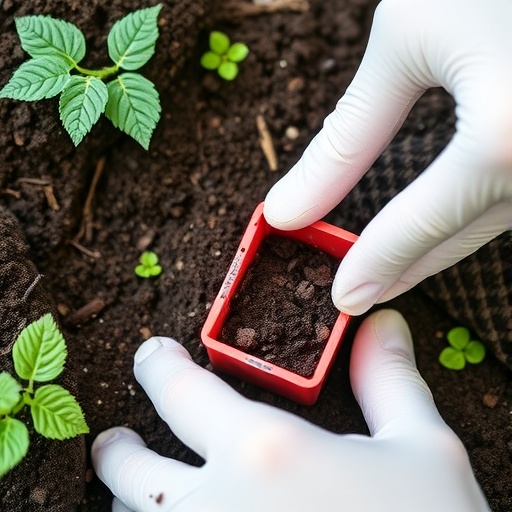
Soil may look lifeless, but it shelters an enormous viral population that continually reshapes microbial life. In a new study, researchers report that the way viral genetic material is extracted can profoundly influence which viruses are detected—and, crucially, what ecological story scientists conclude from those data.
Viruses in soil exist as both DNA and RNA forms, and they are tightly entwined with the activity of bacteria and other microorganisms. Yet metagenomic surveys often mix methodological choices—how samples are treated, concentrated, and sequenced—without fully quantifying how those decisions bias recovery. The result is a risk that “true” community patterns are blurred by the workflow itself.
The team investigated how different preparation steps affect the recovery of DNA and RNA viral communities from soil. They found that extraction and processing can shift the balance of detected viral genomes, altering both the apparent diversity and the inferred relative abundance of viral groups. In other words, the measured community can become a reflection of protocol as much as ecology.
A key insight is that DNA and RNA viral fractions do not respond identically to the same preparation logic. When workflows prioritize one nucleic-acid type or use steps with differential efficiency, the resulting dataset can skew toward particular virus characteristics, even when sequencing depth is held constant. This helps explain why studies sometimes disagree on which viral taxa dominate in similar soils.
Because ecological interpretation depends on these measurements—such as links between viral presence and soil conditions, microbial productivity, or nutrient cycles—methodological bias can propagate into downstream conclusions. The paper emphasizes that ecological patterns derived from viral metagenomes may be partially artifacts of extraction, normalization, or filtering choices.
To address this, the researchers highlight the need for careful comparison of workflows and transparent reporting of preprocessing parameters. They argue that benchmarking should become part of experimental design, not an afterthought, especially when both DNA- and RNA-viral communities are targeted.
Ultimately, the study reframes “viral community” as an operational definition shaped by sample handling. By clarifying how preparation methods influence recovery, it provides a path toward more reliable interpretations of soil viral ecology—and better forecasts of how viruses contribute to microbial dynamics.
Cite Scienmag News
Kristina Jarvis. (July 28, 2026). Soil viral DNA and RNA recovery depend on sample preparation method. Scienmag. https://scienmag.com/soil-viral-dna-and-rna-recovery-depend-on-sample-preparation-method/
Kristina Jarvis. "Soil viral DNA and RNA recovery depend on sample preparation method." Scienmag, 28 July 2026, https://scienmag.com/soil-viral-dna-and-rna-recovery-depend-on-sample-preparation-method/. Accessed 4 September 2026.
Kristina Jarvis. "Soil viral DNA and RNA recovery depend on sample preparation method." Scienmag. July 28, 2026. https://scienmag.com/soil-viral-dna-and-rna-recovery-depend-on-sample-preparation-method/


