

Tuesday, July 28, 2026
Science
No Result
View All Result
  • Login
  • HOME
  • SCIENCE NEWS
  • CONTACT US
  • HOME
  • SCIENCE NEWS
  • CONTACT US
No Result
View All Result
Scienmag
No Result
View All Result
Home Science News Psychology & Psychiatry

Physical Activity Duration and Fragmentation Predict Future Dementia, Depression, Anxiety in UK Biobank

July 28, 2026
in Psychology & Psychiatry
Reading Time: 2 mins read
0
Physical Activity Duration and Fragmentation Predict Future Dementia, Depression, Anxiety in UK Biobank

Physical Activity Duration and Fragmentation Predict Future Dementia, Depression, Anxiety in UK Biobank

65
SHARES
587
VIEWS
Share on FacebookShare on Twitter
ADVERTISEMENT

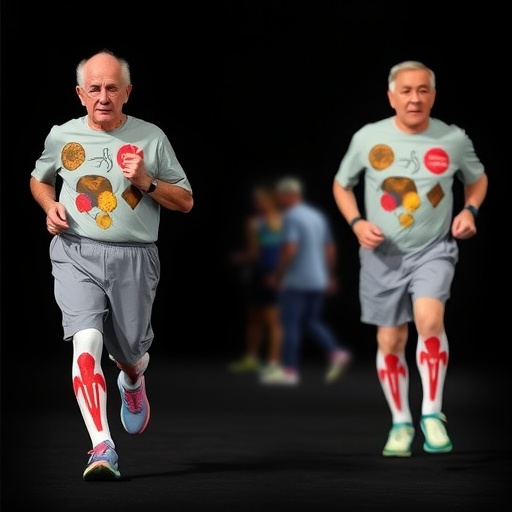
A new wave of public-health research is zeroing in on an underappreciated feature of everyday movement: not just how much physical activity people do, but how long each activity “bout” lasts and how fragmented those bouts are across the day. In a large, multimodal analysis using the UK Biobank, researchers report that patterns of physical activity may forecast later mental health outcomes as well as future dementia risk.

The study examined participants’ movement captured through objective measures rather than relying solely on self-report. By extracting bout duration—how sustained an active period is—and fragmentation—how frequently activity is broken into smaller segments—the team mapped daily activity “micro-structure” onto long-term health trajectories.

What makes the work stand out is its focus on activity architecture. Two people can reach similar totals of activity, yet one may accumulate it in long, uninterrupted blocks while the other repeatedly “peels off” activity into short bursts. The researchers evaluated whether these differences correspond to distinct downstream risks.

Across follow-up, the results suggested that certain activity patterns are associated with a higher likelihood of developing dementia, depression, and anxiety. The associations were not purely about volume; the temporal organization of movement appeared to matter, implying that how activity is distributed may influence biological pathways linked to neuroprotection and stress regulation.

Possible mechanisms include effects on cardiovascular fitness, glucose metabolism, and autonomic balance, all of which can shape brain health over years. Fragmented activity may lead to different physiological recovery cycles than longer bouts, potentially altering inflammation and neurotrophic signaling.

Because the dataset is multi-modal and large, the authors were able to adjust for a range of demographic and health-related factors, strengthening confidence that the observed relationships reflect meaningful patterns rather than simple confounding.

The study also frames a practical message: activity guidance might evolve from counting minutes alone to considering how those minutes are accumulated. Encouraging more continuous bouts—or reducing excessive fragmentation—could become a more nuanced prescription for healthy aging and mental wellbeing.

The authors’ findings, published in Translational Psychiatry, add urgency to future trials that can test whether targeted changes in bout structure can reduce risk. For now, the research reinforces a provocative idea: the “timing texture” of daily movement may be an important lever for lifelong brain and mood health.

https://doi.org/10.1038/s41398-026-04272-3

Subject of Research: Physical activity bout duration and fragmentation; future dementia, depression, and anxiety

Article Title: Associations of physical activity bout duration and fragmentation with future dementia, depression, and anxiety: a multi-modal UK Biobank study.

Article References: Sakal, C., Xu, W., Zhang, W. et al. Associations of physical activity bout duration and fragmentation with future dementia, depression, and anxiety: a multi-modal UK Biobank study. Transl Psychiatry (2026). https://doi.org/10.1038/s41398-026-04272-3

Image Credits: AI Generated

DOI: https://doi.org/10.1038/s41398-026-04272-3

Tags: activity architecture and neurodegenerative diseaseactivity bout duration and mental healthhealth prediction based on activity micro-structureimpact of activity fragmentation on cognitive declinelongitudinal study of activity and mental health outcomesmicro-structure of daily activity and long-term healthmovement pattern analysis for depression predictionobjective movement measurement in health studiesphysical activity fragmentation and dementia riskphysical activity pattern analysisphysical activity segmentation and anxiety riskUK Biobank physical activity research
Share26Tweet16
Previous Post

Tailored Cu-N2S single atoms boost photo-Fenton activity via d–p hybridization

Next Post

Childhood Unpredictability Links to Mental Health Problems

Related Posts

Tactile Discrimination in Adolescents With Anorexia Nervosa: Behavioral and Brain Study
Psychology & Psychiatry

Tactile Discrimination in Adolescents With Anorexia Nervosa: Behavioral and Brain Study

July 28, 2026
Early Adversity Tunes Brain and Behavior’s Oxytocin Response in Altruism
Psychology & Psychiatry

Early Adversity Tunes Brain and Behavior’s Oxytocin Response in Altruism

July 28, 2026
Brain Networks and Peripheral Biomarkers Identified for Major Depressive Disorder
Psychology & Psychiatry

Brain Networks and Peripheral Biomarkers Identified for Major Depressive Disorder

July 27, 2026
Connectome gradient changes linked to rumination and altered in depression
Psychology & Psychiatry

Connectome gradient changes linked to rumination and altered in depression

July 27, 2026
Gut microbiome shift links anhedonia and sensation-seeking in prodromal Parkinson’s mice
Psychology & Psychiatry

Gut microbiome shift links anhedonia and sensation-seeking in prodromal Parkinson’s mice

July 27, 2026
Autism and social anxiety linked to submissive behavior and larger amygdala
Psychology & Psychiatry

Autism and social anxiety linked to submissive behavior and larger amygdala

July 27, 2026
Next Post
Childhood Unpredictability Links to Mental Health Problems

Childhood Unpredictability Links to Mental Health Problems

  • Mothers who receive childcare support from maternal grandparents show more

    Mothers who receive childcare support from maternal grandparents show more parental warmth, finds NTU Singapore study

    27656 shares
    Share 11059 Tweet 6912
  • University of Seville Breaks 120-Year-Old Mystery, Revises a Key Einstein Concept

    1061 shares
    Share 424 Tweet 265
  • Bee body mass, pathogens and local climate influence heat tolerance

    682 shares
    Share 273 Tweet 171
  • Researchers record first-ever images and data of a shark experiencing a boat strike

    546 shares
    Share 218 Tweet 137
  • Groundbreaking Clinical Trial Reveals Lubiprostone Enhances Kidney Function

    531 shares
    Share 212 Tweet 133
Science

Embark on a thrilling journey of discovery with Scienmag.com—your ultimate source for cutting-edge breakthroughs. Immerse yourself in a world where curiosity knows no limits and tomorrow’s possibilities become today’s reality!

RECENT NEWS

  • CUDC-907 boosts temozolomide response in glioblastoma by dual PI3K/HDAC inhibition
  • Michael Hurlston and TRUMPF to Receive 2026 Optica i4 Prize
  • Hepatitis Day 2026: Europe’s progress stalls as prevention gaps block targets
  • How the body’s natural recycling system may reduce inflammation

Categories

  • Agriculture
  • Anthropology
  • Archaeology
  • Athmospheric
  • Biology
  • Biotechnology
  • Blog
  • Bussines
  • Cancer
  • Chemistry
  • Climate
  • Earth Science
  • Editorial Policy
  • Marine
  • Mathematics
  • Medicine
  • Pediatry
  • Policy
  • Psychology & Psychiatry
  • Science Education
  • Social Science
  • Space
  • Technology and Engineering

Subscribe to Blog via Email

Enter your email address to subscribe to this blog and receive notifications of new posts by email.

Join 5,146 other subscribers

© 2025 Scienmag - Science Magazine

Welcome Back!

Login to your account below

Forgotten Password?

Retrieve your password

Please enter your username or email address to reset your password.

Log In
No Result
View All Result
  • HOME
  • SCIENCE NEWS
  • CONTACT US

© 2025 Scienmag - Science Magazine

Discover more from Science

Subscribe now to keep reading and get access to the full archive.

Continue reading
