


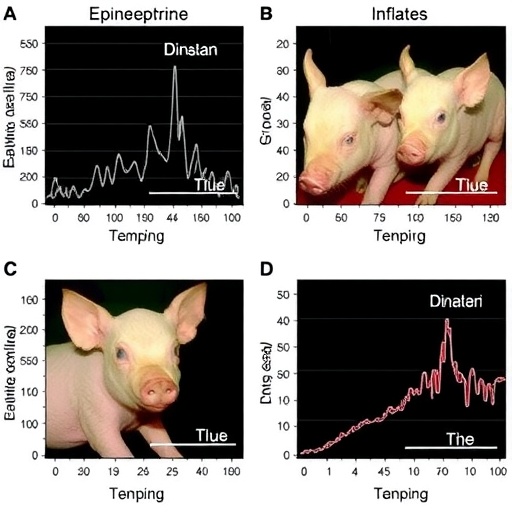
A new study is reshaping how clinicians think about epinephrine delivery in neonatal resuscitation. In the first minutes after birth, when oxygenation and ventilation are critical, the route used to administer life-saving drugs can strongly influence how quickly they take effect. While intravenous (IV) or intraosseous (IO) administration remains the preferred strategy, endotracheal (ETT) delivery has often served as a temporary alternative. Supraglottic airway (SGA) devices—designed to sit above the vocal cords—may provide a more practical option, but their effects on drug behavior in the body have been unclear.
Researchers led by Zhou and colleagues investigated whether epinephrine delivered through an ETT or an SGA produces different pharmacokinetics (PK) and pharmacodynamics (PD) in newborn physiology. They used a neonatal piglet model to compare how epinephrine disperses, persists, and translates into measurable biological responses. The team focused not only on drug concentrations over time, but also on downstream effects consistent with epinephrine’s known cardiovascular and respiratory actions.
A key variable was whether a “sustained inflation” could improve drug absorption. In the study concept, sustained inflation works by maintaining ventilation pressure, potentially pushing epinephrine deeper into the lung after placement through the airway. This addresses a central challenge of airway drug delivery: drug deposition may be limited if the medication remains in the upper airway or is expelled with ventilation.
To evaluate PK, the investigators measured epinephrine levels after administration, tracking how rapidly concentrations rose and fell under each delivery condition. For PD, they monitored physiological responses linked to epinephrine activity, allowing the researchers to connect exposure with effect rather than relying on concentration alone. Comparing ETT versus SGA also helps determine whether device placement changes the efficiency of delivery to pulmonary tissue.
The findings suggest that route matters: ETT and SGA administration produced distinguishable PK/PD profiles in the neonatal model. Importantly, sustained inflation further altered these profiles, indicating that mechanical ventilation strategy can modulate how much of the administered drug becomes systemically available and pharmacologically effective.
Taken together, the work provides actionable insights for resuscitation protocols where IV/IO access may be delayed. By demonstrating that both airway device choice and ventilation mechanics can influence epinephrine delivery, the study suggests clinicians may be able to optimize outcomes even when ETT is not the only feasible option.
As neonatal resuscitation teams refine procedures, these results may support more evidence-based decisions about when to use SGA devices and how to time ventilation maneuvers to maximize drug absorption. The study also highlights a broader theme in emergency neonatology: delivering a drug is not just about where it is placed, but how the lungs are actively managed around that moment.
For parents and caregivers, the promise is ultimately clinical—more reliable dosing pathways could translate into more consistent stabilization in the earliest seconds of life. For researchers, the study offers a framework for future investigations into delivery optimization, dosing, and real-time resuscitation guidance.
Cite Scienmag News
Denise Maddox. (July 28, 2026). Inflation-Induced Changes in Epinephrine Pharmacokinetics and Dynamics in Piglets. Scienmag. https://scienmag.com/inflation-induced-changes-in-epinephrine-pharmacokinetics-and-dynamics-in-piglets/
Denise Maddox. "Inflation-Induced Changes in Epinephrine Pharmacokinetics and Dynamics in Piglets." Scienmag, 28 July 2026, https://scienmag.com/inflation-induced-changes-in-epinephrine-pharmacokinetics-and-dynamics-in-piglets/. Accessed 4 September 2026.
Denise Maddox. "Inflation-Induced Changes in Epinephrine Pharmacokinetics and Dynamics in Piglets." Scienmag. July 28, 2026. https://scienmag.com/inflation-induced-changes-in-epinephrine-pharmacokinetics-and-dynamics-in-piglets/


