


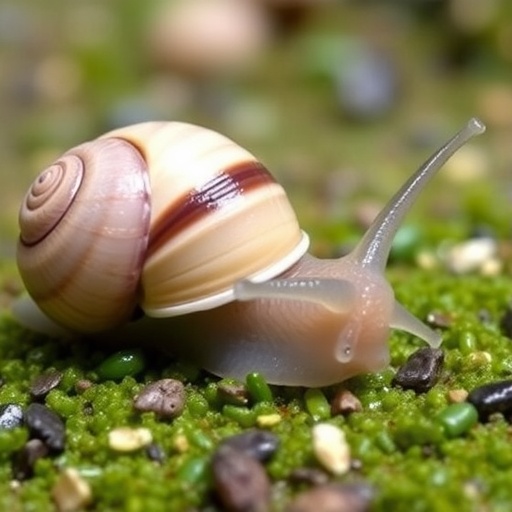
Two newly described land-snail species have expanded Europe’s known Cochlostoma fauna, according to a new open-access study published in Biodiversity Data Journal. The species—Cochlostoma komarnica and Cochlostoma dobrido—are tiny, conical snails about 6 mm long, living on limestone rock faces where they graze algae and lichens.
Unlike most terrestrial snails, these species position their eyes on the sides of the head rather than at the tips of eye stalks. Their shell anatomy also includes a distinctive circular operculum-like disk attached to the tail region, which functions as a “door” that closes the shell opening for protection.
The discoveries were made during field expeditions in Montenegro organized by Taxon Expeditions, in partnership with the Taxon Foundation and the Montenegrin Ecologists Society. Between 2018 and 2025, mixed teams—international researchers, citizen scientists, local students, and conservationists—surveyed biodiversity across Durmitor National Park and nearby Komarnica Canyon.
Field work revealed the snails at multiple rugged sites. However, the species’ novelty was confirmed only after specimens were dissected and genetically analyzed in an on-site field laboratory, combining morphological checks with molecular evidence.
In a camp “voting session,” the team chose names reflecting the localities of discovery: Cochlostoma dobrido honors the Dobri Do Plateau between Durmitor’s peaks, while Cochlostoma komarnica is named for the Komarnica Canyon south of the park.
The study highlights how much unexplored diversity remains in the Balkans, an area where mountain canyons and gorges can act as biodiversity reservoirs. Lead author perspectives also underscore that even in Europe, new species continue to emerge when habitats are carefully surveyed.
Yet the researchers warn that Komarnica Canyon is threatened by plans to flood the area for hydropower infrastructure. Such changes would likely eliminate a unique ecosystem and potentially wipe out additional species unknown to science.
Because of these risks, the Montenegrin Ecologists Society is pushing for Komarnica Canyon’s inclusion in the UNESCO World Heritage site of Durmitor and for cancellation of the hydropower project, arguing that “green” energy is not sustainable if it destroys irreplaceable habitats.
Original source: Schilthuizen M, et al. (2026) Two new Cochlostoma species from the Durmitor and Komarnica regions of northern Montenegro (Caenogastropoda, Cochlostomatidae). Biodiversity Data Journal 14: e196955. DOI: 10.3897/BDJ.14.e196955.
Cite Scienmag News
Margaret Porter. (July 27, 2026). New Snail Species Strengthens Montenegro Biodiversity Protection Case. Scienmag. https://scienmag.com/new-snail-species-strengthens-montenegro-biodiversity-protection-case/
Margaret Porter. "New Snail Species Strengthens Montenegro Biodiversity Protection Case." Scienmag, 27 July 2026, https://scienmag.com/new-snail-species-strengthens-montenegro-biodiversity-protection-case/. Accessed 4 September 2026.
Margaret Porter. "New Snail Species Strengthens Montenegro Biodiversity Protection Case." Scienmag. July 27, 2026. https://scienmag.com/new-snail-species-strengthens-montenegro-biodiversity-protection-case/


