

Monday, July 27, 2026
Science
No Result
View All Result
  • Login
  • HOME
  • SCIENCE NEWS
  • CONTACT US
  • HOME
  • SCIENCE NEWS
  • CONTACT US
No Result
View All Result
Scienmag
No Result
View All Result
Home Science News Medicine

Validation of NEO-READY model for predicting discharge dates in preterm NICU patients

July 27, 2026
in Medicine, Pediatry
Reading Time: 2 mins read
0
Validation of NEO-READY model for predicting discharge dates in preterm NICU patients

Validation of NEO-READY model for predicting discharge dates in preterm NICU patients

65
SHARES
587
VIEWS
Share on FacebookShare on Twitter
ADVERTISEMENT

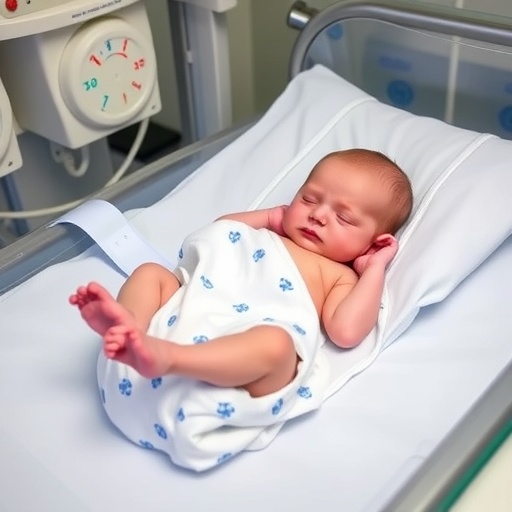
A new clinical tool is aiming to make discharge planning for premature babies more predictable. In a study published this July, researchers report the development and external validation of the NEO-READY model, designed to forecast the likely date of discharge for infants cared for in neonatal intensive care units (NICUs). The work focuses on one of the most challenging moments in preterm care: estimating when a fragile newborn will be medically stable enough to leave intensive monitoring.

Premature infants often require prolonged treatment, and discharge timing depends on a moving target of clinical milestones. Traditional approaches rely heavily on clinicians’ experience and local practice patterns, which can vary between hospitals and regions. That variability can lead to uncertainty for families and operational strain for NICUs. The NEO-READY model was built to reduce that guesswork by translating patient and treatment features into an evidence-based prediction.

Technically, the model uses data-driven methods to estimate discharge timing, incorporating factors that reflect illness severity, progress during hospitalization, and relevant clinical characteristics. By training on one dataset and testing on separate external cohorts, the authors assess whether the model generalizes beyond the environment in which it was created. External validation is critical because models that perform well only in their “home” hospital may fail when applied elsewhere.

The reported validation indicates that the NEO-READY framework can provide useful estimates across different settings, supporting its potential role as a decision-support system. If adopted, it could help NICU teams set more realistic expectations, coordinate post-discharge resources, and plan staffing and bed utilization with greater confidence.

Importantly, the goal is not to replace clinical judgment but to augment it. Predictions of discharge date can guide conversations with parents, inform readiness assessments, and help clinicians identify infants who may require closer follow-up before leaving the unit.

Beyond individual care, improved discharge forecasting may support system-level efficiency. NICUs face persistent bottlenecks, and delays can cascade into longer waits for incoming critically ill newborns. A reliable prediction tool could therefore benefit both patients and healthcare logistics.

With neonatal populations growing and preterm survival improving, demand for smarter, data-informed care pathways is rising. Tools like NEO-READY reflect a broader shift toward predictive analytics in perinatal medicine—where accurate timing forecasts may translate directly into better outcomes and less uncertainty for families.

Whether the model will be widely implemented will depend on integration into electronic health records, ongoing monitoring of performance, and careful evaluation of how predictions are used in real clinical workflows. Still, this validation study offers a timely, science-forward step toward more anticipatory neonatal care.

Subject of Research: Predicting discharge date for premature NICU patients using the NEO-READY model.

Article Title: Development and external validation of the NEO-READY model to predict date of discharge among premature neonatal intensive care patients.

Article References: Lonsdale, H., Patel, K., Domenico, H. et al. (2026) J Perinatol. https://doi.org/10.1038/s41372-026-02827-2

Image Credits: AI Generated

DOI: 10.1038/s41372-026-02827-2

Keywords:

Tags: clinical decision support for preterm infantsdata-driven neonatal discharge modelsdischarge timing estimation in neonatesevidence-based neonatal care toolsexternal validation of NICU predictive toolshealthcare operational efficiency in NICUsimproving neonatal discharge planningmodeling illness severity in preterm infantsNEO-READY clinical prediction modelneonatal intensive care discharge predictionneonatal intensive care unit (NICU) patient outcomespreterm infant discharge planning
Share26Tweet16
Previous Post

AI Detection Model Uses Noncontact Multimodal Data for Early Parkinson’s Diagnosis

Next Post

Balancing Innovation and Validation in Neurobehavioral Assessment Methods

Related Posts

Drosophila Study Reveals Global Molecular Code Linking Birth Order to Neurons
Medicine

Drosophila Study Reveals Global Molecular Code Linking Birth Order to Neurons

July 27, 2026
Cross-Species Spatial Transcriptomics Reveals Conserved Drivers of Lupus Skin and Hair Loss
Medicine

Cross-Species Spatial Transcriptomics Reveals Conserved Drivers of Lupus Skin and Hair Loss

July 27, 2026
AI Detection Model Uses Noncontact Multimodal Data for Early Parkinson’s Diagnosis
Medicine

AI Detection Model Uses Noncontact Multimodal Data for Early Parkinson’s Diagnosis

July 27, 2026
Cocrystal Enables Fixed-Dose Empagliflozin and Metformin Bilayer for Bioequivalence
Medicine

Cocrystal Enables Fixed-Dose Empagliflozin and Metformin Bilayer for Bioequivalence

July 27, 2026
Super Protein Powders Tested for Active Aging Using Artificial Stomach
Medicine

Super Protein Powders Tested for Active Aging Using Artificial Stomach

July 27, 2026
AlphaFold3 contact modeling enables precise DNA base editing
Medicine

AlphaFold3 contact modeling enables precise DNA base editing

July 27, 2026
Next Post
Balancing Innovation and Validation in Neurobehavioral Assessment Methods

Balancing Innovation and Validation in Neurobehavioral Assessment Methods

  • Mothers who receive childcare support from maternal grandparents show more

    Mothers who receive childcare support from maternal grandparents show more parental warmth, finds NTU Singapore study

    27656 shares
    Share 11059 Tweet 6912
  • University of Seville Breaks 120-Year-Old Mystery, Revises a Key Einstein Concept

    1061 shares
    Share 424 Tweet 265
  • Bee body mass, pathogens and local climate influence heat tolerance

    682 shares
    Share 273 Tweet 171
  • Researchers record first-ever images and data of a shark experiencing a boat strike

    546 shares
    Share 218 Tweet 137
  • Groundbreaking Clinical Trial Reveals Lubiprostone Enhances Kidney Function

    531 shares
    Share 212 Tweet 133
Science

Embark on a thrilling journey of discovery with Scienmag.com—your ultimate source for cutting-edge breakthroughs. Immerse yourself in a world where curiosity knows no limits and tomorrow’s possibilities become today’s reality!

RECENT NEWS

  • New Snail Species Strengthens Montenegro Biodiversity Protection Case
  • Experienced Captains Face Conventional AI as Autonomous Navigation Charts a New Course
  • Drosophila Study Reveals Global Molecular Code Linking Birth Order to Neurons
  • Quasi-Ballistic Ion Transport in Vertical Microrod Enables Efficient Evaporation Power Generation

Categories

  • Agriculture
  • Anthropology
  • Archaeology
  • Athmospheric
  • Biology
  • Biotechnology
  • Blog
  • Bussines
  • Cancer
  • Chemistry
  • Climate
  • Earth Science
  • Editorial Policy
  • Marine
  • Mathematics
  • Medicine
  • Pediatry
  • Policy
  • Psychology & Psychiatry
  • Science Education
  • Social Science
  • Space
  • Technology and Engineering

Subscribe to Blog via Email

Enter your email address to subscribe to this blog and receive notifications of new posts by email.

Join 5,146 other subscribers

© 2025 Scienmag - Science Magazine

Welcome Back!

Login to your account below

Forgotten Password?

Retrieve your password

Please enter your username or email address to reset your password.

Log In
No Result
View All Result
  • HOME
  • SCIENCE NEWS
  • CONTACT US

© 2025 Scienmag - Science Magazine

Discover more from Science

Subscribe now to keep reading and get access to the full archive.

Continue reading
