


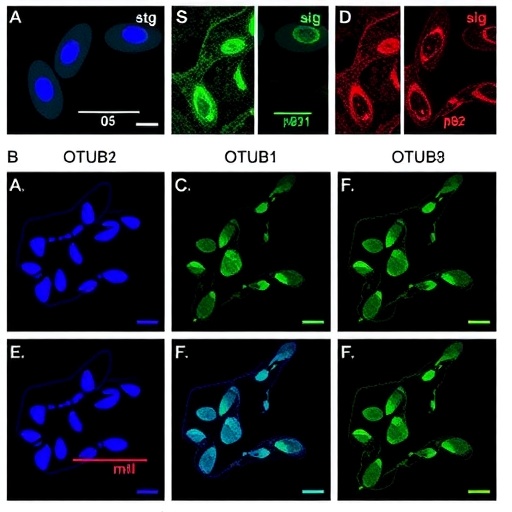
A new study highlights how a little-known protein, OTUB1, can reshape cell death pathways in hepatocellular carcinoma (HCC). Researchers report that OTUB1 acts as a brake on a particularly complex form of tumor vulnerability: autophagy-dependent ferroptosis, an iron-driven, lipid-peroxidation catastrophe that can eliminate cancer cells.
Ferroptosis is increasingly recognized as a therapeutic opportunity, but many tumors evade it by rewiring stress-response networks. In this work, the team connects that evasion to autophagy, a cellular recycling program that can either protect cells or, under certain conditions, feed ferroptosis. The researchers propose that OTUB1 tilts the balance toward survival by interfering with key molecular steps linking autophagy to ferroptotic execution.
Central to the mechanism is p62, also known as SQSTM1, a multifunctional cargo receptor that helps organize autophagic trafficking and regulates multiple signaling hubs. The study finds that OTUB1 increases p62 stability, preventing its timely turnover. By doing so, OTUB1 disrupts the autophagy-to-ferroptosis axis rather than directly blocking ferroptosis machinery alone.
Notably, the stabilization involves a “non-canonical” deubiquitination route. Instead of the standard ubiquitin-editing paradigm often used to explain protein control, OTUB1 appears to engage deubiquitinating activity in a way that preserves p62 from degradation. This altered ubiquitin handling helps maintain a protective p62 pool inside tumor cells under stress.
Because p62 is tightly coupled to autophagic flux and stress signaling, maintaining it can blunt the cellular conditions required for ferroptosis progression. As a result, HCC cells with heightened OTUB1 activity show reduced sensitivity to ferroptosis-inducing insults compared with controls.
The findings suggest OTUB1 may function as an upstream modifier that reprograms cell death outcome by altering protein fate through ubiquitin dynamics. This positions the OTUB1–p62 pathway as a potential vulnerability point for therapies aiming to restore ferroptotic sensitivity.
From a translational perspective, the work provides a mechanistic map that could guide drug discovery. If OTUB1 activity can be inhibited, restoring p62 turnover may reactivate autophagy-dependent ferroptosis in tumor cells, potentially enhancing the efficacy of existing treatment strategies.
Overall, the study adds to a growing framework in which ubiquitination, autophagy, and lipid peroxidation are interlocked to determine whether cancer cells live or die. By identifying OTUB1 as a modulator of that intersection, researchers open a new route for “viral science news” style attention to an emerging target in hepatocellular carcinoma cell death control.
Cite Scienmag News
Nathaniel Bowman. (July 27, 2026). OTUB1 Suppresses Autophagy-Dependent Ferroptosis in Liver Cancer by Stabilizing p62. Scienmag. https://scienmag.com/otub1-suppresses-autophagy-dependent-ferroptosis-in-liver-cancer-by-stabilizing-p62/
Nathaniel Bowman. "OTUB1 Suppresses Autophagy-Dependent Ferroptosis in Liver Cancer by Stabilizing p62." Scienmag, 27 July 2026, https://scienmag.com/otub1-suppresses-autophagy-dependent-ferroptosis-in-liver-cancer-by-stabilizing-p62/. Accessed 4 September 2026.
Nathaniel Bowman. "OTUB1 Suppresses Autophagy-Dependent Ferroptosis in Liver Cancer by Stabilizing p62." Scienmag. July 27, 2026. https://scienmag.com/otub1-suppresses-autophagy-dependent-ferroptosis-in-liver-cancer-by-stabilizing-p62/


