

Monday, July 27, 2026
Science
No Result
View All Result
  • Login
  • HOME
  • SCIENCE NEWS
  • CONTACT US
  • HOME
  • SCIENCE NEWS
  • CONTACT US
No Result
View All Result
Scienmag
No Result
View All Result
Home Science News Medicine

Lessons from history guide the future of AI in medical decision-making

July 27, 2026
in Medicine, Pediatry
Reading Time: 2 mins read
0
Lessons from history guide the future of AI in medical decision-making

Lessons from history guide the future of AI in medical decision-making

65
SHARES
587
VIEWS
Share on FacebookShare on Twitter
ADVERTISEMENT

Neonatal intensive care units are increasingly becoming decision laboratories: clinicians must synthesize rapidly changing vital signs, lab results, imaging, and historical context—often under time pressure where errors can have irreversible consequences. In this environment, artificial intelligence (AI) is being positioned as a cognitive co-pilot, offering faster retrieval of relevant medical knowledge and the ability to detect data patterns that may be difficult for humans to notice in the moment.

In a new perspective published in Journal of Perinatology, Stevenson, Katz, Wong and colleagues argue that the core promise of AI in medicine is practical: narrowing the search space for clinicians by transforming scattered patient data into structured risk signals. Such systems can be trained to recognize associations between physiologic trajectories and outcomes, potentially supporting earlier intervention and more consistent decision pathways across shifts and institutions.

Yet the authors emphasize that decision-making is not purely an algorithmic exercise. For example, even when a model provides statistically accurate recommendations, the “best interest” of a specific infant may involve considerations that are not encoded in datasets—family values, goals of care, clinician judgment about uncertainty, and ethically grounded judgments about tradeoffs.

Importantly, the report highlights the limits of pattern recognition when applied to novel clinical contexts. AI can be vulnerable to dataset bias, variations in clinical practice, and distribution shifts—situations in which the patient data arriving today differs from the data the system learned from. In neonatal care, where conditions can evolve quickly and protocols differ, these gaps can matter.

There is also the question of accountability. The moral weight of clinical responsibility cannot be fully delegated to an analytical tool, because responsibility includes explaining decisions, responding to patient-specific circumstances, and ultimately accepting the ethical burden of action or inaction.

Rather than “replacing” physicians, the authors suggest AI should be understood as a scaffold for knowledge access and hypothesis generation—something that augments human reasoning while preserving human authority. In practice, this means careful validation, transparent performance reporting, and workflows that make AI suggestions auditable and contestable.

For critical-care medicine, the future likely lies in tightly coupled human–AI systems: models that flag risk, clinicians who integrate context and values, and institutions that continually monitor safety and equity. The take-home lesson is clear—AI may accelerate interpretation, but wisdom still belongs to the bedside.

Subject of Research:

AI in medical decision-making, with focus on neonatal intensive care.

Article Title:
A lesson from the past and the future of artificial intelligence in medical decision-making.

Article References:
Stevenson, D.K., Katz, M., Wong, R.J. et al. A lesson from the past and the future of artificial intelligence in medical decision-making. J Perinatol (2026). https://doi.org/10.1038/s41372-026-02824-5

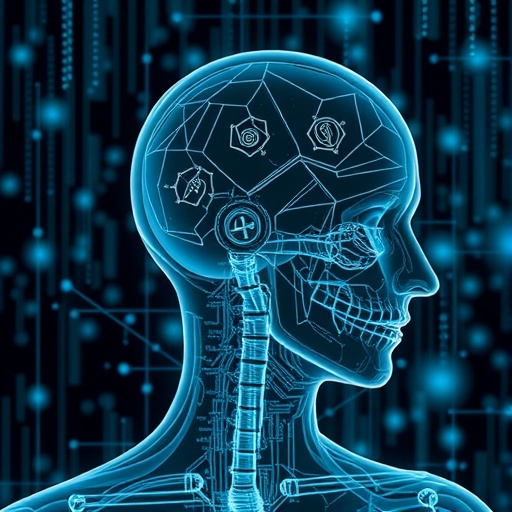
Image Credits: AI Generated

DOI: https://doi.org/10.1038/s41372-026-02824-5

Keywords: AI, neonatal intensive care, medical decision-making, ethics, clinical workflow

Tags: AI as cognitive co-pilot in healthcareAI in neonatal intensive care decision-makingAI-driven early intervention in neonatal carebalancing algorithmic recommendations with human oversightclinician judgment and family values in AI-supported decisionsethical considerations in AI-assisted medical decisionsimproving consistency across healthcare shifts and institutionslimitations of AI in novel clinical scenariosmedical data synthesis and pattern recognitionpractical applications of AI in perinatologystructured risk signals from patient datatransforming scattered data into actionable insights
Share26Tweet16
Previous Post

Stuffed Toys Release PFAS into Saliva, Raising Oral Exposure Concerns

Next Post

OTUB1 Suppresses Autophagy-Dependent Ferroptosis in Liver Cancer by Stabilizing p62

Related Posts

Tertiary lymphoid structures contain stem-like tumor-specific T cells
Medicine

Tertiary lymphoid structures contain stem-like tumor-specific T cells

July 27, 2026
Benchmarking Vision and Pathology Foundation Models for Computational Pathology
Medicine

Benchmarking Vision and Pathology Foundation Models for Computational Pathology

July 27, 2026
OTUB1 Suppresses Autophagy-Dependent Ferroptosis in Liver Cancer by Stabilizing p62
Medicine

OTUB1 Suppresses Autophagy-Dependent Ferroptosis in Liver Cancer by Stabilizing p62

July 27, 2026
Stuffed Toys Release PFAS into Saliva, Raising Oral Exposure Concerns
Medicine

Stuffed Toys Release PFAS into Saliva, Raising Oral Exposure Concerns

July 27, 2026
New Insights Into Ionizing Radiation Exposure and Parkinson’s Disease Risk
Medicine

New Insights Into Ionizing Radiation Exposure and Parkinson’s Disease Risk

July 27, 2026
Study uncovers ultrafast gene evolution driving chicken feather color diversity
Medicine

Study uncovers ultrafast gene evolution driving chicken feather color diversity

July 27, 2026
Next Post
OTUB1 Suppresses Autophagy-Dependent Ferroptosis in Liver Cancer by Stabilizing p62

OTUB1 Suppresses Autophagy-Dependent Ferroptosis in Liver Cancer by Stabilizing p62

  • Mothers who receive childcare support from maternal grandparents show more

    Mothers who receive childcare support from maternal grandparents show more parental warmth, finds NTU Singapore study

    27656 shares
    Share 11059 Tweet 6912
  • University of Seville Breaks 120-Year-Old Mystery, Revises a Key Einstein Concept

    1061 shares
    Share 424 Tweet 265
  • Bee body mass, pathogens and local climate influence heat tolerance

    682 shares
    Share 273 Tweet 171
  • Researchers record first-ever images and data of a shark experiencing a boat strike

    546 shares
    Share 218 Tweet 137
  • Groundbreaking Clinical Trial Reveals Lubiprostone Enhances Kidney Function

    531 shares
    Share 212 Tweet 133
Science

Embark on a thrilling journey of discovery with Scienmag.com—your ultimate source for cutting-edge breakthroughs. Immerse yourself in a world where curiosity knows no limits and tomorrow’s possibilities become today’s reality!

RECENT NEWS

  • Reinforcement Learning Boosts Wave Energy Converter Output by Up to 14%
  • Scientists identify compound that could help muscles remain strong with age
  • Great Barrier Reef Hosts Its Own Diverse Microbiome
  • Seabirds boost next year’s chick survival by shifting energy use flexibly

Categories

  • Agriculture
  • Anthropology
  • Archaeology
  • Athmospheric
  • Biology
  • Biotechnology
  • Blog
  • Bussines
  • Cancer
  • Chemistry
  • Climate
  • Earth Science
  • Editorial Policy
  • Marine
  • Mathematics
  • Medicine
  • Pediatry
  • Policy
  • Psychology & Psychiatry
  • Science Education
  • Social Science
  • Space
  • Technology and Engineering

Subscribe to Blog via Email

Enter your email address to subscribe to this blog and receive notifications of new posts by email.

Join 5,146 other subscribers

© 2025 Scienmag - Science Magazine

Welcome Back!

Login to your account below

Forgotten Password?

Retrieve your password

Please enter your username or email address to reset your password.

Log In
No Result
View All Result
  • HOME
  • SCIENCE NEWS
  • CONTACT US

© 2025 Scienmag - Science Magazine

Discover more from Science

Subscribe now to keep reading and get access to the full archive.

Continue reading
