

Monday, July 27, 2026
Science
No Result
View All Result
  • Login
  • HOME
  • SCIENCE NEWS
  • CONTACT US
  • HOME
  • SCIENCE NEWS
  • CONTACT US
No Result
View All Result
Scienmag
No Result
View All Result
Home Science News Technology and Engineering

KAIST Creates AI That Theorizes the World from Observation, Like Children

July 27, 2026
in Technology and Engineering
Reading Time: 2 mins read
0
KAIST Creates AI That Theorizes the World from Observation, Like Children

KAIST Creates AI That Theorizes the World from Observation, Like Children

65
SHARES
587
VIEWS
Share on FacebookShare on Twitter
ADVERTISEMENT

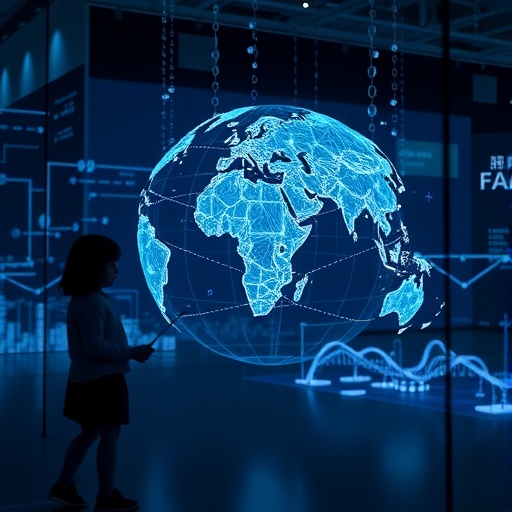
A KAIST research team has unveiled a next-generation “world model” designed to learn executable explanations rather than just anticipate what happens next. Announced July 15, the study proposes a learning paradigm called Learning-to-Theorize (L2T), alongside a neural architecture named Neural Theorizer (NEO) that turns observation into usable “rules of the world.”

Rather than treating environments as patterns to forecast, the approach targets the hidden causes behind transformations. Most world models optimize prediction accuracy for the next moment, but can struggle to answer a deeper question: why did the change occur? L2T reframes training around that causal understanding, using only “before” and “after” observations as supervision.

The inspiration comes from developmental learning: long before children learn language, they build internal theories about how objects move and change. Following this idea, L2T trains AI to infer the underlying principles that generate observed changes, producing mechanisms that can be executed, recombined, and applied to new situations.

NEO implements the framework by discovering reusable primitives—building blocks embedded in transformations—and composing them into programs. These inferred primitives correspond to elementary operations such as rotation, movement in specific directions, and coloring. Importantly, the system can assemble known components into novel sequences without having seen that exact combination during training.

For example, if trained on tasks involving individual operations, NEO can still explain and solve a composite instruction it never encountered—such as “move down, then color, then rotate”—by recombining learned primitives in the correct order. This supports compositional generalization: the ability to combine basic rules to handle new problems.

In comparative experiments, NEO shows stronger performance than approaches that memorize entangled patterns as single units. When unfamiliar combinations appear, entangled-pattern systems often fail because they do not separate “what happened” from “what rule produced it.”

The team describes the work as a step beyond prediction-centric models toward a “World Theory Model,” positioning it as a foundational technology for intelligent robots, autonomous agents, and even AI-assisted scientific discovery. Professor Sungjin Ahn highlighted this direction, emphasizing the promise of theory-like internal representations.

The research was selected for an oral presentation at the 43rd International Conference on Machine Learning (ICML 2026) in Seoul and was presented on July 9. It also received selection for the Best Paper Award at the Compositional Learning Workshop.

Co-first authors are Doojin Baek and Gyubin Lee. The work was supported by the National Research Foundation of Korea (NRF).

Subject of Research: Learning-to-Theorize (L2T) and Neural Theorizer (NEO) for executable world theories from observation
Article Title: Learning to Theorize the World from Observation
News Publication Date: 15-Jul-2026
Web References: http://dx.doi.org/10.48550/arXiv.2605.03413
References: 10.48550/arXiv.2605.03413
Image Credits: KAIST

Keywords

World models, Learning-to-Theorize (L2T), Neural Theorizer (NEO), compositional generalization, causal explanation, executable programs, developmental learning, reinforcement learning for theory inference, ICML 2026, AI theory of the world

Tags: AI capable of recombining learned primitivesAI learning from before-and-after observationsAI world modelingbuilding internal theories in AIcausal reasoning in AIdevelopmental learning in artificial intelligenceexplainable AI through causal understandingLearning-to-Theorize (L2T) paradigmneural architecture for observation-based learningNeural Theorizer (NEO) systemnext-generation AI for understanding transformationsreusable primitives in AI
Share26Tweet16
Previous Post

Study Explains Why DNA Damage from Smoking or UV Causes Cancer in Some

Next Post

Cutting forever-chemical pollution in farmlands at a fraction of costs

Related Posts

Knitted RFID Yarns Enable Smart Fabrics for Motion Sensing and Identification
Technology and Engineering

Knitted RFID Yarns Enable Smart Fabrics for Motion Sensing and Identification

July 27, 2026
Neural Network Models Free Recall, Revealing Multiple Memory Strategies
Technology and Engineering

Neural Network Models Free Recall, Revealing Multiple Memory Strategies

July 27, 2026
Insulator-Free Topological Photonic Multi-Lane Highways Pave the Way for Light
Medicine

Insulator-Free Topological Photonic Multi-Lane Highways Pave the Way for Light

July 27, 2026
Evaluating Industry Effects of Alternative Lactide Production for Polylactic Acid Manufacturing
Technology and Engineering

Evaluating Industry Effects of Alternative Lactide Production for Polylactic Acid Manufacturing

July 27, 2026
Hybrid system enables real-time freehand 3D panoramic photoacoustic angiography mapping
Technology and Engineering

Hybrid system enables real-time freehand 3D panoramic photoacoustic angiography mapping

July 27, 2026
High-Throughput AC Electrospinning Enables Nanofibrous Yarn Fabrication
Technology and Engineering

High-Throughput AC Electrospinning Enables Nanofibrous Yarn Fabrication

July 27, 2026
Next Post
Synthetic glabridin derivative restores salivary function by regulating metabolism and immunity in Sjögren’s

Synthetic glabridin derivative restores salivary function by regulating metabolism and immunity in Sjögren’s

  • Mothers who receive childcare support from maternal grandparents show more

    Mothers who receive childcare support from maternal grandparents show more parental warmth, finds NTU Singapore study

    27656 shares
    Share 11059 Tweet 6912
  • University of Seville Breaks 120-Year-Old Mystery, Revises a Key Einstein Concept

    1061 shares
    Share 424 Tweet 265
  • Bee body mass, pathogens and local climate influence heat tolerance

    682 shares
    Share 273 Tweet 171
  • Researchers record first-ever images and data of a shark experiencing a boat strike

    546 shares
    Share 218 Tweet 137
  • Groundbreaking Clinical Trial Reveals Lubiprostone Enhances Kidney Function

    531 shares
    Share 212 Tweet 133
Science

Embark on a thrilling journey of discovery with Scienmag.com—your ultimate source for cutting-edge breakthroughs. Immerse yourself in a world where curiosity knows no limits and tomorrow’s possibilities become today’s reality!

RECENT NEWS

  • Blood metabolomics reveals responses to deep brain stimulation in Parkinson’s disease
  • Knitted RFID Yarns Enable Smart Fabrics for Motion Sensing and Identification
  • Structural Factors, Not Reconstruction Spending, Drove Depopulation After Japan’s 2011 Disasters
  • Study Finds Falls Risk Perception Influenced by Multiple Factors in Elderly Hip Fracture Patients

Categories

  • Agriculture
  • Anthropology
  • Archaeology
  • Athmospheric
  • Biology
  • Biotechnology
  • Blog
  • Bussines
  • Cancer
  • Chemistry
  • Climate
  • Earth Science
  • Editorial Policy
  • Marine
  • Mathematics
  • Medicine
  • Pediatry
  • Policy
  • Psychology & Psychiatry
  • Science Education
  • Social Science
  • Space
  • Technology and Engineering

Subscribe to Blog via Email

Enter your email address to subscribe to this blog and receive notifications of new posts by email.

Join 5,146 other subscribers

© 2025 Scienmag - Science Magazine

Welcome Back!

Login to your account below

Forgotten Password?

Retrieve your password

Please enter your username or email address to reset your password.

Log In
No Result
View All Result
  • HOME
  • SCIENCE NEWS
  • CONTACT US

© 2025 Scienmag - Science Magazine

Discover more from Science

Subscribe now to keep reading and get access to the full archive.

Continue reading
