

Sunday, July 26, 2026
Science
No Result
View All Result
  • Login
  • HOME
  • SCIENCE NEWS
  • CONTACT US
  • HOME
  • SCIENCE NEWS
  • CONTACT US
No Result
View All Result
Scienmag
No Result
View All Result
Home Science News Social Science

Regression to the Mean Inflates Prediction Accuracy in Symptom Change Models

July 26, 2026
in Social Science
Reading Time: 2 mins read
0
Regression to the Mean Inflates Prediction Accuracy in Symptom Change Models

Regression to the Mean Inflates Prediction Accuracy in Symptom Change Models

65
SHARES
587
VIEWS
Share on FacebookShare on Twitter
ADVERTISEMENT

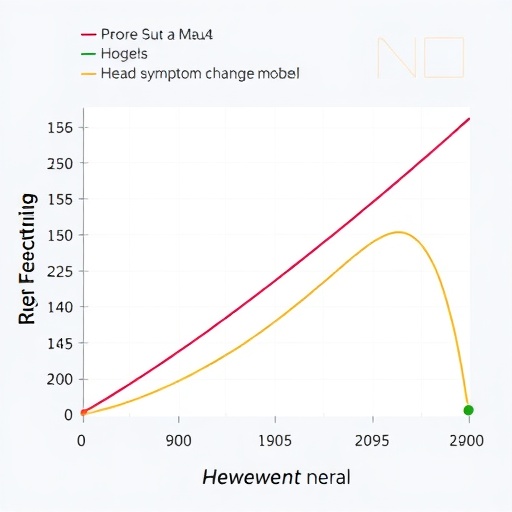
A new study in Nature Mental Health warns that a common promise of machine learning—precise predictions from noisy clinical data—may be overstated when psychological symptom scores fluctuate for reasons unrelated to treatment. Researchers led by Radua and colleagues examined how “regression to the mean” can artificially boost the apparent accuracy of models forecasting changes in symptoms over time.

In many mental health trials, individuals do not simply move in one direction; their scores naturally drift. Some participants begin an assessment with unusually high or low symptom levels, driven by temporary circumstances, measurement noise, or short-term variation. Even without any therapeutic effect, their later scores are statistically likely to move toward average values. This phenomenon is known as regression to the mean.

The team showed that prediction pipelines that learn patterns from past data can inadvertently capitalize on this statistical tendency. When a model sees extreme baseline symptoms, it may predict improvement (or worsening) largely because extreme observations are, by definition, followed by more average outcomes. In such cases, high performance metrics can reflect the mathematics of sampling rather than an understanding of underlying clinical mechanisms.

To evaluate this risk, the authors focused on how machine learning estimates symptom change. They analyzed whether “accuracy” remained robust when accounting for the tendency of repeated measurements to cluster near the population average. Their findings suggest that, without careful controls, models can look impressively accurate while delivering limited real-world clinical value.

The paper underscores that symptom prediction is especially vulnerable because psychiatric measures are often noisy and frequently subject to ceiling and floor effects, varying engagement, and context-dependent reporting. Together, these factors can amplify apparent predictability that stems from regression to the mean.

For clinicians and developers, the study offers a practical warning: evaluation protocols should distinguish true prognostic signals from statistical artifacts. That means testing against baselines that reflect expected drift, using appropriate validation strategies, and interpreting performance in relation to the stability and distribution of symptom measures.

The results also highlight a broader lesson for viral science news in clinical AI: “better accuracy” is not synonymous with “better decision-making.” Models can improve prediction scores while still failing to identify who will benefit meaningfully from an intervention.

Ultimately, this work calls for more rigorous benchmarking of mental health prediction models. By explicitly addressing regression to the mean, future systems can be assessed on whether they capture treatment-relevant dynamics rather than predictable statistical rebound.

Subject of Research: Machine learning prediction of symptom change in mental health; regression to the mean in clinical trial data.

Article Title: Regression to the mean inflates accuracy in machine learning prediction of symptom change.

Article References: Radua, J., Oliva, V., Vieta, E. et al. Regression to the mean inflates accuracy in machine learning prediction of symptom change. Nat. Mental Health (2026). https://doi.org/10.1038/s44220-026-00686-6

Image Credits: AI Generated

DOI: 10.1038/s44220-026-00686-6

Keywords: Regression to the mean; machine learning; symptom change prediction; mental health; clinical data; validation; statistical bias

Tags: artificial inflation in clinical predictionclinical data noisemachine learning pitfallsmental health modelingmental health trial analysisoverestimation of prediction accuracypredictive model evaluationRegression to the meanstatistical bias in predictionssymptom change predictionsymptom score baseline effectssymptom score fluctuations
Share26Tweet16
Previous Post

Redox Mediator Enables Bacterial Cooperation for Anammox Extracellular Electron Transfer

Next Post

Pinning Ångström-Scale Solid Ionic Channels for Rare-Earth Element Separation

Related Posts

Mathematical equations may reveal the secret to lasting love
Social Science

Mathematical equations may reveal the secret to lasting love

July 26, 2026
Spatial planning boosts sustainability by restructuring land use, new study finds
Social Science

Spatial planning boosts sustainability by restructuring land use, new study finds

July 26, 2026
Reciprocal cross-border learning uses education to build bridges during turbulence
Social Science

Reciprocal cross-border learning uses education to build bridges during turbulence

July 26, 2026
More Social Media Use Linked to Anxiety and Suicidal Thoughts in Young Adults
Social Science

More Social Media Use Linked to Anxiety and Suicidal Thoughts in Young Adults

July 26, 2026
Key Factors Driving Sustainable Stormwater Management Success
Social Science

Key Factors Driving Sustainable Stormwater Management Success

July 18, 2026
Disrupted cerebellar-thalamocortical connections across risk stages in first-episode psychosis
Social Science

Disrupted cerebellar-thalamocortical connections across risk stages in first-episode psychosis

July 17, 2026
Next Post
Pinning Ångström-Scale Solid Ionic Channels for Rare-Earth Element Separation

Pinning Ångström-Scale Solid Ionic Channels for Rare-Earth Element Separation

  • Mothers who receive childcare support from maternal grandparents show more

    Mothers who receive childcare support from maternal grandparents show more parental warmth, finds NTU Singapore study

    27656 shares
    Share 11059 Tweet 6912
  • University of Seville Breaks 120-Year-Old Mystery, Revises a Key Einstein Concept

    1061 shares
    Share 424 Tweet 265
  • Bee body mass, pathogens and local climate influence heat tolerance

    682 shares
    Share 273 Tweet 171
  • Researchers record first-ever images and data of a shark experiencing a boat strike

    546 shares
    Share 218 Tweet 137
  • Groundbreaking Clinical Trial Reveals Lubiprostone Enhances Kidney Function

    531 shares
    Share 212 Tweet 133
Science

Embark on a thrilling journey of discovery with Scienmag.com—your ultimate source for cutting-edge breakthroughs. Immerse yourself in a world where curiosity knows no limits and tomorrow’s possibilities become today’s reality!

RECENT NEWS

  • Kogakuin and IIT (ISM) Dhanbad launch research on multifunctional energy glass-ceramics
  • Discovering what shapes white blood cells may enable new cancer therapies
  • Can sparkling water be gentler on your teeth than other drinks?
  • Time-Restricted Eating May Help Preserve Cognitive Function in Older Adults

Categories

  • Agriculture
  • Anthropology
  • Archaeology
  • Athmospheric
  • Biology
  • Biotechnology
  • Blog
  • Bussines
  • Cancer
  • Chemistry
  • Climate
  • Earth Science
  • Editorial Policy
  • Marine
  • Mathematics
  • Medicine
  • Pediatry
  • Policy
  • Psychology & Psychiatry
  • Science Education
  • Social Science
  • Space
  • Technology and Engineering

Subscribe to Blog via Email

Enter your email address to subscribe to this blog and receive notifications of new posts by email.

Join 5,146 other subscribers

© 2025 Scienmag - Science Magazine

Welcome Back!

Login to your account below

Forgotten Password?

Retrieve your password

Please enter your username or email address to reset your password.

Log In
No Result
View All Result
  • HOME
  • SCIENCE NEWS
  • CONTACT US

© 2025 Scienmag - Science Magazine

Discover more from Science

Subscribe now to keep reading and get access to the full archive.

Continue reading
