

Thursday, July 16, 2026
Science
No Result
View All Result
  • Login
  • HOME
  • SCIENCE NEWS
  • CONTACT US
  • HOME
  • SCIENCE NEWS
  • CONTACT US
No Result
View All Result
Scienmag
No Result
View All Result
Home Science News Medicine

Metabolite Glues Enable Purine Sensing and Predict Chemotherapy Response

July 16, 2026
in Medicine, Technology and Engineering
Reading Time: 2 mins read
0
Metabolite Glues Enable Purine Sensing and Predict Chemotherapy Response

Metabolite Glues Enable Purine Sensing and Predict Chemotherapy Response

65
SHARES
587
VIEWS
Share on FacebookShare on Twitter
ADVERTISEMENT

Metabolite “Glues” Find a More Flexible Way to Attack Cancer Targets

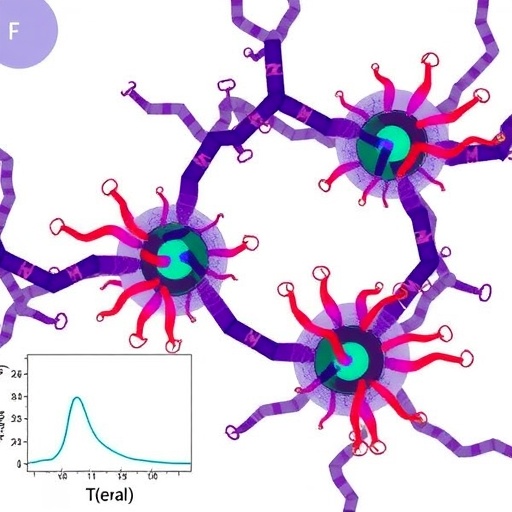
Researchers have uncovered why certain designed small molecules—called metabolite glues—can lock a regulatory protein into a harmful complex, and they used that insight to engineer stronger versions. The work centers on PPAT, a key metabolic enzyme that can be inhibited by purine-related compounds only when a second factor, the nucleotide-sensing protein NUDT5, is present.

The study begins with a surprising observation: when the team modified a thiopurine-derived glue, attaching a larger benzylthio group to 6-TIMP, the molecule did not lose potency. Instead, 6-benzylTIMP preserved similar PPAT inhibition in the presence of NUDT5 and became roughly fivefold more potent when NUDT5 was absent—suggesting the binding interface can adapt beyond what was expected.

To understand the molecular basis for this adaptability, the authors solved cryo-EM structures of PPAT bound to the improved glue 6-benzylTIMP in complex with NUDT5. The new structure revealed that 6-benzylTIMP binds in nearly the same orientation as the previously studied 6-meTIMP, but the larger benzyl group forces a different set of interactions in PPAT’s hydrophobic pocket.

That re-tuning of local contacts triggers a structural disturbance near a loop region containing residues I422–E436. In the benzylTIMP complex, this loop shifts away from the ligand, and high-resolution cryo-EM density in that area becomes less defined—consistent with increased conformational flexibility.

Armed with this structural map, the team tested a strategy for making even better thiopurine glues. They noticed that the methylthio group of 6-meTIMP occupies a PPAT hydrophobic pocket not similarly engaged by AMP, implying that adding hydrophobic character could strengthen inhibition.

Following that logic, the researchers synthesized 6-ethylthioinosine-5′-monophosphate (6-etTIMP). Compared with 6-meTIMP, 6-etTIMP showed about threefold stronger PPAT inhibition in a manner that depended on the metabolite-glue interface, indicating that subtle chemical changes can translate into measurable biochemical performance.

Finally, the study evaluated therapeutic relevance in human leukemia–like cells. 6-etTIMP reduced viability in a dose-dependent manner, with cytotoxicity diminished in cells lacking NUDT5 and in glue-deficient NUDT5 mutants. Importantly, 6-etTIMP produced a larger gap between wild-type and ΔNUDT5 cells than 6-meTIMP, reflected in a more favorable selectivity index.

Overall, the results show that PPAT–NUDT5 metabolite-glue pockets can undergo marked conformational changes to accommodate bulky ligands without collapsing glue function. The work points to a practical route for upgrading decades-old chemotherapeutic scaffolds by engineering their shape and hydrophobicity to exploit protein flexibility.


Subject of Research: Metabolite glues for purine sensing and chemotherapeutic response
Article Title: Metabolite glues as a means of purine sensing and chemotherapeutic response
Article References: Witus, S.R., Kober, M.M., Roh, H. et al. Nature (2026). https://doi.org/10.1038/s41586-026-10790-3
DOI: https://doi.org/10.1038/s41586-026-10790-3
Keywords: metabolite glues, PPAT, NUDT5, cryo-EM, thiopurine, purine sensing, chemotherapeutic response

Tags: cancer target modulationchemotherapy response predictioncryo-EM structural analysisdrug design and engineeringmetabolic enzyme inhibitionmetabolite gluesnucleotide-sensing proteinsNUDT5 protein functionPPAT enzyme regulationprotein-ligand interactionspurine sensingsmall molecule inhibitors
Share26Tweet16
Previous Post

Sweeteners Slow Growth of Key Gut Bacteria in Laboratory Studies

Next Post

Social Isolation Disrupts Prefrontal Excitatory–Inhibitory Balance, Impairs Novel Social Memory in Male Mice

Related Posts

Frog Protein Antidote Could Neutralize Lethal Red Tide Toxin First
Medicine

Frog Protein Antidote Could Neutralize Lethal Red Tide Toxin First

July 16, 2026
Low-PFAS Drinking Water: Is It a Major Source of Human PFAS Exposure?
Medicine

Low-PFAS Drinking Water: Is It a Major Source of Human PFAS Exposure?

July 16, 2026
Cortical hierarchy shows rarely categorical yet highly separable representations
Medicine

Cortical hierarchy shows rarely categorical yet highly separable representations

July 16, 2026
Sweeteners Slow Growth of Key Gut Bacteria in Laboratory Studies
Medicine

Sweeteners Slow Growth of Key Gut Bacteria in Laboratory Studies

July 16, 2026
Rising European Dust Pollution Tied to a Changing Climate
Medicine

Rising European Dust Pollution Tied to a Changing Climate

July 16, 2026
Blood Test Model Predicts Postoperative Lung Infections in Older Hip Fracture Patients
Medicine

Blood Test Model Predicts Postoperative Lung Infections in Older Hip Fracture Patients

July 16, 2026
Next Post
Social Isolation Disrupts Prefrontal Excitatory–Inhibitory Balance, Impairs Novel Social Memory in Male Mice

Social Isolation Disrupts Prefrontal Excitatory–Inhibitory Balance, Impairs Novel Social Memory in Male Mice

  • Mothers who receive childcare support from maternal grandparents show more

    Mothers who receive childcare support from maternal grandparents show more parental warmth, finds NTU Singapore study

    27656 shares
    Share 11059 Tweet 6912
  • University of Seville Breaks 120-Year-Old Mystery, Revises a Key Einstein Concept

    1061 shares
    Share 424 Tweet 265
  • Bee body mass, pathogens and local climate influence heat tolerance

    682 shares
    Share 273 Tweet 171
  • Researchers record first-ever images and data of a shark experiencing a boat strike

    546 shares
    Share 218 Tweet 137
  • Groundbreaking Clinical Trial Reveals Lubiprostone Enhances Kidney Function

    531 shares
    Share 212 Tweet 133
Science

Embark on a thrilling journey of discovery with Scienmag.com—your ultimate source for cutting-edge breakthroughs. Immerse yourself in a world where curiosity knows no limits and tomorrow’s possibilities become today’s reality!

RECENT NEWS

  • Frog Protein Shows Promise as First Antidote to Fatal Red Tide Toxin
  • Frog Protein Antidote Could Neutralize Lethal Red Tide Toxin First
  • Location key to future energy systems powering reliable grids
  • Endometriosis Shows Symptom Patterns Extending Far Beyond Pain

Categories

  • Agriculture
  • Anthropology
  • Archaeology
  • Athmospheric
  • Biology
  • Biotechnology
  • Blog
  • Bussines
  • Cancer
  • Chemistry
  • Climate
  • Earth Science
  • Editorial Policy
  • Marine
  • Mathematics
  • Medicine
  • Pediatry
  • Policy
  • Psychology & Psychiatry
  • Science Education
  • Social Science
  • Space
  • Technology and Engineering

Subscribe to Blog via Email

Enter your email address to subscribe to this blog and receive notifications of new posts by email.

Join 5,146 other subscribers

© 2025 Scienmag - Science Magazine

Welcome Back!

Login to your account below

Forgotten Password?

Retrieve your password

Please enter your username or email address to reset your password.

Log In
No Result
View All Result
  • HOME
  • SCIENCE NEWS
  • CONTACT US

© 2025 Scienmag - Science Magazine

Discover more from Science

Subscribe now to keep reading and get access to the full archive.

Continue reading
