

Wednesday, July 15, 2026
Science
No Result
View All Result
  • Login
  • HOME
  • SCIENCE NEWS
  • CONTACT US
  • HOME
  • SCIENCE NEWS
  • CONTACT US
No Result
View All Result
Scienmag
No Result
View All Result
Home Science News Medicine

Virtual Tumor Model Predicts Response to Liver Cancer Immunotherapy

July 15, 2026
in Medicine
Reading Time: 2 mins read
0
Virtual Tumor Model Predicts Response to Liver Cancer Immunotherapy

Virtual Tumor Model Predicts Response to Liver Cancer Immunotherapy

65
SHARES
587
VIEWS
Share on FacebookShare on Twitter
ADVERTISEMENT

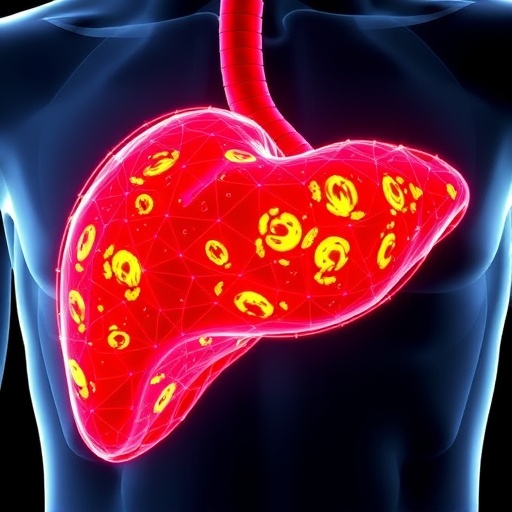
A research team at Johns Hopkins has built a computational framework to forecast which people with hepatocellular carcinoma (HCC) may benefit from a combination of immunotherapy and a targeted drug. The approach merges quantitative systems pharmacology with a spatial agent-based model, allowing scientists to simulate not just tumor size, but how tumor cells interact with surrounding tissues over time.

In the study, the platform was expanded to include fibroblasts, cells previously linked to immunotherapy resistance in liver cancer. Using a machine-learning calibration workflow, the model was tuned to data from real clinical trials, producing “virtual patients” whose predicted outcomes can be compared with observed responses.

The key advance is spatial modeling. By tracking where individual cell populations reside, the researchers map the tumor microenvironment architecture that governs treatment sensitivity. This includes the distribution and organization of fibroblasts, immune T cells, and cancer cells, revealing how physical and biochemical barriers can shape drug effectiveness.

The team tested the system against therapy scenarios involving cabozantinib, a targeted therapy that blocks tumor growth signaling, and nivolumab, an immunotherapy. Simulated response rates aligned closely with those reported in clinical trials, suggesting the virtual cohort behaves like real patients.

To validate biological realism, the researchers compared predicted tumor architectures with post-treatment tissue patterns. They also contrasted the microenvironments of responders and non-responders, identifying mechanisms tied to therapeutic failure.

A striking finding emerged in predicted non-responders: fibroblasts can remodel the microenvironment into an immunosuppressive structure. In simulations, fibroblasts assemble into a physical “wall” that prevents T cells from reaching tumor regions, even when immune cells are nearby.

Because architectural features are visible before therapy begins, the model could help stratify patients—flagging who is likely to respond and who might need alternative strategies. The framework is intended for future clinical validation, rather than immediate use in treatment decisions.

The work was supported by multiple funding sources including the National Institutes of Health and other agencies. Results were published online July 14 in the Proceedings of the National Academy of Sciences.

Subject of Research: Predicting immunotherapy benefit in hepatocellular carcinoma using spatial computational modeling
Article Title: (Not provided in the provided content)
News Publication Date: July 14
Web References: https://www.pnas.org/doi/10.1073/pnas.2525799123
References: Proceedings of the National Academy of Sciences (PNAS), published online July 14
Image Credits: Atul Deshpande, Ph.D., and colleagues

Keywords: hepatocellular carcinoma, immunotherapy, cabozantinib, nivolumab, quantitative systems pharmacology, agent-based modeling, tumor microenvironment, fibroblasts, predictive modeling, virtual patients

Tags: combination therapy simulation with cabozantinib and nivolumabcomputational prediction of immunotherapy responsefibroblast role in liver cancer treatment resistanceimmune cell spatial distribution in liver tumorsmachine learning calibration in cancer modelsspatial agent-based models in oncologysystems pharmacology for hepatocellular carcinomatumor microenvironment mappingtumor-immune interaction modelingvalidation of virtual cancer models with clinical trial datavirtual patient cohorts for personalized cancer therapyvirtual tumor modeling for liver cancer
Share26Tweet16
Previous Post

Deforestation declines show corporate pledges aren’t the driving force

Next Post

Low Carbon Dioxide Boosts Microbes to Produce More Biodegradable Plastic

Related Posts

Sex and multimorbidity link to higher dementia readmissions in England study
Medicine

Sex and multimorbidity link to higher dementia readmissions in England study

July 15, 2026
Food System Transformation Could Reshape Global Agriculture, Experts Say
Medicine

Food System Transformation Could Reshape Global Agriculture, Experts Say

July 15, 2026
Butyrate epigenetically sustains intestinal epithelial–T cell signaling for tolerance
Medicine

Butyrate epigenetically sustains intestinal epithelial–T cell signaling for tolerance

July 15, 2026
Correction: NLRP3 pyroptosis worsens mouse cardiac hypertrophy; irisin is protective
Medicine

Correction: NLRP3 pyroptosis worsens mouse cardiac hypertrophy; irisin is protective

July 15, 2026
Laryngoscopy attempts during transition linked to severe intraventricular hemorrhage in extreme preterms
Medicine

Laryngoscopy attempts during transition linked to severe intraventricular hemorrhage in extreme preterms

July 15, 2026
Older Adults’ Hip Abduction and Ankle Dorsiflexion Differences After Falls
Medicine

Older Adults’ Hip Abduction and Ankle Dorsiflexion Differences After Falls

July 15, 2026
Next Post
Low Carbon Dioxide Boosts Microbes to Produce More Biodegradable Plastic

Low Carbon Dioxide Boosts Microbes to Produce More Biodegradable Plastic

  • Mothers who receive childcare support from maternal grandparents show more

    Mothers who receive childcare support from maternal grandparents show more parental warmth, finds NTU Singapore study

    27656 shares
    Share 11059 Tweet 6912
  • University of Seville Breaks 120-Year-Old Mystery, Revises a Key Einstein Concept

    1061 shares
    Share 424 Tweet 265
  • Bee body mass, pathogens and local climate influence heat tolerance

    682 shares
    Share 273 Tweet 171
  • Researchers record first-ever images and data of a shark experiencing a boat strike

    546 shares
    Share 218 Tweet 137
  • Groundbreaking Clinical Trial Reveals Lubiprostone Enhances Kidney Function

    531 shares
    Share 212 Tweet 133
Science

Embark on a thrilling journey of discovery with Scienmag.com—your ultimate source for cutting-edge breakthroughs. Immerse yourself in a world where curiosity knows no limits and tomorrow’s possibilities become today’s reality!

RECENT NEWS

  • Chemistry from Alien World Detected in Meteorite That Hit New Jersey Home
  • Sex and multimorbidity link to higher dementia readmissions in England study
  • Roadless Rule Safeguards Drinking Water for 25 Million Americans, Study Finds
  • Precolonial Brazilian Cerrado Villages Grew Maize-Based Polyculture for Centuries

Categories

  • Agriculture
  • Anthropology
  • Archaeology
  • Athmospheric
  • Biology
  • Biotechnology
  • Blog
  • Bussines
  • Cancer
  • Chemistry
  • Climate
  • Earth Science
  • Editorial Policy
  • Marine
  • Mathematics
  • Medicine
  • Pediatry
  • Policy
  • Psychology & Psychiatry
  • Science Education
  • Social Science
  • Space
  • Technology and Engineering

Subscribe to Blog via Email

Enter your email address to subscribe to this blog and receive notifications of new posts by email.

Join 5,146 other subscribers

© 2025 Scienmag - Science Magazine

Welcome Back!

Login to your account below

Forgotten Password?

Retrieve your password

Please enter your username or email address to reset your password.

Log In
No Result
View All Result
  • HOME
  • SCIENCE NEWS
  • CONTACT US

© 2025 Scienmag - Science Magazine

Discover more from Science

Subscribe now to keep reading and get access to the full archive.

Continue reading
