

Wednesday, July 15, 2026
Science
No Result
View All Result
  • Login
  • HOME
  • SCIENCE NEWS
  • CONTACT US
  • HOME
  • SCIENCE NEWS
  • CONTACT US
No Result
View All Result
Scienmag
No Result
View All Result
Home Science News Psychology & Psychiatry

Resting-State Brain Connectivity Changes Linked to Affective Symptoms in Youth

July 15, 2026
in Psychology & Psychiatry
Reading Time: 2 mins read
0
Resting-State Brain Connectivity Changes Linked to Affective Symptoms in Youth

Resting-State Brain Connectivity Changes Linked to Affective Symptoms in Youth

65
SHARES
587
VIEWS
Share on FacebookShare on Twitter
ADVERTISEMENT

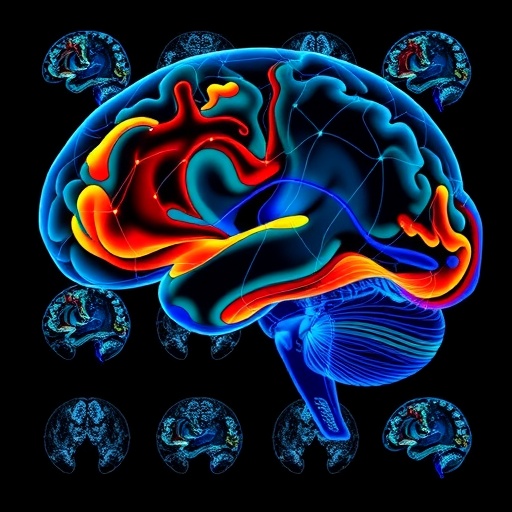
Adolescence and young adulthood are periods when emotional symptoms can emerge or intensify—and a new population-based study suggests the brain’s “resting” communication lines may shift alongside affective distress. Published in Translational Psychiatry, the research reports that patterns of resting-state functional connectivity (rsFC)—how brain regions co-activate when people are not performing a task—change in relation to affective symptoms.

The team focused on resting-state networks rather than momentary responses to stimuli. Using functional MRI, they analyzed how connectivity within and across large-scale brain systems varied across participants and then compared these patterns with measures of affective symptoms. This approach leverages the fact that the brain maintains structured activity even in the absence of explicit tasks.

A key idea is that rsFC provides a window into system-level organization. Instead of isolating single “mood centers,” the study treats affective symptoms as emerging from altered coordination among networks that support emotion regulation, self-referential processing, and cognitive control. In this framework, symptoms may reflect changes in the brain’s baseline wiring dynamics.

Importantly, the study draws on a population-based sample of adolescents and young adults, strengthening the relevance of the findings beyond clinical cohorts. Such samples can capture variation in symptom severity and comorbid tendencies that are often missed when researchers recruit only from psychiatric services.

Across analyses, connectivity differences were linked to affective symptom burden. While the paper details specific brain connections and statistical associations, the overarching message is consistent: as affective symptoms change, so does the architecture of coordinated resting activity.

The authors also emphasize that rsFC alterations may serve as biomarkers—signals that can potentially support early identification or track symptom-related brain changes over time. Because resting-state data can be collected without complex task performance, this strategy may be especially feasible in developmental groups.

A viral takeaway for science news readers is that mood-related biology might be detectable even when the mind is “at rest.” If further validated, rsFC measures could complement symptom assessments, helping researchers understand why some individuals experience rising emotional difficulties during critical developmental windows.

Still, the study is observational, meaning connectivity patterns are associated with symptoms rather than proving direct causality. Future work will need longitudinal designs to determine whether connectivity shifts precede symptom changes, and whether interventions can normalize these networks.

DOI: 10.1038/s41398-026-04269-y

Subject of Research: Resting-state functional connectivity and affective symptoms in adolescents and young adults
Article Title: Changes in resting-state functional connectivity linked to affective symptoms: insights from a population-based study of adolescents and young adults.
Article References: Henneberg, P.M., Beesdo-Baum, K., Marxen, M. et al. Transl Psychiatry 16, 362 (2026). https://doi.org/10.1038/s41398-026-04269-y
Image Credits: AI Generated
DOI: 10.1038/s41398-026-04269-y

Tags: adolescent affective symptomsaffective distress neurobiologybrain system organization in mental healthcognitive control brain networksemotion regulation neural circuitsfunctional MRI in youthlarge-scale brain network analysispopulation-based neuroimaging studiesresting-state brain connectivityresting-state functional connectivity changesself-referential processing in adolescenceyouth mental health and brain connectivity
Share26Tweet16
Previous Post

Daydreaming Enables AI to Recall What Matters Most

Next Post

Dielectric metasurface enables spin-multiplexed point spread functions for imaging

Related Posts

Sleep spindles linked to cognitive performance in euthymic bipolar disorder
Psychology & Psychiatry

Sleep spindles linked to cognitive performance in euthymic bipolar disorder

July 15, 2026
EEG Machine Learning Predicts Comorbid Anxiety in Depressed Adolescents
Psychology & Psychiatry

EEG Machine Learning Predicts Comorbid Anxiety in Depressed Adolescents

July 15, 2026
Brain Morphometry Links Behavioral Inhibition Activation System to OCD Treatment Outcomes
Psychology & Psychiatry

Brain Morphometry Links Behavioral Inhibition Activation System to OCD Treatment Outcomes

July 14, 2026
Depression Linked to Hippocampal Subfield Volume Changes in Older Adults
Psychology & Psychiatry

Depression Linked to Hippocampal Subfield Volume Changes in Older Adults

July 14, 2026
DRD1-MSNs Hyperactivity in Striatum Causes Repetitive Behaviors in Cry1Δ11 Mutation
Psychology & Psychiatry

DRD1-MSNs Hyperactivity in Striatum Causes Repetitive Behaviors in Cry1Δ11 Mutation

July 14, 2026
Widespread White Matter Abnormalities Found in First-Episode Schizophrenia Patients
Psychology & Psychiatry

Widespread White Matter Abnormalities Found in First-Episode Schizophrenia Patients

July 13, 2026
Next Post
Dielectric metasurface enables spin-multiplexed point spread functions for imaging

Dielectric metasurface enables spin-multiplexed point spread functions for imaging

  • Mothers who receive childcare support from maternal grandparents show more

    Mothers who receive childcare support from maternal grandparents show more parental warmth, finds NTU Singapore study

    27656 shares
    Share 11059 Tweet 6912
  • University of Seville Breaks 120-Year-Old Mystery, Revises a Key Einstein Concept

    1061 shares
    Share 424 Tweet 265
  • Bee body mass, pathogens and local climate influence heat tolerance

    682 shares
    Share 273 Tweet 171
  • Researchers record first-ever images and data of a shark experiencing a boat strike

    546 shares
    Share 218 Tweet 137
  • Groundbreaking Clinical Trial Reveals Lubiprostone Enhances Kidney Function

    531 shares
    Share 212 Tweet 133
Science

Embark on a thrilling journey of discovery with Scienmag.com—your ultimate source for cutting-edge breakthroughs. Immerse yourself in a world where curiosity knows no limits and tomorrow’s possibilities become today’s reality!

RECENT NEWS

  • Mapping Tumor Microenvironment Immune Pathways in Immunotherapy-Treated Melanoma
  • Early maturation of antimicrobial peptide defenses enables host–pathogen coexistence
  • Brain-Computer Interface Training Could Boost Error Detection Abilities
  • Dielectric metasurface enables spin-multiplexed point spread functions for imaging

Categories

  • Agriculture
  • Anthropology
  • Archaeology
  • Athmospheric
  • Biology
  • Biotechnology
  • Blog
  • Bussines
  • Cancer
  • Chemistry
  • Climate
  • Earth Science
  • Editorial Policy
  • Marine
  • Mathematics
  • Medicine
  • Pediatry
  • Policy
  • Psychology & Psychiatry
  • Science Education
  • Social Science
  • Space
  • Technology and Engineering

Subscribe to Blog via Email

Enter your email address to subscribe to this blog and receive notifications of new posts by email.

Join 5,146 other subscribers

© 2025 Scienmag - Science Magazine

Welcome Back!

Login to your account below

Forgotten Password?

Retrieve your password

Please enter your username or email address to reset your password.

Log In
No Result
View All Result
  • HOME
  • SCIENCE NEWS
  • CONTACT US

© 2025 Scienmag - Science Magazine

Discover more from Science

Subscribe now to keep reading and get access to the full archive.

Continue reading
