

Wednesday, July 15, 2026
Science
No Result
View All Result
  • Login
  • HOME
  • SCIENCE NEWS
  • CONTACT US
  • HOME
  • SCIENCE NEWS
  • CONTACT US
No Result
View All Result
Scienmag
No Result
View All Result
Home Science News Technology and Engineering

Microplastics Found 2,000 Meters Deep in Hydrothermal Vent Animals

July 15, 2026
in Technology and Engineering
Reading Time: 2 mins read
0
Microplastics Found 2,000 Meters Deep in Hydrothermal Vent Animals

Microplastics Found 2,000 Meters Deep in Hydrothermal Vent Animals

65
SHARES
587
VIEWS
Share on FacebookShare on Twitter
ADVERTISEMENT

Plastic pollution is increasingly recognized as a planet-wide stressor rather than a problem confined to coasts. Researchers estimate that roughly 11 million tons of plastic enter the oceans every year, where large debris gradually fragments into microplastics. These microscopic particles can be dispersed by ocean currents across vast distances, raising concerns about bioaccumulation and eventual transfer through marine food webs.

Most previous work has focused on surface waters and coastal regions. Yet nearly 90% of Earth’s ocean volume lies in the deep sea, a realm that is largely inaccessible for routine monitoring. In that environment, hydrothermal vent ecosystems are especially compelling: they host complex communities driven by chemical energy instead of sunlight, while remaining among the most remote habitats on the planet.

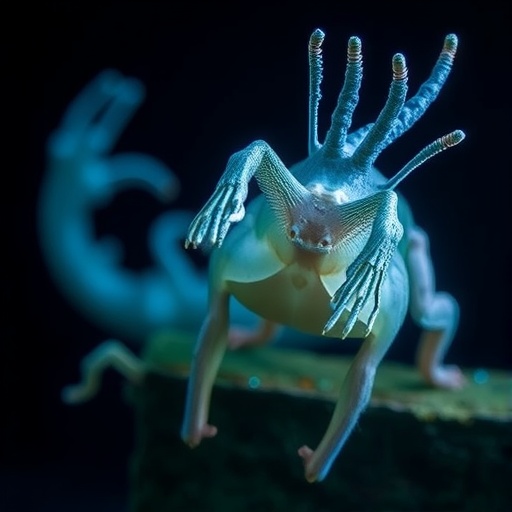
In a comparative study, scientists led by Dr. Se-Joo Kim and Dr. Jinyoung Jeong at the Korea Research Institute of Bioscience and Biotechnology (KRIBB), together with colleagues from the Korea Institute of Ocean Science and Technology (KIOST), investigated how microplastics accumulate in vent-dwelling animals from two different ocean basins. Deep-sea snails and mussels were collected from vents over 2,000 meters deep in the North Fiji Basin (southwestern Pacific Ocean) and the Central Indian Ridge (Indian Ocean).

Microplastics were detected in 92% of the analyzed animals, with an average of 3.42 particles per individual. Among the polymer types observed, polystyrene—common in consumer and packaging materials—was the most abundant, indicating that widely used plastics are reaching even chemically extreme deep habitats.

The team found that biology strongly shapes microplastic distribution inside organisms. In grazing snails that feed on microbial mats, microplastics concentrated mainly in digestive organs. In contrast, filter-feeding mussels showed a more uniform spread across tissues, consistent with different ingestion pathways.

Regional conditions also mattered. After accounting for body weight, microplastic concentrations in the Indian Ocean were up to 14.7 times higher than in the southwestern Pacific. The authors propose that differences in riverine plastic inputs, human activity, and large-scale circulation patterns likely contribute to this disparity.

Overall, the results provide direct evidence that pollution generated at the ocean surface can be transported thousands of meters downward. The findings imply that future deep-sea assessments will need to consider both hydrodynamic transport and species-specific feeding strategies to accurately predict contamination risk.

The study, published online June 3 in Water Research, supports the development of deep-sea monitoring frameworks, informs environmental impact assessments for deep-sea mineral resource development, and strengthens conservation priorities for vent ecosystems.

Subject of Research: Microplastic bioaccumulation in deep-sea hydrothermal vent fauna
Article Title: Oceanic determinants of microplastic bioaccumulation in fauna of deep-sea hydrothermal vents: Comparative study of the southwestern Pacific and Indian Oceans
News Publication Date: 3-Jun-2026
Web References: http://dx.doi.org/10.1016/j.watres.2026.126245
References: Water Research (online publication June 3, 2026); DOI: 10.1016/j.watres.2026.126245
Image Credits: Korea Research Institute of Bioscience and Biotechnology (KRIBB)

Keywords

microplastics; hydrothermal vents; bioaccumulation; deep sea; polystyrene; feeding strategy; Indian Ocean; southwestern Pacific

Tags: chemical energy-driven hydrothermal vent ecosystemsdeep-sea microplastic contaminationenvironmental implications of deep-seaglobal distribution of microplastics in oceansimpact of microplastics on vent-dwelling speciesmicroplastic bioaccumulation in deep-sea ecosystemsmicroplastics detection at 2000 meters depthMicroplastics in deep-sea hydrothermal vent animalsocean plastic pollutionplastic pollution in remote ocean habitatsresearch on microplastics in Indian Ocean and Pacific Ocean
Share26Tweet16
Previous Post

Many Women Still Confused by Perimenopause

Next Post

Integrating Polygenic Scores with Registry Data to Improve Colorectal Cancer Screening

Related Posts

Dielectric metasurface enables spin-multiplexed point spread functions for imaging
Technology and Engineering

Dielectric metasurface enables spin-multiplexed point spread functions for imaging

July 15, 2026
Daydreaming Enables AI to Recall What Matters Most
Technology and Engineering

Daydreaming Enables AI to Recall What Matters Most

July 15, 2026
New insights may improve the quality of 3D-printed aluminum components
Technology and Engineering

New insights may improve the quality of 3D-printed aluminum components

July 15, 2026
KAUST Researchers Create Wearable Tech to Monitor Medicines in Real Time
Technology and Engineering

KAUST Researchers Create Wearable Tech to Monitor Medicines in Real Time

July 15, 2026
Drones and Ensemble AI Uncover Hidden Patterns in Urban Water Pollution
Technology and Engineering

Drones and Ensemble AI Uncover Hidden Patterns in Urban Water Pollution

July 15, 2026
Major NSF grant boosts quantum technology innovation in Connecticut
Technology and Engineering

Major NSF grant boosts quantum technology innovation in Connecticut

July 15, 2026
Next Post
Integrating Polygenic Scores with Registry Data to Improve Colorectal Cancer Screening

Integrating Polygenic Scores with Registry Data to Improve Colorectal Cancer Screening

  • Mothers who receive childcare support from maternal grandparents show more

    Mothers who receive childcare support from maternal grandparents show more parental warmth, finds NTU Singapore study

    27656 shares
    Share 11059 Tweet 6912
  • University of Seville Breaks 120-Year-Old Mystery, Revises a Key Einstein Concept

    1061 shares
    Share 424 Tweet 265
  • Bee body mass, pathogens and local climate influence heat tolerance

    682 shares
    Share 273 Tweet 171
  • Researchers record first-ever images and data of a shark experiencing a boat strike

    546 shares
    Share 218 Tweet 137
  • Groundbreaking Clinical Trial Reveals Lubiprostone Enhances Kidney Function

    531 shares
    Share 212 Tweet 133
Science

Embark on a thrilling journey of discovery with Scienmag.com—your ultimate source for cutting-edge breakthroughs. Immerse yourself in a world where curiosity knows no limits and tomorrow’s possibilities become today’s reality!

RECENT NEWS

  • Dielectric metasurface enables spin-multiplexed point spread functions for imaging
  • Resting-State Brain Connectivity Changes Linked to Affective Symptoms in Youth
  • Daydreaming Enables AI to Recall What Matters Most
  • Elephants Use Ground Vibrations for Communication via Specialized Middle Ear Anatomy

Categories

  • Agriculture
  • Anthropology
  • Archaeology
  • Athmospheric
  • Biology
  • Biotechnology
  • Blog
  • Bussines
  • Cancer
  • Chemistry
  • Climate
  • Earth Science
  • Editorial Policy
  • Marine
  • Mathematics
  • Medicine
  • Pediatry
  • Policy
  • Psychology & Psychiatry
  • Science Education
  • Social Science
  • Space
  • Technology and Engineering

Subscribe to Blog via Email

Enter your email address to subscribe to this blog and receive notifications of new posts by email.

Join 5,146 other subscribers

© 2025 Scienmag - Science Magazine

Welcome Back!

Login to your account below

Forgotten Password?

Retrieve your password

Please enter your username or email address to reset your password.

Log In
No Result
View All Result
  • HOME
  • SCIENCE NEWS
  • CONTACT US

© 2025 Scienmag - Science Magazine

Discover more from Science

Subscribe now to keep reading and get access to the full archive.

Continue reading
