


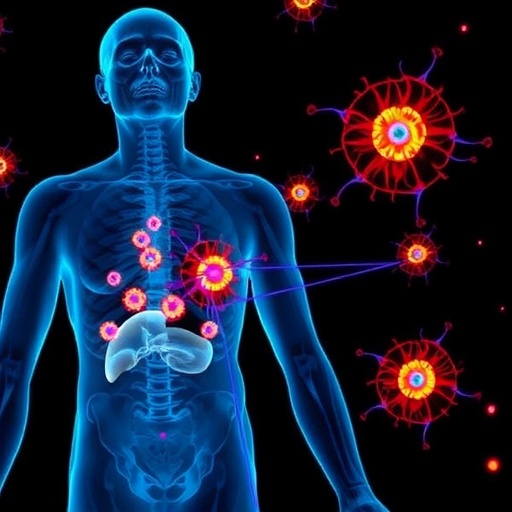
Why the immune system wanes with age remains one of biology’s most persistent puzzles. A new USC study, published in BMC Biology, narrows the question to a single, widely distributed immune workhorse: macrophages. These cells patrol nearly every tissue, clearing debris, coordinating defenses, and tuning inflammation. Yet their function does not stay constant across the lifespan.
To uncover what changes during aging, the researchers performed a cross-tissue meta-analysis using macrophage datasets from young and older mice. Instead of treating aging as a one-organ problem, they compared gene-expression profiles from multiple locations, including brain, lungs, liver, and other sites. This design allowed them to separate “shared” aging programs from “niche-specific” adaptations.
The analysis revealed a common molecular shift across many macrophage populations. With age, macrophages increasingly prioritize stress- and damage-response transcriptional programs, consistent with a tissue environment accumulating cellular injury over time. At the same time, the cells show signs of losing aspects of gene regulation linked to maintaining healthy tissue structure and local cell–cell communication.
However, aging did not unfold identically everywhere. Brain macrophages, for example, displayed distinct age-associated expression changes compared with lung macrophages, underscoring that local physiology and resident microenvironments sculpt immune aging. In other words, macrophage senescence is not purely systemic—it is also anatomical.
The study also reported sex-linked differences in how macrophage aging manifests across tissues. Such effects suggest that future interventions may need to account for both tissue context and biological sex, rather than relying on a universal immune rejuvenation strategy.
Crucially, the investigators identified a set of genes and molecular pathways that changed consistently across diverse macrophage types. Because these pathways recur in multiple tissues, they may represent core determinants of immune aging and attractive targets for therapeutic development.
The work gains additional power from its data strategy. Instead of generating new experiments from scratch, it leveraged publicly available sequencing datasets deposited after the original studies were published, effectively reusing specimens of scientific history to extract new comparative insight.
Lead author Ella Schwab highlighted that analyzing dozens of pre-existing studies enabled comparisons across tissues and sexes that no single experiment could achieve at scale. The resulting map—one of the most comprehensive yet—aims to serve as a reference for researchers designing strategies to preserve immune competence later in life.
By linking shared transcriptional signatures with tissue- and sex-specific variation, the study reframes immune aging as a multi-layered process. That perspective could sharpen how scientists measure dysfunction and how they test interventions aimed at healthier aging.
Cite Scienmag News
Beatrice Stafford. (July 15, 2026). Scientists Reveal How Macrophages Age Differently Across the Body. Scienmag. https://scienmag.com/scientists-reveal-how-macrophages-age-differently-across-the-body/
Beatrice Stafford. "Scientists Reveal How Macrophages Age Differently Across the Body." Scienmag, 15 July 2026, https://scienmag.com/scientists-reveal-how-macrophages-age-differently-across-the-body/. Accessed 3 September 2026.
Beatrice Stafford. "Scientists Reveal How Macrophages Age Differently Across the Body." Scienmag. July 15, 2026. https://scienmag.com/scientists-reveal-how-macrophages-age-differently-across-the-body/


