

Tuesday, July 14, 2026
Science
No Result
View All Result
  • Login
  • HOME
  • SCIENCE NEWS
  • CONTACT US
  • HOME
  • SCIENCE NEWS
  • CONTACT US
No Result
View All Result
Scienmag
No Result
View All Result
Home Science News Cancer

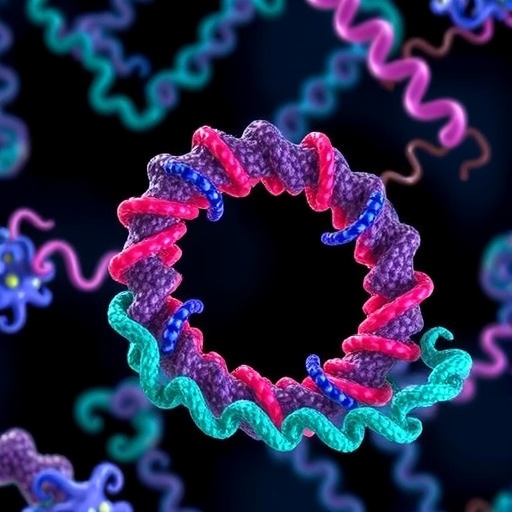
SPOP Double-Donut Structure Reveals Cause of Cancer Mutations

July 14, 2026
in Cancer
Reading Time: 2 mins read
0
SPOP Double-Donut Structure Reveals Cause of Cancer Mutations

SPOP Double-Donut Structure Reveals Cause of Cancer Mutations

65
SHARES
587
VIEWS
Share on FacebookShare on Twitter
ADVERTISEMENT

A newly published study in Molecular Cell unravels the intricate structural dynamics of the protein SPOP, shedding light on how cancer-associated mutations disrupt its delicate functional balance. Researchers at St. Jude Children’s Research Hospital reveal that SPOP exists in a finely tuned equilibrium between an active filamentous state and an inactive “double-donut” assembly—a discovery that resolves previous mysteries behind unexplained mutations impacting cancer progression.

SPOP acts as a substrate receptor within a larger E3 ubiquitin ligase complex, tasked with regulating cellular protein levels. This regulation controls critical gene regulators such as BRD2, BRD3, and BRD4, whose dysregulation is implicated in oncogenesis. While certain cancer-linked mutations impair substrate binding and are well understood, others located outside the substrate interaction sites had remained enigmatic—until now.

Using cryo-electron microscopy, the team characterized two distinct quaternary structural states of SPOP. The inactive form assembles into a large, ring-like double-donut structure composed of 22 to 30 SPOP molecules stacked as two rings. This conformation essentially “switches off” SPOP’s function. In contrast, the active conformation features linear filaments, a unique property among substrate receptors in ubiquitin ligase complexes, which facilitates the binding and turnover of target proteins.

The study further demonstrated that the cellular equilibrium between these states is governed by Cullin-3, a scaffolding protein that promotes filament formation and activates SPOP. Crucially, cancer mutations either shift this balance toward the inactive double-donut state—resulting in loss of function—or toward the active filaments, causing gain of function. This aberrant switching allows mutated SPOP to evade normal regulatory mechanisms that govern its activity.

Intriguingly, the inactive double-donut concentrates within nuclear speckles—membraneless compartments associated with RNA processing—while gain-of-function mutants disperse outside these domains. This spatial distribution highlights how structural shifts not only affect SPOP activity but also its subnuclear localization, further influencing cellular behavior in cancer.

These insights usher in a new framework for targeting SPOP in cancer therapy. Understanding the signaling pathways that regulate the transition between inactive and active states could permit pharmaceutical modulation of SPOP’s function. By manipulating this structural equilibrium, it may become feasible to restore proper protein homeostasis in cancer cells.

The discovery presented took several years and substantial access to advanced cryo-EM facilities, reflecting the complexity of SPOP’s higher-order assemblies. Despite these advances, some prevalent cancer mutations remain unexplained, signaling that SPOP’s role in oncogenesis is even more multifaceted than currently appreciated.

This pioneering research not only resolves longstanding structural puzzles but also underscores the sophisticated regulation of ubiquitin ligase receptors. As cancer mutations commandeer SPOP’s molecular switching mechanism, new therapeutic strategies targeting these transitions represent a promising frontier in combating malignancies.


Subject of Research: Cells
Article Title: Large-scale quaternary structural transitions underlie gain of function of SPOP cancer mutations
News Publication Date: 13-Jul-2026
Web References: http://dx.doi.org/10.1016/j.molcel.2026.06.030
Image Credits: Courtesy of St. Jude Children’s Research Hospital
Keywords: Ligases, Enzymes, Cancer mutations, Protein structure, Ubiquitin ligase

Tags: cancer-related SPOP mutationscryo-electron microscopy structural analysisdouble-donut SPOP protein assemblyelucidation of Simpact of SPOP mutations on substrate bindingimplications of SPOP mutations outside substrate sitesmechanism of SPOP conformational switchregulation of ubiquitin ligase activity in cancerrole of SPOP filamentous state in protein degradationSPOP's function in regulating BRD2/3/4 in cancerstructural dynamics of SPOP in tumorigenesis
Share26Tweet16
Previous Post

Scientists reverse “silly sprinklers” to solve decades-old physics mystery

Next Post

KAIST Advances Development of Microbial Cell Factories

Related Posts

Cellular Recycling Protein Crucial for Gut Protection and Health
Cancer

Cellular Recycling Protein Crucial for Gut Protection and Health

July 14, 2026
AI Advances Revolutionize Oncology Drug Discovery from Targets to Therapies
Cancer

AI Advances Revolutionize Oncology Drug Discovery from Targets to Therapies

July 14, 2026
KRAS Drugs Offer New Hope for Rare Appendix Cancer Treatment
Cancer

KRAS Drugs Offer New Hope for Rare Appendix Cancer Treatment

July 14, 2026
IU Study Links Obesity to Leukemia, Weight-Loss Drugs Could Halt It
Cancer

IU Study Links Obesity to Leukemia, Weight-Loss Drugs Could Halt It

July 13, 2026
New therapy uses cellular recycling to combat multiple myeloma
Cancer

New therapy uses cellular recycling to combat multiple myeloma

July 13, 2026
Unusual Epigenetic Modifier Drives Some Cancers While Inhibiting Others
Cancer

Unusual Epigenetic Modifier Drives Some Cancers While Inhibiting Others

July 13, 2026
Next Post
KAIST Advances Development of Microbial Cell Factories

KAIST Advances Development of Microbial Cell Factories

  • Mothers who receive childcare support from maternal grandparents show more

    Mothers who receive childcare support from maternal grandparents show more parental warmth, finds NTU Singapore study

    27656 shares
    Share 11059 Tweet 6912
  • University of Seville Breaks 120-Year-Old Mystery, Revises a Key Einstein Concept

    1061 shares
    Share 424 Tweet 265
  • Bee body mass, pathogens and local climate influence heat tolerance

    682 shares
    Share 273 Tweet 171
  • Researchers record first-ever images and data of a shark experiencing a boat strike

    546 shares
    Share 218 Tweet 137
  • Groundbreaking Clinical Trial Reveals Lubiprostone Enhances Kidney Function

    531 shares
    Share 212 Tweet 133
Science

Embark on a thrilling journey of discovery with Scienmag.com—your ultimate source for cutting-edge breakthroughs. Immerse yourself in a world where curiosity knows no limits and tomorrow’s possibilities become today’s reality!

RECENT NEWS

  • New Method Enables Modular Synthesis of β-Amino Boronic Esters
  • Segmented Thermoelectric Module Reaches 12.7% Efficiency in Energy Harvesting
  • Multicenter Study Reveals New Strategies for ICU Rehabilitation and Nutrition
  • Advances and Challenges of Triboelectric Nanogenerators in Military Applications

Categories

  • Agriculture
  • Anthropology
  • Archaeology
  • Athmospheric
  • Biology
  • Biotechnology
  • Blog
  • Bussines
  • Cancer
  • Chemistry
  • Climate
  • Earth Science
  • Editorial Policy
  • Marine
  • Mathematics
  • Medicine
  • Pediatry
  • Policy
  • Psychology & Psychiatry
  • Science Education
  • Social Science
  • Space
  • Technology and Engineering

Subscribe to Blog via Email

Enter your email address to subscribe to this blog and receive notifications of new posts by email.

Join 5,146 other subscribers

© 2025 Scienmag - Science Magazine

Welcome Back!

Login to your account below

Forgotten Password?

Retrieve your password

Please enter your username or email address to reset your password.

Log In
No Result
View All Result
  • HOME
  • SCIENCE NEWS
  • CONTACT US

© 2025 Scienmag - Science Magazine

Discover more from Science

Subscribe now to keep reading and get access to the full archive.

Continue reading
