

Thursday, September 3, 2026
Science
No Result
View All Result
  • Login
  • HOME
  • SCIENCE NEWS
  • CONTACT US
  • HOME
  • SCIENCE NEWS
  • CONTACT US
No Result
View All Result
Scienmag
No Result
View All Result
Home Science News Technology and Engineering

Advancing Humanoid Robots with Human-Aware ErgoCub Intelligence Optimization

July 13, 2026
in Technology and Engineering
Denise Maddox
By Denise Maddox Scienmag Editorial Profile - Mechanical Engineering
Reading Time: 2 mins read
0
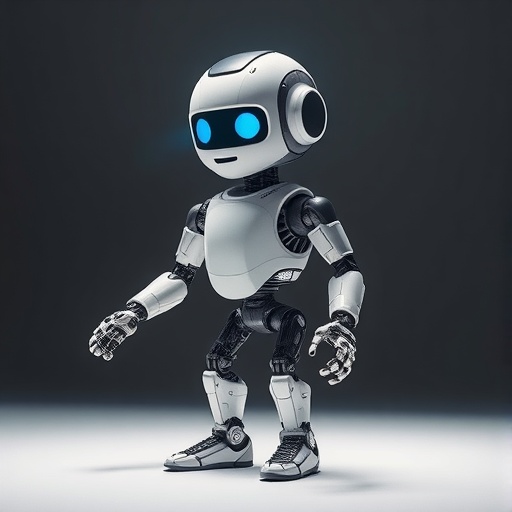
Advancing Humanoid Robots with Human-Aware ErgoCub Intelligence Optimization

Advancing Humanoid Robots with Human-Aware ErgoCub Intelligence Optimization

65
SHARES
587
VIEWS
Share on FacebookShare on Twitter
ADVERTISEMENT

In a significant advance for robotics and artificial intelligence, researchers have unveiled the human-aware ergoCub robot, a humanoid platform designed to pioneer shared embodied intelligence. This groundbreaking work marks a pivotal step towards robots that can optimize their interactions, development, and performance taking direct inspiration from human bodily cognition and social awareness.

The ergoCub robot leverages an intricate blend of optimization techniques and embodiment principles to bridge the gap between artificial and human intelligence. Unlike traditional robots that follow pre-set programming, ergoCub actively adapts its behavior through continuous learning and environmental feedback. This enables it to perform tasks in a way that considers not just efficiency but also the context of human presence and actions.

At the heart of the project lies the concept of “shared embodied intelligence,” a computational paradigm emphasizing the co-development of robot actions and knowledge through physical and social interaction. The researchers implemented sophisticated sensorimotor loops that allow ergoCub to interpret and anticipate human movements, fostering an intuitive collaboration. This embodied cognition framework equips the robot with the ability to integrate visual, proprioceptive, and tactile inputs into a coherent model of self and others in shared environments.

Optimization procedures were crucial in refining ergoCub’s mechanical design and control algorithms. Through iterative cycles of simulation and real-world trials, the robot’s architecture was fine-tuned to enhance stability, dexterity, and responsiveness. This optimization not only improves performance in manipulation tasks but also ensures safety and comfort when operating near humans—essential for practical deployment in collaborative settings.

Testing involved multiple scenarios aligned with daily human interactions, ranging from object handling to shared workspace navigation. The robot demonstrated robust adaptive capabilities, adjusting its movements and grip strength dynamically in response to subtle human cues. These behaviors showcase a new level of human awareness rarely realized in humanoid robotics.

The project’s multidisciplinary approach integrates robotics, AI, cognitive science, and biomechanics, embodying the future of intelligent machines designed for seamless integration with human partners. By fostering a robot that “understands” human ergonomics and social dynamics, this research paves the way for enhanced cooperation in manufacturing, healthcare, and service industries.

This breakthrough offers exciting possibilities beyond robotics, including the development of assistive technologies that can intuitively support human tasks and rehabilitation. Through modeling the intricacies of the human body and mind in a machine form, ergoCub exemplifies the next generation of robots that are not only functional but socially attuned.

Ultimately, the human-aware ergoCub represents a paradigm shift from isolated robotic automation to interconnected, embodied intelligence systems. As this technology matures, it promises a future where robots and humans work shoulder to shoulder, sharing intelligence and physical space more naturally than ever before.

Subject of Research: Shared embodied intelligence and human-aware humanoid robotics.

Article Title: Towards shared embodied intelligence in humanoid robots through optimization, development and testing of the human-aware ergoCub robot.

Article References: Sartore, C., Elobaid, M., Rapetti, L., Romualdi, G., Dafarra, S., Piga, N. A., Sorrentino, I., Viceconte, P. M., Traversaro, S., Pattacini, U., Fiorio, L., Draicchio, F., Tranfo, G., Natale, L., Maggiali, M., & Pucci, D. (2026). Towards shared embodied intelligence in humanoid robots through optimization, development and testing of the human-aware ergoCub robot. Nature Machine Intelligence, 8(8), 1221-1237. https://doi.org/10.1038/s42256-026-01272-2

Image Credits: AI Generated

DOI: 10.1038/s42256-026-01272-2

Keywords: advancing robot performance with environmental feedback, development of intelligent humanoid platforms, embodied cognition in artificial intelligence, human-aware humanoid robots, human-robot collaboration, optimization techniques for robot control, physical and social interaction in robotics, robot adaptation through continuous learning, sensorimotor loops in humanoid robots, shared embodied intelligence in robotics, social awareness in humanoid robots, tactile and proprioceptive sensing in robots

Cite Scienmag News

Denise Maddox. (July 13, 2026). Advancing Humanoid Robots with Human-Aware ErgoCub Intelligence Optimization. Scienmag. https://scienmag.com/advancing-humanoid-robots-with-human-aware-ergocub-intelligence-optimization/


Denise Maddox. "Advancing Humanoid Robots with Human-Aware ErgoCub Intelligence Optimization." Scienmag, 13 July 2026, https://scienmag.com/advancing-humanoid-robots-with-human-aware-ergocub-intelligence-optimization/. Accessed 3 September 2026.

Denise Maddox. "Advancing Humanoid Robots with Human-Aware ErgoCub Intelligence Optimization." Scienmag. July 13, 2026. https://scienmag.com/advancing-humanoid-robots-with-human-aware-ergocub-intelligence-optimization/

Tags: advancing robot performance with environmental feedbackdevelopment of intelligent humanoid platformsembodied cognition in artificial intelligencehuman-aware humanoid robotshuman-robot collaborationoptimization techniques for robot controlphysical and social interaction in roboticsrobot adaptation through continuous learningsensorimotor loops in humanoid robotsshared embodied intelligence in roboticssocial awareness in humanoid robotstactile and proprioceptive sensing in robots
Share26Tweet16
Previous Post

Predicting Outcomes for Premature Infants in Advanced NICU Respiratory Care

Next Post

A Call for Advancing Sustainability in Robotics Technology

Related Posts

Molecular dynamics reveals fusion behavior of Ni–Pd core–shell nanoparticles
Technology and Engineering

Molecular dynamics reveals fusion behavior of Ni–Pd core–shell nanoparticles

September 3, 2026
Spin-coated surface-eroding implants enable automated multi-pulse drug delivery
Technology and Engineering

Spin-coated surface-eroding implants enable automated multi-pulse drug delivery

September 3, 2026
Machine Learning Predicts Microplastic Aging and Environmental Risks
Technology and Engineering

Machine Learning Predicts Microplastic Aging and Environmental Risks

September 3, 2026
Perfusion platform screens self-assembling peptide drugs in 3D breast tumor models
Technology and Engineering

Perfusion platform screens self-assembling peptide drugs in 3D breast tumor models

September 3, 2026
IRX1 blocks cervical cancer growth by curbing lipid synthesis enzyme ACLY
Technology and Engineering

IRX1 blocks cervical cancer growth by curbing lipid synthesis enzyme ACLY

September 3, 2026
Hybrid nanofluid blood flow modeled in ciliated porous concentric tubes
Technology and Engineering

Hybrid nanofluid blood flow modeled in ciliated porous concentric tubes

September 3, 2026
Next Post
A Call for Advancing Sustainability in Robotics Technology

A Call for Advancing Sustainability in Robotics Technology

  • Mothers who receive childcare support from maternal grandparents show more optimized

    Mothers who receive childcare support from maternal grandparents show more parental warmth, finds NTU Singapore study

    27656 shares
    Share 11059 Tweet 6912
  • University of Seville Breaks 120-Year-Old Mystery, Revises a Key Einstein Concept

    1061 shares
    Share 424 Tweet 265
  • Bee body mass, pathogens and local climate influence heat tolerance

    682 shares
    Share 273 Tweet 171
  • Researchers record first-ever images and data of a shark experiencing a boat strike

    546 shares
    Share 218 Tweet 137
  • Groundbreaking Clinical Trial Reveals Lubiprostone Enhances Kidney Function

    531 shares
    Share 212 Tweet 133
Science

Embark on a thrilling journey of discovery with Scienmag.com—your ultimate source for cutting-edge breakthroughs. Immerse yourself in a world where curiosity knows no limits and tomorrow’s possibilities become today’s reality!

RECENT NEWS

  • Targeted nutrition during oesophageal cancer treatment preserves muscle and aids recovery
  • Digital health tools reshape cancer prevention alongside traditional in-person care
  • What influences cancer survivors’ participation in colorectal and breast screening
  • α-Synuclein curbs glioma growth via CDH13–JNK/c-Jun signaling pathway

Categories

  • Agriculture
  • Anthropology
  • Archaeology
  • Athmospheric
  • Biology
  • Biotechnology
  • Blog
  • Bussines
  • Cancer
  • Chemistry
  • Climate
  • Earth Science
  • Editorial Policy
  • Marine
  • Mathematics
  • Medicine
  • Pediatry
  • Policy
  • Psychology & Psychiatry
  • Science Education
  • Social Science
  • Space
  • Technology and Engineering

Subscribe to Blog via Email

Enter your email address to subscribe to this blog and receive notifications of new posts by email.

Join 5,151 other subscribers

© 2025 Scienmag - Science Magazine

Welcome Back!

Login to your account below

Forgotten Password?

Retrieve your password

Please enter your username or email address to reset your password.

Log In
No Result
View All Result
  • HOME
  • SCIENCE NEWS
  • CONTACT US

© 2025 Scienmag - Science Magazine

Discover more from Science

Subscribe now to keep reading and get access to the full archive.

Continue reading