


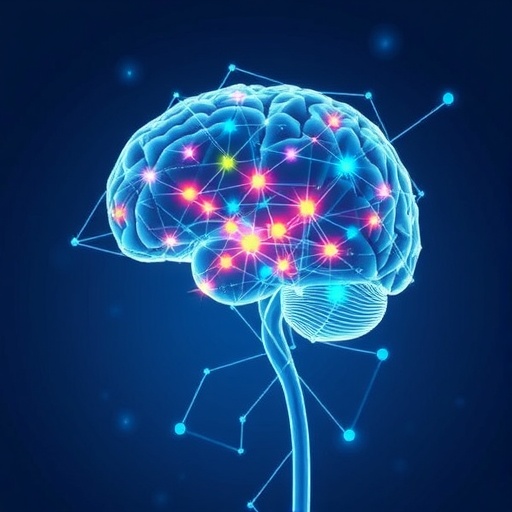
New research has unveiled pivotal changes in brain function associated with obsessive-compulsive disorder (OCD) following state-of-the-art exposure and response prevention therapy. This study, recently published in Translational Psychiatry, offers unprecedented insight into how this evidence-based treatment recalibrates neural networks implicated in the disorder.
Obsessive-compulsive disorder is characterized by intrusive thoughts and repetitive behaviors, believed to stem from dysfunctional communication between specific brain regions. Traditional imaging studies have consistently highlighted abnormalities in circuits involving the prefrontal cortex and striatum, yet the direct impact of behavioral therapy on these pathways remained elusive until now.
Leveraging advanced functional connectivity analysis through functional magnetic resonance imaging (fMRI), the researchers explored the dynamic interplay among brain regions before and after therapy. Their approach mapped real-time communication changes across networks, moving beyond static structural observations to capture the plasticity induced by treatment.
The study cohort consisted of patients diagnosed with OCD undergoing a rigorous regimen of exposure and response prevention. This therapeutic method challenges patients to confront triggering stimuli without engaging in ritualistic behaviors, facilitating extinction of compulsive habits and cognitive restructuring.
Post-treatment imaging revealed significant modulation in connectivity strength, particularly within the cortico-striato-thalamo-cortical (CSTC) loops, which have long been implicated in OCD pathophysiology. Enhanced synchronization between the dorsolateral prefrontal cortex and anterior cingulate cortex was observed, regions critical for cognitive control and conflict monitoring.
Moreover, the data demonstrated a normalization of hyperconnectivity patterns often linked to compulsive symptomatology. This rewiring suggests that exposure and response prevention not only alleviates behavioral symptoms but also induces measurable neuroplastic changes that underlie clinical improvement.
Importantly, these findings may redefine therapeutic targets, encouraging development of interventions designed to augment neural circuit flexibility. The characterization of connectivity plasticity offers promising biomarkers for treatment responsiveness, paving the way for personalized medicine approaches in OCD.
This research exemplifies how merging neuroimaging with psychotherapy research can elucidate the mechanistic underpinnings of mental disorders. It offers a hopeful advance toward better prognosis and refined treatments that address the brain’s profound adaptability.
As the field continues to decode the neural basis of psychiatric conditions, studies like this one serve as a testament to the power of integrative science — connecting mind, brain, and behavior through cutting-edge methodologies.
Cite Scienmag News
Cassandra Pierce. (July 11, 2026). Brain Connectivity Shifts in OCD After Exposure and Response Therapy. Scienmag. https://scienmag.com/brain-connectivity-shifts-in-ocd-after-exposure-and-response-therapy/
Cassandra Pierce. "Brain Connectivity Shifts in OCD After Exposure and Response Therapy." Scienmag, 11 July 2026, https://scienmag.com/brain-connectivity-shifts-in-ocd-after-exposure-and-response-therapy/. Accessed 4 September 2026.
Cassandra Pierce. "Brain Connectivity Shifts in OCD After Exposure and Response Therapy." Scienmag. July 11, 2026. https://scienmag.com/brain-connectivity-shifts-in-ocd-after-exposure-and-response-therapy/


