

Saturday, July 11, 2026
Science
No Result
View All Result
  • Login
  • HOME
  • SCIENCE NEWS
  • CONTACT US
  • HOME
  • SCIENCE NEWS
  • CONTACT US
No Result
View All Result
Scienmag
No Result
View All Result
Home Science News Psychology & Psychiatry

Data-Driven Autism Subtyping Advances Understanding Across Multiple Levels

July 11, 2026
in Psychology & Psychiatry
Reading Time: 2 mins read
0
Data-Driven Autism Subtyping Advances Understanding Across Multiple Levels

Data-Driven Autism Subtyping Advances Understanding Across Multiple Levels

65
SHARES
587
VIEWS
Share on FacebookShare on Twitter
ADVERTISEMENT

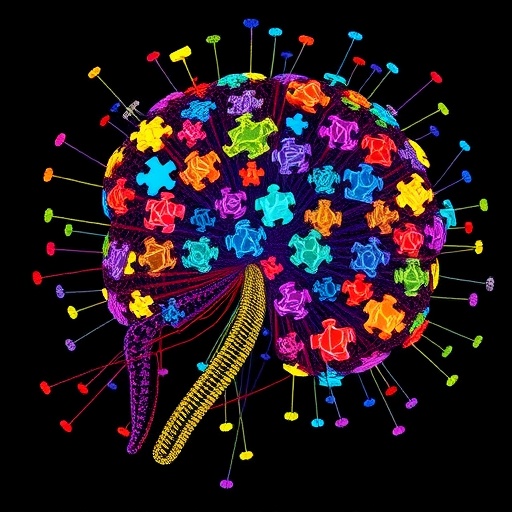
A groundbreaking study published this year in Translational Psychiatry unveils a novel approach to understanding the complexity of autism spectrum disorder (ASD) through advanced data-driven subtyping. This research leverages an innovative multilevel framework, integrating diverse data types to address the pervasive challenge of heterogeneity in autism diagnoses and treatment outcomes.

Autism has long been characterized by its diverse presentations, ranging from subtle social communication difficulties to profound cognitive and behavioral impairments. Traditional diagnostic categories often fall short in capturing this variability, hindering personalized treatment and prognostic accuracy. The new study by Wang et al. pioneers a systematic method to stratify individuals with autism into more homogeneous subgroups, which could ultimately transform clinical practice.

Central to their approach is the application of machine learning algorithms that process multi-dimensional datasets, including genetic, neuroimaging, and behavioral metrics. By synthesizing these layers of biological and phenotypic information, the researchers identified distinct autism subtypes that correspond to specific neural and molecular profiles. This granular categorization moves beyond surface-level symptomology and taps into the underlying neurobiological mechanisms.

The researchers utilized a multilevel data integration technique, which is particularly suited to capturing the complexity of ASD. This method allows simultaneous analysis at genetic, cellular, brain systems, and behavioral levels, revealing patterns invisible to single-dimension studies. The result is a set of nuanced subgroups that not only differ in their clinical presentation but also in their likely response to interventions.

One of the most significant implications of this work lies in its translational potential. With clearer subtyping, clinicians may soon be able to tailor treatment plans more precisely, selecting therapies best suited to an individual’s unique profile. This personalized medicine approach promises to improve outcomes and reduce the trial-and-error burden often experienced by patients and families.

Furthermore, the study highlights several biomarkers identifiable through routine clinical assessments and non-invasive imaging techniques. These biomarkers serve as accessible indicators for categorizing patients, opening the door to more timely and accurate diagnoses. The integration of such markers into clinical workflows could revolutionize how autism is managed across healthcare systems.

The investigation also sheds light on the developmental trajectories of different ASD subtypes. Understanding how specific biological factors influence symptom progression over time can inform early intervention strategies and resource allocation. By tracking these trajectories, researchers can predict the course of autism in ways previously unattainable.

While the findings are compelling, the authors emphasize the need for further validation across diverse populations to ensure generalizability. They also point out that data-sharing initiatives and larger, more inclusive datasets will be crucial in refining the subtyping models. Nevertheless, this study lays a robust foundation for the next generation of autism research and care.

In conclusion, the integration of multilevel data analytics to subtype autism represents a pivotal advancement in the field. It underscores a shift from a one-size-fits-all diagnostic paradigm toward a precision medicine framework, promising a future where autism treatment is as heterogeneous as the condition itself.


Subject of Research: Autism Spectrum Disorder (ASD) subtyping using data-driven multilevel frameworks.

Article Title: From heterogeneity to translation: data‑driven subtyping of autism in a multilevel framework.

Article References:
Wang, XK., Zhang, Z., Li, S. et al. From heterogeneity to translation: data‑driven subtyping of autism in a multilevel framework. Transl Psychiatry (2026). https://doi.org/10.1038/s41398-026-04243-8

Image Credits: AI Generated

DOI: https://doi.org/10.1038/s41398-026-04243-8

Tags: advanced data integration in ASDAutism spectrum disorder subtypingbehavioral and molecular profiles in autismclinical implications of autism subtypingdata-driven autism classificationgenetic and neuroimaging biomarkers in ASDheterogeneity in autism diagnosisMachine learning in autism researchmulti-dimensional autism data analysismultilevel neurobiological analysis in autismneurobiological mechanisms of autismpersonalized treatment strategies for autism
Share26Tweet16
Previous Post

Calcineurin/NFAT Pathway Links Calcium Stress to Neurodegeneration Timing

Next Post

Akkermansia massiliensis and FcRL3 Gene Linked to Multiple Sclerosis Protection

Related Posts

Brain Connectivity Shifts in OCD After Exposure and Response Therapy
Psychology & Psychiatry

Brain Connectivity Shifts in OCD After Exposure and Response Therapy

July 11, 2026
Polygenic Risk Scores Linked to Social Anxiety Disorder Subtypes
Psychology & Psychiatry

Polygenic Risk Scores Linked to Social Anxiety Disorder Subtypes

July 11, 2026
Deep Learning Predicts Antidepressant Response from Electronic Health Records
Psychology & Psychiatry

Deep Learning Predicts Antidepressant Response from Electronic Health Records

July 11, 2026
Stress-Coping Traits Influence Fat Tissue Function and Metabolic Resilience
Psychology & Psychiatry

Stress-Coping Traits Influence Fat Tissue Function and Metabolic Resilience

July 10, 2026
Disrupted Brain Signal Balance Tied to Symptoms and Cognition in Schizophrenia
Psychology & Psychiatry

Disrupted Brain Signal Balance Tied to Symptoms and Cognition in Schizophrenia

July 10, 2026
Early-Life Tobacco Exposure Impacts Mental Health and Brain Development Differently by Stage
Psychology & Psychiatry

Early-Life Tobacco Exposure Impacts Mental Health and Brain Development Differently by Stage

July 10, 2026
Next Post
Akkermansia massiliensis and FcRL3 Gene Linked to Multiple Sclerosis Protection

Akkermansia massiliensis and FcRL3 Gene Linked to Multiple Sclerosis Protection

  • Mothers who receive childcare support from maternal grandparents show more

    Mothers who receive childcare support from maternal grandparents show more parental warmth, finds NTU Singapore study

    27656 shares
    Share 11059 Tweet 6912
  • University of Seville Breaks 120-Year-Old Mystery, Revises a Key Einstein Concept

    1061 shares
    Share 424 Tweet 265
  • Bee body mass, pathogens and local climate influence heat tolerance

    682 shares
    Share 273 Tweet 171
  • Researchers record first-ever images and data of a shark experiencing a boat strike

    546 shares
    Share 218 Tweet 137
  • Groundbreaking Clinical Trial Reveals Lubiprostone Enhances Kidney Function

    531 shares
    Share 212 Tweet 133
Science

Embark on a thrilling journey of discovery with Scienmag.com—your ultimate source for cutting-edge breakthroughs. Immerse yourself in a world where curiosity knows no limits and tomorrow’s possibilities become today’s reality!

RECENT NEWS

  • Brain Connectivity Shifts in OCD After Exposure and Response Therapy
  • Glycocholic Acid Accelerates Colitis by Suppressing Intestinal Stem Cells
  • Volcanism Alters Carbon Cycle and Oxygen Levels in Mesoproterozoic Era
  • Wild Carnivores in Netherlands Reveal West Nile and Usutu Virus Infection

Categories

  • Agriculture
  • Anthropology
  • Archaeology
  • Athmospheric
  • Biology
  • Biotechnology
  • Blog
  • Bussines
  • Cancer
  • Chemistry
  • Climate
  • Earth Science
  • Editorial Policy
  • Marine
  • Mathematics
  • Medicine
  • Pediatry
  • Policy
  • Psychology & Psychiatry
  • Science Education
  • Social Science
  • Space
  • Technology and Engineering

Subscribe to Blog via Email

Enter your email address to subscribe to this blog and receive notifications of new posts by email.

Join 5,146 other subscribers

© 2025 Scienmag - Science Magazine

Welcome Back!

Login to your account below

Forgotten Password?

Retrieve your password

Please enter your username or email address to reset your password.

Log In
No Result
View All Result
  • HOME
  • SCIENCE NEWS
  • CONTACT US

© 2025 Scienmag - Science Magazine

Discover more from Science

Subscribe now to keep reading and get access to the full archive.

Continue reading
