

Friday, July 10, 2026
Science
No Result
View All Result
  • Login
  • HOME
  • SCIENCE NEWS
  • CONTACT US
  • HOME
  • SCIENCE NEWS
  • CONTACT US
No Result
View All Result
Scienmag
No Result
View All Result
Home Science News Cancer

Urolithin A Improves Heart Health by Boosting Mitophagy and Gut-Ceramide Axis

July 10, 2026
in Cancer
Reading Time: 2 mins read
0
Urolithin A Improves Heart Health by Boosting Mitophagy and Gut-Ceramide Axis

Urolithin A Improves Heart Health by Boosting Mitophagy and Gut-Ceramide Axis

65
SHARES
587
VIEWS
Share on FacebookShare on Twitter
ADVERTISEMENT

A groundbreaking study has unveiled the therapeutic potential of Urolithin A, a natural compound, in combating heart failure with preserved ejection fraction (HFpEF), a complex cardiac condition notoriously difficult to treat. Researchers have now elucidated the molecular mechanisms by which Urolithin A exerts protective effects on the heart, spotlighting its role in enhancing mitophagy and modulating metabolic pathways.

HFpEF, characterized by the heart’s inability to relax properly despite retaining normal contraction force, contributes significantly to cardiovascular morbidity and mortality worldwide. Current treatments remain limited, thus prompting intense investigation into novel molecular targets. The new research focuses on the AMPK–mTOR signaling axis, a crucial regulator of cellular energy homeostasis and autophagy.

The study demonstrated that Urolithin A activates AMPK, a master kinase that senses cellular energy deficits. Activation of AMPK subsequently inhibits the mechanistic target of rapamycin (mTOR), a protein kinase that suppresses autophagy when nutrients are abundant. This inhibition effectively lifts the brake on mitophagy, a specialized form of autophagy responsible for the selective removal of damaged mitochondria, thereby restoring mitochondrial quality control in cardiac cells.

Crucially, the enhancement of mitophagy attenuates pathological cardiac remodeling—structural and functional changes in the heart muscle that underlie HFpEF progression. Improved mitochondrial clearance prevents the accumulation of dysfunctional organelles, reducing oxidative stress and preserving cardiomyocyte function.

Moreover, the investigation revealed that Urolithin A also influences the gut–ceramide axis, linking metabolic signaling between intestinal microbiota and cardiac tissue. Ceramides, sphingolipid metabolites known to promote inflammation and insulin resistance, are modulated by gut-derived factors. By reshaping this axis, Urolithin A diminishes ceramide-driven deleterious effects, further contributing to cardiac protection.

Experimental models showed significant amelioration of cardiac remodeling following Urolithin A treatment, highlighting its promise as a novel therapeutic agent. This dual mechanism—restoring mitophagy via the AMPK–mTOR pathway and regulating systemic metabolic crosstalk via the gut–ceramide axis—positions Urolithin A as a multifaceted candidate against heart failure syndromes.

The findings open avenues for targeted therapies that harness endogenous cellular recycling processes and metabolic communication networks to counteract HFpEF. Future clinical trials are anticipated to evaluate the safety and efficacy of Urolithin A in human patients.

This study not only enriches our understanding of heart failure pathophysiology but also underscores the intricate interplay between cellular quality control and systemic metabolism. As such, Urolithin A heralds a new era in cardiometabolic therapeutics, bridging nutraceutical science and molecular cardiology.

Subject of Research: Heart failure with preserved ejection fraction (HFpEF) and mitophagy mechanisms

Article Title: Urolithin A activates mitophagy via the AMPK–mTOR axis and modulates the gut–ceramide axis to ameliorate cardiac remodeling in HFpEF

Article References:
Song, H., Yun, C., Choi, Y. et al. Urolithin A activates mitophagy via the AMPK–mTOR axis and modulates the gut–ceramide axis to ameliorate cardiac remodeling in HFpEF. Exp Mol Med (2026). https://doi.org/10.1038/s12276-026-01776-2

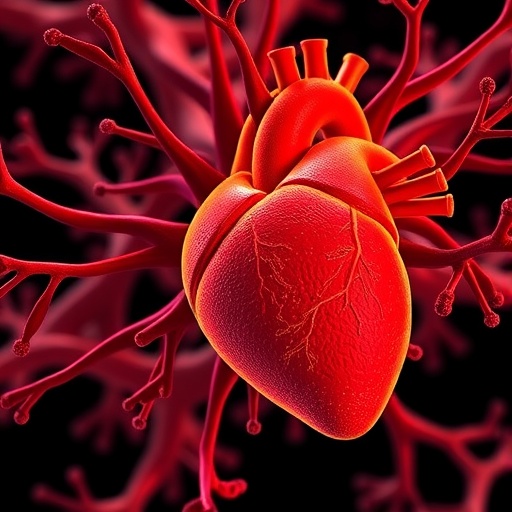
Image Credits: AI Generated

DOI: 10.1038/s12276-026-01776-2

Tags: AMPK–mTOR signaling pathway in heart diseaseautophagy modulation in heart failurebioactive compounds for cardiovascular protectiongut-ceramide axis and cardiac functionheart failure with preserved ejection fractioninnovative approaches to HFpEF managementmetabolic regulation of heart healthmitochondrial dynamics and cardiac remodelingmitochondrial quality control in cardiovascular therapymitophagy activation in cardiac healthnatural compounds for heart failure treatmenttherapeutic potential of Urolithin AUrolithin A
Share26Tweet16
Previous Post

Cruise ship air pollution may worsen viral infection severity

Next Post

Near-Earth Object Shows Comet-Like Non-Gravitational Acceleration

Related Posts

Second PSMA PET Scan Alters Treatment in Almost Half of Prostate Cancer Cases
Cancer

Second PSMA PET Scan Alters Treatment in Almost Half of Prostate Cancer Cases

July 10, 2026
Birth Method and Antibiotics Influence Newborns’ Gut Bacteria, Study Finds
Cancer

Birth Method and Antibiotics Influence Newborns’ Gut Bacteria, Study Finds

July 10, 2026
New Method Shows Promise Against Drug-Resistant Deadly Brain Cancer
Cancer

New Method Shows Promise Against Drug-Resistant Deadly Brain Cancer

July 10, 2026
New compounds permanently disable tumors’ natural defense system against treatment
Cancer

New compounds permanently disable tumors’ natural defense system against treatment

July 10, 2026
Studying Oral Inflammation Reveals Insights into Other Human Diseases
Cancer

Studying Oral Inflammation Reveals Insights into Other Human Diseases

July 10, 2026
Scientists Develop Novel Approach to Target Challenging Prostate Cancer Protein
Cancer

Scientists Develop Novel Approach to Target Challenging Prostate Cancer Protein

July 10, 2026
Next Post
Near-Earth Object Shows Comet-Like Non-Gravitational Acceleration

Near-Earth Object Shows Comet-Like Non-Gravitational Acceleration

  • Mothers who receive childcare support from maternal grandparents show more

    Mothers who receive childcare support from maternal grandparents show more parental warmth, finds NTU Singapore study

    27656 shares
    Share 11059 Tweet 6912
  • University of Seville Breaks 120-Year-Old Mystery, Revises a Key Einstein Concept

    1061 shares
    Share 424 Tweet 265
  • Bee body mass, pathogens and local climate influence heat tolerance

    682 shares
    Share 273 Tweet 171
  • Researchers record first-ever images and data of a shark experiencing a boat strike

    546 shares
    Share 218 Tweet 137
  • Groundbreaking Clinical Trial Reveals Lubiprostone Enhances Kidney Function

    531 shares
    Share 212 Tweet 133
Science

Embark on a thrilling journey of discovery with Scienmag.com—your ultimate source for cutting-edge breakthroughs. Immerse yourself in a world where curiosity knows no limits and tomorrow’s possibilities become today’s reality!

RECENT NEWS

  • Machine Learning Enhances Biosensor Accuracy for Freshwater Microcystin Monitoring
  • New Therapy Accelerates Bone Marrow Recovery by Targeting Microenvironment
  • Simplified Parameter Tuning Boosts Echo State Network Predictions
  • Near-Earth Object Shows Comet-Like Non-Gravitational Acceleration

Categories

  • Agriculture
  • Anthropology
  • Archaeology
  • Athmospheric
  • Biology
  • Biotechnology
  • Blog
  • Bussines
  • Cancer
  • Chemistry
  • Climate
  • Earth Science
  • Editorial Policy
  • Marine
  • Mathematics
  • Medicine
  • Pediatry
  • Policy
  • Psychology & Psychiatry
  • Science Education
  • Social Science
  • Space
  • Technology and Engineering

Subscribe to Blog via Email

Enter your email address to subscribe to this blog and receive notifications of new posts by email.

Join 5,146 other subscribers

© 2025 Scienmag - Science Magazine

Welcome Back!

Login to your account below

Forgotten Password?

Retrieve your password

Please enter your username or email address to reset your password.

Log In
No Result
View All Result
  • HOME
  • SCIENCE NEWS
  • CONTACT US

© 2025 Scienmag - Science Magazine

Discover more from Science

Subscribe now to keep reading and get access to the full archive.

Continue reading
