

Friday, July 10, 2026
Science
No Result
View All Result
  • Login
  • HOME
  • SCIENCE NEWS
  • CONTACT US
  • HOME
  • SCIENCE NEWS
  • CONTACT US
No Result
View All Result
Scienmag
No Result
View All Result
Home Science News Chemistry

Scientists Capture Cosmic Drift Preceding Star Birth

July 10, 2026
in Chemistry
Reading Time: 2 mins read
0
Scientists Capture Cosmic Drift Preceding Star Birth

Scientists Capture Cosmic Drift Preceding Star Birth

65
SHARES
587
VIEWS
Share on FacebookShare on Twitter
ADVERTISEMENT

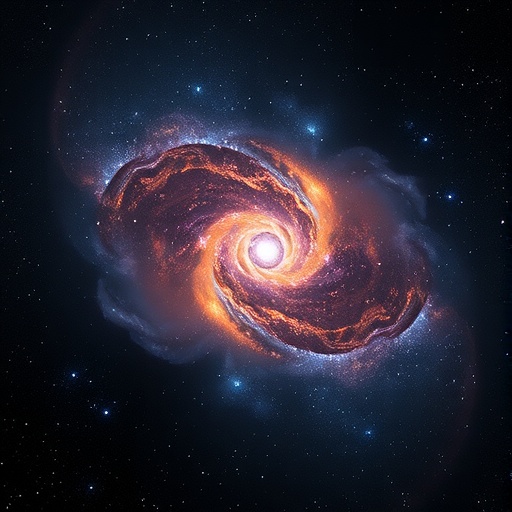
In a groundbreaking discovery, astrophysicists have, for the first time, observed ambipolar diffusion within a prestellar core, shedding light on the critical magnetic processes that initiate star formation. This milestone was achieved by researchers from Kyushu University and the Max Planck Institute for Extraterrestrial Physics, who focused their investigation on L1544, a well-studied dense core in the Taurus molecular cloud. Their findings, published in Astronomy & Astrophysics, reveal the subtle interplay between ions, neutrals, and magnetic fields that dictate the earliest stages of stellar birth.

Prestellar cores are cold, dense concentrations of gas and dust that represent the embryonic phase preceding star formation. These cores typically harbor strong magnetic fields, believed to oppose gravity and thus regulate collapse. Yet, star formation requires these magnetic supports to weaken selectively, allowing gravity to dominate and trigger protostar development. Ambipolar diffusion—a process where neutral particles break free from the magnetic field lines that bind ions—emerges as the key mechanism enabling this transition.

Using the IRAM 30-meter radio telescope, the team employed sophisticated molecular tracers: the ion diazenylium-d₁ (N₂D⁺) and the neutral molecule para-monodeuterated ammonia (para-NH₂D). These tracers, sensitive to the dense, cold environment of L1544, acted as dynamic probes of the gas motions within. Remarkably, the researchers detected a consistent velocity offset of approximately 0.05 km/s between these two species. This drift evidence confirms that neutral molecules accelerate inward under gravity, disengaging from ions tethered to magnetic fields.

This observed ion-neutral drift is essential because it indicates that magnetic field lines are not perfectly frozen into the collapsing gas. Instead, ambipolar diffusion reduces magnetic flux in the central regions, effectively permitting gravitational collapse to proceed. As neutral gas plunges inward faster than ions, the core transitions from magnetic to gravity-dominated dynamics, setting the stage for protostar formation.

Until now, direct observation of ambipolar diffusion within prestellar cores had eluded scientists, largely due to the technical challenges of detecting subtle velocity differences in molecular species frozen out at such low temperatures. The successful application of N₂D⁺ and para-NH₂D as tracers provided the breakthrough, marking a significant advance in astrochemical and magnetic field studies.

The research not only confirms theoretical predictions about the magnetic regulation of star formation but also opens avenues for more detailed explorations. The team plans to observe additional cores and utilize higher-resolution instruments to refine maps of velocity drifts and magnetic structures, helping decode the complex chemistry occurring in these frigid nurseries.

Understanding ambipolar diffusion and magnetic field dynamics in prestellar cores delivers profound insights into star and planetary system formation. Since such processes govern the material environments where planets—and potentially life—emerge, this discovery resonates far beyond astrophysics, influencing our broader comprehension of cosmic origins and the conditions that may foster life in the universe.

Subject of Research: Not applicable
Article Title: Probing the ion-neutral drift velocity towards the L1544 prestellar core. Detection of ambipolar diffusion using N2D+ and para-NH2D
News Publication Date: 10-Jul-2026
Web References: http://www.aanda.org/10.1051/0004-6361/202658871
References: Arzoumanian, D., Spezzano, S., Grassi, T., et al. (2026). Astronomy & Astrophysics. DOI: 10.1051/0004-6361/202658871
Image Credits: Yurika Nakamura and Doris Arzoumanian/Kyushu University

Keywords

Star Formation, Ambipolar Diffusion, Prestellar Core, Magnetic Fields, Ion-Neutral Drift, L1544, Molecular Clouds, Astrochemistry, Protostar

Tags: ambipolar diffusion in prestellar coresastrophysical discovery in star formationearly stages of star formationion and neutral gas dynamicsion-neutral driftIRAM 30-meter radio telescopeL1544 dense coremagnetic fields in molecular cloudsmagnetic regulation of star birthmolecular tracers in astrophysicsstar formationTaurus molecular cloud
Share26Tweet16
Previous Post

Genetic Mapping Reveals New Treatments for Bone Diseases

Next Post

Cruise ship air pollution may worsen viral infection severity

Related Posts

Artificial Intelligence Transforms Material Synthesis Methods
Chemistry

Artificial Intelligence Transforms Material Synthesis Methods

July 10, 2026
Computer Chip Uses Vibrations for Memory Storage
Chemistry

Computer Chip Uses Vibrations for Memory Storage

July 10, 2026
Rapid Screening Advances Discovery of Nanocrystals
Chemistry

Rapid Screening Advances Discovery of Nanocrystals

July 10, 2026
New Eco-Friendly Method Developed for Alcohol Oxidation
Chemistry

New Eco-Friendly Method Developed for Alcohol Oxidation

July 10, 2026
Pre-cooked seafood meals may absorb chemicals during packaging and processing
Chemistry

Pre-cooked seafood meals may absorb chemicals during packaging and processing

July 10, 2026
Temporary Power Reduction Boosts Carbon Dioxide Conversion Efficiency
Chemistry

Temporary Power Reduction Boosts Carbon Dioxide Conversion Efficiency

July 10, 2026
Next Post
Cruise ship air pollution may worsen viral infection severity

Cruise ship air pollution may worsen viral infection severity

  • Mothers who receive childcare support from maternal grandparents show more

    Mothers who receive childcare support from maternal grandparents show more parental warmth, finds NTU Singapore study

    27656 shares
    Share 11059 Tweet 6912
  • University of Seville Breaks 120-Year-Old Mystery, Revises a Key Einstein Concept

    1061 shares
    Share 424 Tweet 265
  • Bee body mass, pathogens and local climate influence heat tolerance

    682 shares
    Share 273 Tweet 171
  • Researchers record first-ever images and data of a shark experiencing a boat strike

    546 shares
    Share 218 Tweet 137
  • Groundbreaking Clinical Trial Reveals Lubiprostone Enhances Kidney Function

    531 shares
    Share 212 Tweet 133
Science

Embark on a thrilling journey of discovery with Scienmag.com—your ultimate source for cutting-edge breakthroughs. Immerse yourself in a world where curiosity knows no limits and tomorrow’s possibilities become today’s reality!

RECENT NEWS

  • Machine Learning Enhances Biosensor Accuracy for Freshwater Microcystin Monitoring
  • New Therapy Accelerates Bone Marrow Recovery by Targeting Microenvironment
  • Simplified Parameter Tuning Boosts Echo State Network Predictions
  • Near-Earth Object Shows Comet-Like Non-Gravitational Acceleration

Categories

  • Agriculture
  • Anthropology
  • Archaeology
  • Athmospheric
  • Biology
  • Biotechnology
  • Blog
  • Bussines
  • Cancer
  • Chemistry
  • Climate
  • Earth Science
  • Editorial Policy
  • Marine
  • Mathematics
  • Medicine
  • Pediatry
  • Policy
  • Psychology & Psychiatry
  • Science Education
  • Social Science
  • Space
  • Technology and Engineering

Subscribe to Blog via Email

Enter your email address to subscribe to this blog and receive notifications of new posts by email.

Join 5,146 other subscribers

© 2025 Scienmag - Science Magazine

Welcome Back!

Login to your account below

Forgotten Password?

Retrieve your password

Please enter your username or email address to reset your password.

Log In
No Result
View All Result
  • HOME
  • SCIENCE NEWS
  • CONTACT US

© 2025 Scienmag - Science Magazine

Discover more from Science

Subscribe now to keep reading and get access to the full archive.

Continue reading
