


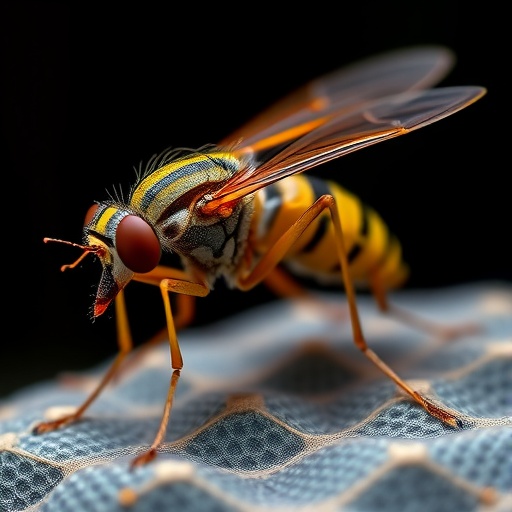
In a groundbreaking review published in EXO – Beyond the Cell, researchers have outlined the expanding role of the fruit fly Drosophila melanogaster as a vital model for unraveling the complexities of extracellular vesicle (EV) biology. Extracellular vesicles, nanoscale carriers ferrying proteins, lipids, and genetic material between cells, are crucial mediators of intercellular communication across physiological and pathological states. However, investigating their biogenesis and functional diversity remains challenging due to the heterogeneity and overlapping characteristics of EV populations.
The review emphasizes how Drosophila, with its powerful genetic toolbox, complements mammalian studies by providing a tractable in vivo system to dissect conserved molecular pathways governing EV formation and cargo sorting. EV biogenesis involves sophisticated processes including the endosomal sorting complex required for transport (ESCRT)-dependent and independent pathways, Rab GTPase-mediated membrane trafficking, as well as lipid remodeling. In Drosophila, tissue-specific studies at neuromuscular junctions, imaginal discs, and glial cells have unveiled mechanisms of multivesicular body (MVB) formation and subsequent release of exosomes, advancing our understanding of EV dynamics under physiological conditions.
The review also sheds light on alternative EV biogenesis routes, such as secretory autophagosomes that bypass lysosomal degradation, and ectosome formation via plasma membrane budding—processes equally conserved between flies and mammals. These insights underscore the need to classify EV subtypes based on their biogenetic origins rather than simplistic criteria like size or protein markers, fostering a more rigorous framework for future research.
Functionally, EVs extend beyond local communication to orchestrate systemic responses. Mammalian studies link EVs to developmental signaling, metabolic regulation, immune responses, and cancer progression. Parallel discoveries in Drosophila have revealed pivotal roles for EVs in synaptic communication, long-range signaling cascades, and systemic antiviral defenses, highlighting evolutionary conservation of EV-mediated functions.
The authors advocate a synergistic approach that leverages Drosophila genetics to explore mechanistic questions difficult to address solely in mammalian models. This integrative strategy promises to unravel the causal pathways underlying EV-mediated intercellular communication in health and disease. As the field pushes towards standardized nomenclature and classification, discoveries from Drosophila will be instrumental in refining our understanding of EV heterogeneity and biological impact.
In conclusion, this comprehensive review establishes Drosophila melanogaster not as a replacement but as a powerful complement to mammalian systems in EV research. The convergence of genetic, cellular, and molecular insights across species heralds a new era of precision in studying extracellular vesicles, setting the stage for novel therapeutic avenues targeting intercellular communication networks.
Cite Scienmag News
Juliet Wilcox. (July 10, 2026). Drosophila as a Key Genetic Model for Studying Extracellular Vesicles. Scienmag. https://scienmag.com/drosophila-as-a-key-genetic-model-for-studying-extracellular-vesicles/
Juliet Wilcox. "Drosophila as a Key Genetic Model for Studying Extracellular Vesicles." Scienmag, 10 July 2026, https://scienmag.com/drosophila-as-a-key-genetic-model-for-studying-extracellular-vesicles/. Accessed 4 September 2026.
Juliet Wilcox. "Drosophila as a Key Genetic Model for Studying Extracellular Vesicles." Scienmag. July 10, 2026. https://scienmag.com/drosophila-as-a-key-genetic-model-for-studying-extracellular-vesicles/


