

Wednesday, August 26, 2026
Science
No Result
View All Result
  • Login
  • HOME
  • SCIENCE NEWS
  • CONTACT US
  • HOME
  • SCIENCE NEWS
  • CONTACT US
No Result
View All Result
Scienmag
No Result
View All Result
Home Science News Space

Satellites Track Penguin Poo Color to Reveal Climate Change Impact

July 9, 2026
in Space
Reading Time: 2 mins read
0
Satellites Track Penguin Poo Color to Reveal Climate Change Impact

Satellites Track Penguin Poo Color to Reveal Climate Change Impact

65
SHARES
587
VIEWS
Share on FacebookShare on Twitter
ADVERTISEMENT

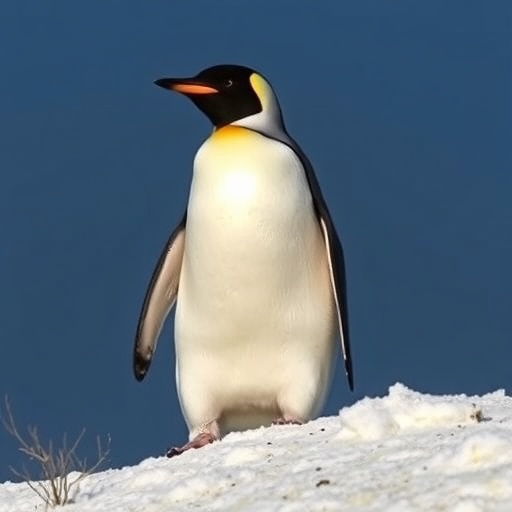
In a groundbreaking study, scientists have harnessed decades of NASA satellite imagery to unlock the dietary secrets of Antarctica’s emblematic Adélie penguins. By analyzing the spectral signatures of penguin guano—essentially the unique color patterns visible across visible and infrared wavelengths—researchers have for the first time mapped the diet of these birds continent-wide from 1984 to 2013. This innovative approach bridges remote sensing technology with ecological research, providing an unprecedented view into how climate change reshapes food webs in one of the planet’s harshest environments.

The research, published in Current Biology, leverages the spectral data retrieved from Landsat satellites to distinguish between the penguins’ consumption of fish and krill, two vital but ecologically distinct prey species. In lab settings, team members first established a correlation between guano color and dietary composition using controlled stable isotope analyses. This calibration allowed them to extrapolate diet profiles directly from satellite-mounted sensors, effectively “spying on penguins from space,” according to Michael Polito, a professor of ocean sciences at UC Santa Cruz.

Their results reveal a striking climate-linked dietary shift: throughout regions experiencing abundant sea ice, Adélie penguins predominantly consumed fish, which offer richer nutritional value. Conversely, in areas where warming has caused sea ice loss, penguins relied increasingly on krill, a less nourishing crustacean facing its own population pressures due to ecosystem changes. This shift corresponds with population declines in colonies with krill-heavy diets, echoing earlier findings that chicks raised on fish show greater growth and survival.

The significance of this work extends beyond penguin ecology. It presents a scalable model for long-term ecosystem monitoring across remote and inaccessible environments. Traditional field studies, while invaluable, cannot feasibly capture such expansive temporal and spatial dietary data. Satellite-based guano spectral analysis, combined with modern geochemical and statistical tools, offers a paradigm shift in wildlife observation, enabling scientists to track ecosystem health and food web disruptions in real time.

Antarctica’s harsh conditions and vast expanse have long limited comprehensive ecological studies, making this approach particularly timely amid rapid environmental change. Since the termination of the study’s dataset in 2013, Antarctic sea ice has reached unprecedented lows, raising concerns about the continued viability of fish populations and, by extension, the penguins that depend on them.

As top predators relying on a narrow range of prey species, Adélie penguins serve as crucial indicators of marine ecosystem integrity. Polito describes them as a “canary in the coal mine,” illustrating how warming oceans and ice loss cascade through trophic levels, threatening both wildlife and the intricate Antarctic marine food web.

This innovative fusion of satellite remote sensing and ecological science marks a promising new frontier for understanding and conserving polar ecosystems under the accelerating pressures of climate change.


Keywords

Adélie penguins, Antarctic ecology, satellite remote sensing, guano spectral analysis, climate change, sea ice loss, marine food webs, diet shifts, wildlife monitoring

Subject of Research: Animals
Article Title: Space-based monitoring of penguin diet links sea ice, food webs, and population change
News Publication Date: 7-Jul-2026
Web References: https://www.sciencedirect.com/science/article/abs/pii/S0960982226007414?dgcid=author
Image Credits: Michael Polito, UC Santa Cruz

Article Title: Satellites Track Penguin Poo Color to Reveal Climate Change Impact

Article References: Original research article

Image Credits: AI Generated

DOI: Not provided

Keywords: Adélie penguin diet mapping, climate change effects on Antarctic wildlife, climate change impact on penguin diet, fish and krill consumption in penguins, innovative methods in climate change research, long-term monitoring of penguin populations, penguin food web dynamics, remote sensing technology for ecological research, satellite remote sensing of guano, sea ice loss and penguin feeding habits, spectral analysis of penguin droppings, using Landsat satellites for ecological studies

Tags: Adélie penguin diet mappingclimate change effects on Antarctic wildlifeclimate change impact on penguin dietfish and krill consumption in penguinsinnovative methods in climate change researchlong-term monitoring of penguin populationspenguin food web dynamicsremote sensing technology for ecological researchsatellite remote sensing of guanosea ice loss and penguin feeding habitsspectral analysis of penguin droppingsusing Landsat satellites for ecological studies
Share26Tweet16
Previous Post

Doctors struggle to learn from experiences that challenge AI recommendations

Next Post

Neoadjuvant Immunotherapy Shows Promise for High-Risk Localized Prostate Cancer

Related Posts

Lunar Drilling and Sampling System Deployed for China’s Chang’e-5 and Chang’e-6 Missions
Space

Lunar Drilling and Sampling System Deployed for China’s Chang’e-5 and Chang’e-6 Missions

August 26, 2026
Millisecond Pulsars Show Distinct Spin Distributions in Galactic Fields and Globular Clusters
Space

Millisecond Pulsars Show Distinct Spin Distributions in Galactic Fields and Globular Clusters

August 26, 2026
Magnetoacoustic Cutoff Frequency Changes with Height Across the Solar Atmosphere
Space

Magnetoacoustic Cutoff Frequency Changes with Height Across the Solar Atmosphere

August 26, 2026
Entanglement and Minimal Length Yield Hybrid Generalized Uncertainty Relations
Space

Entanglement and Minimal Length Yield Hybrid Generalized Uncertainty Relations

August 26, 2026
QBism Challenges the Need for Shared Agreement on Measurement Outcomes
Space

QBism Challenges the Need for Shared Agreement on Measurement Outcomes

August 26, 2026
New orthomode transducer design advances CARUSO’s broad W-band focal-plane array receiver
Space

New orthomode transducer design advances CARUSO’s broad W-band focal-plane array receiver

August 26, 2026
Next Post
Neoadjuvant Immunotherapy Shows Promise for High-Risk Localized Prostate Cancer

Neoadjuvant Immunotherapy Shows Promise for High-Risk Localized Prostate Cancer

  • Mothers who receive childcare support from maternal grandparents show more

    Mothers who receive childcare support from maternal grandparents show more parental warmth, finds NTU Singapore study

    27656 shares
    Share 11059 Tweet 6912
  • University of Seville Breaks 120-Year-Old Mystery, Revises a Key Einstein Concept

    1061 shares
    Share 424 Tweet 265
  • Bee body mass, pathogens and local climate influence heat tolerance

    682 shares
    Share 273 Tweet 171
  • Researchers record first-ever images and data of a shark experiencing a boat strike

    546 shares
    Share 218 Tweet 137
  • Groundbreaking Clinical Trial Reveals Lubiprostone Enhances Kidney Function

    531 shares
    Share 212 Tweet 133
Science

Embark on a thrilling journey of discovery with Scienmag.com—your ultimate source for cutting-edge breakthroughs. Immerse yourself in a world where curiosity knows no limits and tomorrow’s possibilities become today’s reality!

RECENT NEWS

  • Unresectable Gallbladder Cancer Develops Rare Spontaneous Cholecystocutaneous Fistula, Case Report Finds
  • Study identifies global genetic factors influencing fetal hemoglobin in sickle cell disease
  • Data Centers Could Recycle Waste Heat for Cooling Using Adsorption Heat Pumps
  • New method prequalifies offshore wind turbines under normal Moroccan Atlantic metocean conditions

Categories

  • Agriculture
  • Anthropology
  • Archaeology
  • Athmospheric
  • Biology
  • Biotechnology
  • Blog
  • Bussines
  • Cancer
  • Chemistry
  • Climate
  • Earth Science
  • Editorial Policy
  • Marine
  • Mathematics
  • Medicine
  • Pediatry
  • Policy
  • Psychology & Psychiatry
  • Science Education
  • Social Science
  • Space
  • Technology and Engineering

Subscribe to Blog via Email

Enter your email address to subscribe to this blog and receive notifications of new posts by email.

Join 5,150 other subscribers

© 2025 Scienmag - Science Magazine

Welcome Back!

Login to your account below

Forgotten Password?

Retrieve your password

Please enter your username or email address to reset your password.

Log In
No Result
View All Result
  • HOME
  • SCIENCE NEWS
  • CONTACT US

© 2025 Scienmag - Science Magazine

Discover more from Science

Subscribe now to keep reading and get access to the full archive.

Continue reading
