


A groundbreaking ancient DNA study has unveiled compelling evidence that political power among Scythian elites during the Iron Age was inherited through intricate family networks spanning vast geographic regions. This pioneering research, integrating advanced genomic analysis with archaeological and anthropological expertise, offers unprecedented insights into the social stratification and governance mechanisms of ancient nomadic societies across the Eurasian steppe. The findings challenge longstanding assumptions about status acquisition in these mobile cultures, revealing that elite status was dynastically preserved and intricately linked to kinship ties rather than solely earned through individual merit.
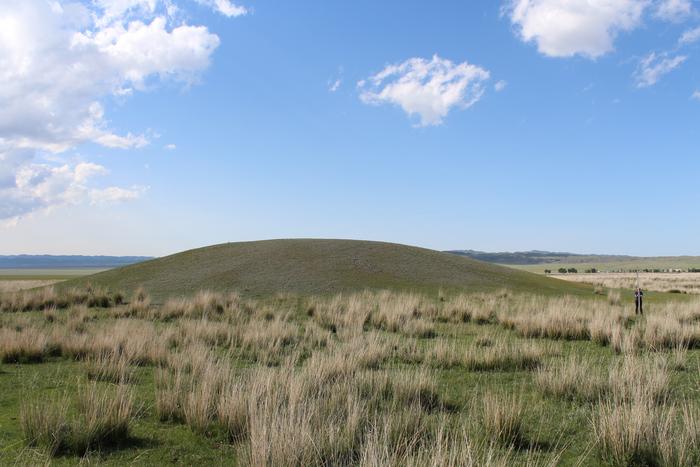
The Scytho-Siberian horizon, which emerged around the first millennium BCE, spanned from the Altai Mountains in Central Asia to the Black Sea. Nomadic groups within this cultural milieu, known broadly as the Scythians and Sakas, were renowned for their extraordinary mobility, horsemanship, and distinctive artistic traditions. Archaeological excavations have revealed large, elaborately constructed burial mounds—or kurgans—reserved for high-status individuals, often adorned with gold artifacts, sophisticated weaponry, and remains of sacrificed animals. These monumental tombs starkly contrast with simpler, modest graves lacking substantial grave goods, providing clear archaeological markers of prevailing social hierarchies.
Despite the visible material differentiation in burial contexts, the mechanisms underpinning social inequality and the transmission of elite status within these societies remained elusive. This study addresses a critical question: was high social status an achieved position based on personal accomplishments, or was it predominantly inherited through family lineage? To resolve this, researchers sequenced genome-wide ancient DNA from 85 Iron Age individuals, including 38 elites and 47 non-elites, unearthed from multiple Central Eurasian sites. This sample includes 46 newly sequenced genomes and, notably, the first genome-wide data from the iconic “Golden Man” of the Issyk kurgan in Kazakhstan—a find celebrated for its exquisite craftsmanship and symbolic significance.
The Issyk burial complex, located approximately 50 kilometers east of Almaty, Kazakhstan, is among the most remarkable archaeological discoveries from the Eurasian steppe. Dating to around 400–300 BCE, the “Golden Man” was interred within a wooden chamber and accompanied by over 4,000 gold ornaments, a gold-embroidered headdress, weaponry, zoomorphic embellishments, and a silver bowl inscribed with enigmatic script. Prior to this study, the biological sex of this individual was debated; however, genomic data now confidently classify the “Golden Man” as male, situating him genetically within the broader Iron Age Saka population. This breakthrough enhances our understanding of one of Central Asia’s most emblematic archaeological treasures.
Beyond identifying the “Golden Man,” the study’s population-wide analysis illuminated tight kinship structures among those interred in elite tombs. Intriguingly, individuals of high status were found to be genetically more closely related to each other across kurgans up to 100 kilometers apart than to contemporaneous, lower-status individuals buried at the same site. This pattern strongly implies the existence of an interconnected aristocratic network stretching across regional boundaries. Furthermore, evidence suggests consanguineous unions between elite families, consolidating power and reinforcing familial dominance.
Contrary to traditional models that associate elite status with either patrilocal (male-centered) or matrilocal (female-centered) residence patterns, the genetic data revealed no definitive correlation between lineage transmission and gender-specific residence practice. This nuance indicates that social organization among Iron Age Scythian elites was markedly complex, potentially incorporating flexible strategies of alliance and residence that transcended simplistic binary kinship paradigms. These findings open new avenues for interpreting how nomadic elites engineered their social and political landscapes.
Another notable revelation pertains to the prominent role of elite women within this Iron Age society. Nearly half of the genetically identified elite individuals in the dataset were female, challenging conventional perceptions that leadership and high status were predominantly male domains. Archaeological contexts corroborate this finding, with richly adorned female burials containing elaborate grave goods comparable to their male counterparts. This evidence underscores the possibilities of female agency and influence in governance and social affairs within Scythian groups, hinting at gender dynamics that warrant deeper exploration.
These comprehensive insights collectively underscore that Iron Age Eurasian steppe elites were not isolated individuals but members of extensive dynastic families whose influence and authority extended network-wide through shared ancestry and marital alliances. The inherited elite status, maintained across generations and regions, shaped both political authority and social inequality in ways that resonate with modern concepts of aristocratic rule and hereditary power.
The research was made possible by the synthesis of highly interdisciplinary methodologies—melding cutting-edge ancient DNA extraction and sequencing techniques, rigorous archeological contextualization, and detailed anthropological analysis. By transcending disciplinary boundaries, this approach elucidates how complex socio-political structures emerged in mobile, pastoralist societies often perceived as lacking formal hierarchies.
This study also expands the global understanding of the Scythian-Saka cultural complex, a label that encompasses a variety of nomadic groups who thrived across Central Eurasia during the early Iron Age. While ancient Greek historians termed them “Scythians” and Persian and Indian sources identified them as “Sakas,” these tribes shared distinct artistic styles, military prowess, and economic reliance on nomadic herding over vast landscapes. Their legacies are etched not only in their spectacular burial mounds but also in the emerging genetic evidence that reveals the sophistication of their social order.
The implications of this work extend beyond historical curiosities, offering a paradigm to understand how kinship and inheritance underpin power structures in non-sedentary societies. Such findings challenge narratives that associate complex hierarchy with urbanization exclusively, demonstrating that pastoral nomads developed elaborate dynastic systems without permanent cities or written languages.
In unraveling the genetic fabric of the “Golden Man” and his elite contemporaries, this study sets a precedent for future genomic research on ancient nomadic cultures. It highlights the transformative potential of ancient DNA to unravel mysteries of individual identity, social stratification, and political organization in prehistory. These revelations enrich our comprehension of Eurasian history and underscore the nuanced interplay between genetics, culture, and power in human society.
News Publication Date: 3-Jul-2026
Web References: http://dx.doi.org/10.1126/sciadv.aef0108
Cite Scienmag News
Courtney Benton. (July 4, 2026). Genomic Analysis Reveals Ancestral Connections Among Scythian Elite Burials Across the Eurasian Steppe. Scienmag. https://scienmag.com/genomic-analysis-reveals-ancestral-connections-among-scythian-elite-burials-across-the-eurasian-steppe/
Courtney Benton. "Genomic Analysis Reveals Ancestral Connections Among Scythian Elite Burials Across the Eurasian Steppe." Scienmag, 4 July 2026, https://scienmag.com/genomic-analysis-reveals-ancestral-connections-among-scythian-elite-burials-across-the-eurasian-steppe/. Accessed 3 September 2026.
Courtney Benton. "Genomic Analysis Reveals Ancestral Connections Among Scythian Elite Burials Across the Eurasian Steppe." Scienmag. July 4, 2026. https://scienmag.com/genomic-analysis-reveals-ancestral-connections-among-scythian-elite-burials-across-the-eurasian-steppe/


