


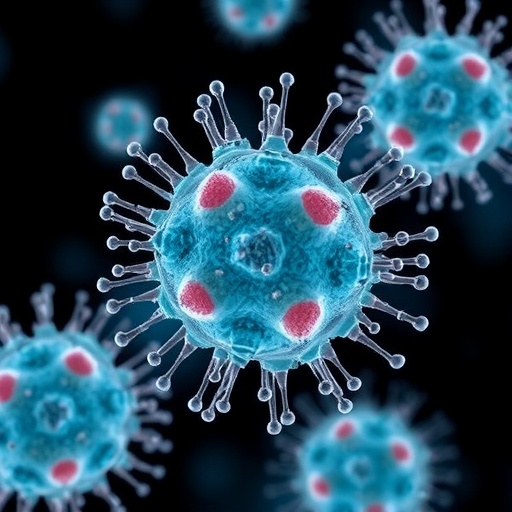
Cancer, traditionally viewed as a localized disease, has increasingly been understood as a systemic disorder that fundamentally disrupts the homeostasis of various host tissues and organs. Its impact extends beyond the primary tumor site, provoking widespread physiological alterations that contribute to disease progression and patient morbidity. Central to this systemic influence are extracellular vesicles and particles (EVPs), pivotal mediators of intercellular communication that shuttle bioactive molecules across distant biological landscapes. These nanoscale entities, secreted by tumor cells, serve as couriers of oncogenic signals capable of reprogramming recipient host cells in ways that foster an environment conducive to metastasis and immune evasion, thereby orchestrating a complex network of systemic dysfunction.
Emerging research has illuminated the role of tumor-derived EVPs in the establishment of pre-metastatic niches (PMNs) within distant organs. This process involves the selective priming of remote tissues, effectively conditioning them to support the colonization and outgrowth of metastatic cancer cells. EVPs deliver a cargo comprised of proteins, lipids, and nucleic acids that remodel the extracellular matrix, modulate local immune cell populations, and influence stromal cell behavior. Through these multifaceted mechanisms, EVPs not only facilitate metastatic dissemination but also engender significant immune dysregulation within PMNs, undermining the organ-specific defenses that would ordinarily impede tumor cell invasion.
Moreover, cancer-associated EVPs are implicated in systemic complications that extend into the realms of thrombosis and cardiovascular disease. The pro-coagulant nature of certain EVP populations contributes to the heightened risk of thrombotic events observed in cancer patients, a leading cause of morbidity and mortality. These vesicles modulate endothelial function, platelet aggregation, and coagulation cascades, creating a prothrombotic milieu. Concurrent cardiovascular impairment further exemplifies the broad-reaching consequences of EVP-mediated intercellular communication, linking tumor biology with systemic vascular pathology in an intricate interplay that exacerbates patient outcomes.
Beyond the vascular system, tumor-secreted EVPs exert profound effects on hepatic metabolism. The liver, a central hub for metabolic regulation, becomes a target for EVP-induced reprogramming that disrupts lipid and glucose processing. This hepatic dysfunction manifests as metabolic derangements with systemic repercussions, including insulin resistance and altered energy homeostasis. These pathophysiological changes underpin various cancer-associated metabolic syndromes, highlighting the liver’s vulnerability to EVP-driven remodeling and underscoring the systemic nature of oncogenic signaling facilitated by these vesicles.
In parallel, the influence of cancer-associated EVPs extends to glucose metabolism disorders, compounding the metabolic dysregulation stemming from hepatic impairment. Tumor-derived EVPs impact pancreatic beta cell function and systemic insulin sensitivity, promoting hyperglycemia and fostering an environment that supports tumor growth. This bidirectional metabolic crosstalk exemplifies a vicious cycle wherein cancer progression and metabolic disease synergistically exacerbate one another, emphasizing the need for holistic therapeutic interventions that address both oncologic and metabolic derangements.
Cachexia, a debilitating wasting syndrome characterized by severe muscle and adipose tissue loss, is another devastating paraneoplastic consequence propelled by EVP activity. EVPs carry factors that drive systemic inflammation and catabolic signaling pathways, accelerating tissue degradation and impairing anabolism. This multifactorial syndrome impacts quality of life and survival, illustrating the catastrophic systemic reach of EVPs beyond the tumor microenvironment into whole-body homeostasis.
Distinct from these metabolic and inflammatory manifestations are paraneoplastic syndromes targeting the nervous system, wherein EVP-mediated communication perturbs neural function and induces neurological deficits. The transport of neurotoxic or immune-modulating cargo by cancer-secreted vesicles contributes to neural damage, cognitive impairment, and neuropathies, underscoring the neurobiological dimension of EVP-related systemic pathology. This expands the clinical frontiers of cancer’s influence, revealing previously underappreciated mechanisms of neural-endocrine disruption.
The complexity of EVP-mediated systemic effects is further amplified by the dynamic interactions involving host-, diet-, and microbiota-derived EVPs. These various extracellular vesicle populations engage in a sophisticated interplay with tumor cells, influencing cancer progression and therapeutic resistance. Dietary components and microbial communities modulate EVP composition and function, integrating environmental factors into the tumor-host dialogue. This intricate network mediates response variability and opens avenues for microbiota-targeted and nutritional strategies aimed at modulating EVP profiles to improve treatment outcomes.
Therapeutically, EVPs present both challenges and opportunities. Their role as mediators of systemic dysfunction makes them compelling targets for intervention, with prospects ranging from inhibiting deleterious vesicle release to harnessing EVPs as delivery vehicles for anti-cancer agents. Engineering EVPs to carry immunomodulatory or cytotoxic payloads represents a promising frontier in systemic cancer therapy, potentially enabling precision targeting of both tumors and their systemic sequelae. However, the complex biology of EVPs demands nuanced approaches that consider their diverse origins, cargo heterogeneity, and functional versatility.
The recognition of cancer as a systemic disease, orchestrated in part through EVP-mediated inter-organ communication, mandates a paradigm shift in oncologic treatment approaches. Traditional strategies focusing solely on tumor eradication fall short of addressing the multifaceted systemic perturbations driven by EVP signaling. A holistic approach, targeting not only the localized tumor but also its systemic metabolic, immunological, and neurological consequences, offers a more comprehensive model for improving patient prognosis and quality of life.
Future research aims to delineate the precise molecular mechanisms governing EVP biogenesis, cargo selection, and uptake, as well as their specific roles in various organ systems. This knowledge will enhance the development of biomarkers for early detection, prognostication, and the monitoring of systemic disease burden. Implementing EVP profiling in clinical settings could transform personalized medicine by enabling tailored interventions that counteract systemic effects while optimizing anti-tumor efficacy.
The systemic health alterations promoted by EVPs extend beyond mere clinical symptoms; they represent fundamental disruptions in cellular communication networks that maintain organismal equilibrium. Understanding these disruptions at a molecular and cellular level unravels the complexity of cancer pathophysiology and highlights novel therapeutic vulnerabilities. Integrating insights from EVP biology into clinical oncology holds promise for not only extending survival but also mitigating the multifactorial burdens of cancer-associated comorbidities.
In summary, the systemic impact of cancer-associated extracellular vesicles and particles embodies a transformative area of oncology research, unveiling the far-reaching influence of tumors on host physiology. These findings compel a re-evaluation of cancer from a localized disease to a multifaceted systemic disorder, driven by intricate EVP networks that foster metastasis, metabolic derangements, immune escape, and organ dysfunction. Holistic treatment paradigms that address this complexity through the modulation or exploitation of EVPs could revolutionize cancer therapy and improve comprehensive patient care.
As investigations continue, the intersection of EVP biology with immunology, metabolism, neurology, and microbiome science promises to yield integrated strategies that combat the systemic consequences of cancer. Leveraging the dual roles of EVPs—as both disease mediators and therapeutic tools—could unlock novel clinical avenues for managing cancer’s broad assault on human health. This evolving understanding ultimately underscores the necessity to transcend tumor-centric models and embrace systemic frameworks that encompass the full spectrum of cancer’s impact.
In this new era of oncology, where extracellular vesicles and particles emerge as both villains and potential heroes, a more nuanced appreciation of cancer’s systemic nature propels scientific discovery and therapeutic innovation. The future of cancer treatment lies in unraveling these complex vesicular communications that transcend traditional boundaries, paving the way for interventions that restore homeostasis, thwart metastasis, and enhance survival. This holistic vision heralds a paradigm shift, positioning extracellular vesicles and particles at the forefront of systemic cancer biology and clinical therapeutics.
Wang, G., Lucotti, S., Bojmar, L. et al. Systemic health impact of cancer-associated extracellular vesicles and particles.
Nat Rev Cancer (2026). https://doi.org/10.1038/s41568-026-00952-w
Cite Scienmag News
Nathaniel Bowman. (July 2, 2026). Cancer-Linked Extracellular Vesicles Impact Systemic Health. Scienmag. https://scienmag.com/cancer-linked-extracellular-vesicles-impact-systemic-health/
Nathaniel Bowman. "Cancer-Linked Extracellular Vesicles Impact Systemic Health." Scienmag, 2 July 2026, https://scienmag.com/cancer-linked-extracellular-vesicles-impact-systemic-health/. Accessed 1 September 2026.
Nathaniel Bowman. "Cancer-Linked Extracellular Vesicles Impact Systemic Health." Scienmag. July 2, 2026. https://scienmag.com/cancer-linked-extracellular-vesicles-impact-systemic-health/


