


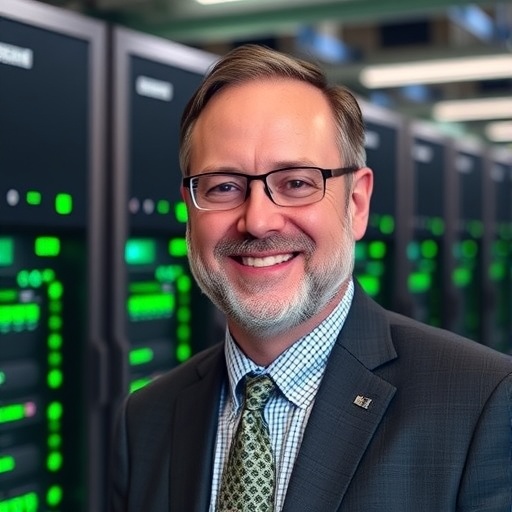
Tom King, a distinguished veteran in electric grid research at the U.S. Department of Energy’s Oak Ridge National Laboratory (ORNL), has been appointed as the director of the Next-Generation Data Centers Institute (NGDCI). This newly established institute is positioned at the forefront of integrating scientific research across computing, energy systems, and applied engineering disciplines. Its mission is to build the foundational science necessary for creating the next wave of AI data centers—facilities designed to be affordable, energy-efficient, reliable, and seamlessly integrated with the nation’s electric grid infrastructure.
The appointment of King signals a strategic emphasis on addressing the multifaceted challenges posed by increasingly demanding AI workloads and their substantial energy consumption footprints. NGDCI’s research agenda is expansive, tackling core areas such as thermal management aimed at mitigating heat dissipation issues in dense computing environments, development of robust physical frameworks for power systems, sophisticated grid integration techniques, and advanced operational load management. Moreover, NGDCI prioritizes cybersecurity in data center operations and applies decision sciences alongside integrated systems modeling to optimize performance and resilience across the entire ecosystem of AI infrastructure.
King’s extensive career at ORNL, where he has remained a pivotal figure for over two decades, lends unparalleled expertise to this role. His leadership experience encompasses overseeing the Grid Infrastructure Program and acting as a senior advisor on national grid deployment strategies. His prior collaborative role with the University of Tennessee’s CURENT Engineering Research Center emphasized innovations in wide-area situational awareness and control systems, critical to enhancing grid stability and responsiveness—skills essential to NGDCI’s mission of tightly coupling AI data centers with grid operations.
A fundamental challenge NGDCI addresses is the complex interplay between computational efficiency, power consumption, and cooling requirements within AI data centers. King underscores this by highlighting the necessity of integrated design and validation approaches that encompass power, cooling, and grid considerations simultaneously. This systems-level perspective ensures that advancements are not isolated but holistically optimized, thereby reducing deployment risks and accelerating technological breakthroughs for commercial applications.
To realize these goals, NGDCI leverages ORNL’s cutting-edge research assets and platforms. One such resource is the ExaDIGIT initiative, which facilitates sophisticated modeling of interactions between large-scale computing infrastructure, energy networks, and the electric grid. Additionally, hardware-in-the-loop testbeds simulate real-world operational conditions to assess the robustness and effectiveness of emerging technologies. Complementing these, NGDCI employs real-time virtual models—digital twins—that offer comprehensive insights into chip performance, rack-level dynamics, facility operations, and grid behavior, providing a dynamic feedback loop for continuous innovation.
The institute adopts a “lab-as-a-test-bed” methodology, enabling end-to-end validation of AI data center technologies within controlled ORNL environments before their widespread industry adoption. This approach significantly curtails deployment risks while enhancing system reliability and efficiency, imperative for the mission-critical nature of AI workloads that underpin national research and development endeavors.
NGDCI’s work also aligns with the broader objectives of the Department of Energy’s Genesis Mission, which aims to synergize the country’s preeminent computational resources with the energy systems that power them. The ultimate aspiration is to double the impact and productivity of American R&D within a decade, positioning the U.S. as a leader in AI infrastructure innovation and energy-efficient computation on a global scale.
King’s vision for NGDCI encapsulates a proactive steering of cutting-edge research and development efforts that address the pressing energy, reliability, and infrastructure challenges posed by next-generation AI systems. By bridging the gap between computational demands and grid capabilities, NGDCI aspires to create AI data centers that are not only powerful but also sustainable and resilient, advancing both industry and national interests.
Before joining ORNL, King contributed his expertise at the Department of Energy as a program manager specializing in distributed energy resources and industrial technologies. His tenure in the commercial sector provided leadership experience in fossil energy generation, adding a diverse energy management perspective that informs his holistic approach to AI data center challenges.
King’s educational foundation includes a mechanical engineering degree from Clarkson University, a master’s in materials engineering from Rensselaer Polytechnic Institute, and an MBA from the University of Tennessee. This blend of technical and business acumen uniquely positions him to lead NGDCI in translating complex scientific discoveries into commercial innovations that address the critical needs of AI infrastructure and energy management.
As the Next-Generation Data Centers Institute embarks on its ambitious mission, it represents a nexus of interdisciplinary research and practical development aimed at revolutionizing AI data centers. Through its comprehensive integration of computing, energy systems, and applied engineering under Tom King’s leadership, NGDCI holds the promise of delivering transformative solutions that will power the future of artificial intelligence while safeguarding the grid and optimizing resource utilization for years to come.
News Publication Date: Not specified
Web References:
- https://www.ornl.gov/nextgendatacenters
- https://www.olcf.ornl.gov/tag/exadigit/
- https://www.ornl.gov/genesis
- https://www.energy.gov/science/office-science
Keywords
Next-Generation Data Centers, AI Infrastructure, Electric Grid Integration, Thermal Management, Systems Modeling, Grid Reliability, ExaDIGIT, Digital Twins, Energy Efficiency, Oak Ridge National Laboratory, High-Performance Computing, AI Data Center Innovation
Cite Scienmag News
Denise Maddox. (July 1, 2026). King Appointed Director of ORNL’s Next-Generation Data Centers Institute. Scienmag. https://scienmag.com/king-appointed-director-of-ornls-next-generation-data-centers-institute/
Denise Maddox. "King Appointed Director of ORNL’s Next-Generation Data Centers Institute." Scienmag, 1 July 2026, https://scienmag.com/king-appointed-director-of-ornls-next-generation-data-centers-institute/. Accessed 1 September 2026.
Denise Maddox. "King Appointed Director of ORNL’s Next-Generation Data Centers Institute." Scienmag. July 1, 2026. https://scienmag.com/king-appointed-director-of-ornls-next-generation-data-centers-institute/


