


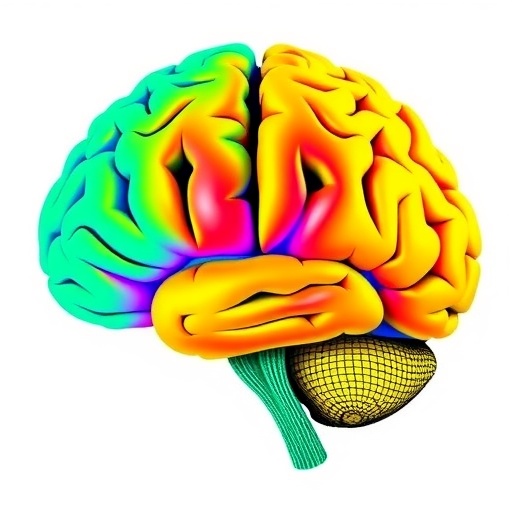
In a groundbreaking study published in Nature, researchers have unveiled a complex interplay of genetic programs that sculpt the sensorimotor–association (S–A) axis of cortical development. This axis represents a fundamental organizational feature of the mammalian brain, linking primary sensory and motor areas with higher-order association regions. Central to this discovery are two key genes, SEMA7A and PLXNC1, whose antagonistic expression patterns reveal competing developmental programs that orchestrate the maturation of neocortical areas from fetal stages through adulthood.
The study leverages principal component analysis (PCA) to dissect gene expression profiles along the S–A axis during human cortical development. Notably, SEMA7A, a gene encoding a membrane-bound ligand, exhibits a strikingly increasing contribution to principal component 1 (PC1) scores throughout development, culminating in its dominant role within adult sensorimotor cortices. Its receptor, encoded by PLXNC1, displays an inverse trajectory, with expression concentrated in association areas. This complementary expression pattern suggests that SEMA7A and PLXNC1 serve as molecular markers of opposing developmental trajectories—central programs dominating sensorimotor regions and pericentral programs defining association cortex.
The functional significance of this gene pair is profound. Both SEMA7A and PLXNC1 govern axon guidance via bidirectional signaling, playing essential roles in axonal repulsion, synaptogenesis, and dendritogenesis. The researchers hypothesize that the dynamic balance of these molecules underlies the physical and functional segregation of cortical zones, effectively delineating the S–A axis at a molecular level. Intriguingly, other axon guidance genes and thyroid hormone receptor THRB—which likely intersects retinoid acid (RA) signaling pathways—also track with this developmental axis, hinting at a broader signaling network driving cortical maturation.
To validate this model, the team examined the spatiotemporal expression of SEMA7A and PLXNC1 from early fetal human brain stages to adulthood. Their analyses at fetal period 7 reveal that PCA based exclusively on these two genes robustly recapitulates the canonical S–A axis, with high SEMA7A expression pinpointing primary sensorimotor areas and elevated PLXNC1 marking association regions. This dichotomy is mirrored in thalamic nuclei, where first-order sensorimotor (FO) and higher-order association (HO) nuclei also display complementary gene expression, reinforcing the concept that thalamic gene expression encapsulates cortical organizational principles.
Further confirmation comes from advanced imaging modalities including MRI-based cortical surface renderings, which depict these genes’ sharply opposed gradients in a PCW17 (post-conception week 17) fetal brain. This imaging, combined with detailed gene expression correlations, underscores a near-perfect inverse relationship between SEMA7A and PLXNC1 across cortical regions. This gene expression polarity is preserved in adulthood, supporting the hypothesis that the S–A axis, as defined by these molecular programs, is a conserved and defining feature of brain anatomy.
The temporal refinement of SEMA7A expression, especially in the primary visual cortex (V1C), emerges prominently between early and late mid-fetal stages, as evidenced by fluorescence markers and in situ hybridization studies. Notably, SEMA7A enrichment also demarcates the lateral occipital cortex corresponding to the middle temporal area (also known as visual area 5) in primates—a region with unique thalamic input characteristics. This suggests that SEMA7A’s role extends beyond classic sensorimotor domains into associative visual processing, potentially contributing to species-specific adaptations.
Parallel investigations in murine models illuminate the developmental dynamics of these programs in rodents. Initial broad cortical distribution of Sema7a undergoes progressive restriction and focal upregulation within primary sensorimotor territories, whereas Plxnc1 expression initiates at forelimb and temporal poles before gradually invading medial prefrontal, insular, and temporal associative zones. This staggered spatiotemporal expression aligns with the theory that pericentral programs emanate inward from cortical poles to sculpt association areas, supplanting central programs concentrated centrally.
The study also integrates observations on Cyp26b1, an enzyme critical for retinoic acid metabolism. Its ring-like expression around anterolateral motor cortex and related allocortical regions suggests a modulatory role for RA signaling in defining pericentral developmental boundaries. Given the known interaction between thyroid hormone receptor THRB and RA signaling, these findings hint at an intricate hormonal-genetic axis that fine-tunes cortical patterning along the S–A gradient.
Importantly, these genetic programs are evolutionarily conserved across species. Comparative analyses using RNA-scope in mouse, opossum, and chicken brains reveal similar SEMA7A and PLXNC1 expression patterns, underscoring the fundamental nature of these molecular determinants. Such conservation foregrounds the universality of these competing genetic programs in establishing cortical architectures responsible for sensorimotor and association functions across vertebrates.
Methodologically, the research harnesses cutting-edge gene expression profiling, high-throughput PCA, and in situ hybridization techniques, combined with anatomical brain mapping and MRI data integration. This multi-modal approach provides a robust framework for decoding the molecular logic underlying cortical development, offering unprecedented granularity into how competing genetic circuits choreograph the emergence of functionally specialized cortical domains.
The implications of this study are broad and potentially transformative. By elucidating the molecular basis of the S–A axis, it lays the groundwork for understanding neurodevelopmental disorders that disproportionately affect distinct cortical areas. Furthermore, the intersection of axon guidance cues with hormonal pathways could open new avenues for therapeutic intervention aimed at restoring or modulating cortical circuit formation.
This pioneering exploration of SEMA7A and PLXNC1 as central players in cortical patterning enhances our understanding of brain development at the molecular level. It provides a powerful paradigm for investigating how competing genetic programs integrate spatial and temporal cues to sculpt the brain’s complex functional landscape. As we further dissect these pathways, new insights into brain evolution, development, and disease are bound to emerge, heralding a new era in neuroscience research.
Cite Scienmag News
Juliet Wilcox. (July 1, 2026). Competing Programs Drive Cortical Sensorimotor Development. Scienmag. https://scienmag.com/competing-programs-drive-cortical-sensorimotor-development/
Juliet Wilcox. "Competing Programs Drive Cortical Sensorimotor Development." Scienmag, 1 July 2026, https://scienmag.com/competing-programs-drive-cortical-sensorimotor-development/. Accessed 2 September 2026.
Juliet Wilcox. "Competing Programs Drive Cortical Sensorimotor Development." Scienmag. July 1, 2026. https://scienmag.com/competing-programs-drive-cortical-sensorimotor-development/


