


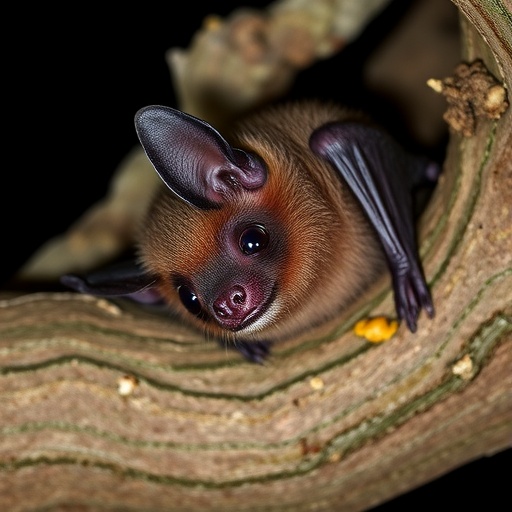
A groundbreaking new study from the University of Maryland has illuminated the intricate ways in which animals tailor their immune systems not merely in response to infection but also in an evolutionary dance with their sex, age, and reproductive strategies. This expansive research focusing on wild greater spear-nosed bats (Phyllostomus hastatus) unpacks how these mammals balance immune investment with the competing demands of survival, reproduction, and social competition.
Published recently in the Journal of Animal Ecology, the study challenges long-standing assumptions about immune system evolution by revealing that immune defense strategies are finely tuned to the ecological and biological pressures each individual faces. Rather than universally amplifying immune responses, animals forge a balance to optimize their overall fitness, carefully allocating limited energy and physiological resources across growth, mating, and defense mechanisms.
At the heart of this research lies a detailed analysis of leukocyte profiles, where the ratio of neutrophils to lymphocytes (NLR) serves as a proxy to understanding immune strategy shifts. Neutrophils represent the immune system’s rapid responders, acting as a first line of defense, while lymphocytes enable targeted, adaptive immunity. Intriguingly, the study shows that male bats prioritize a neutrophil-dominant immune profile much more than females do, suggesting an evolutionary trade-off geared towards immediate, nonspecific immune protection.
The greater spear-nosed bat presents an exceptional model for this inquiry due to its highly polygynous reproductive system. Dominant males fiercely guard harems of up to 25 females, resulting in intense competition and a disproportionately higher mortality rate among males compared to females. These males, although short-lived, sire multiple offspring, which naturally raises questions about how reproductive effort intersects with immune function. The researchers’ findings underscore that the mating success of these males, despite their extreme physiological toll, hinges partly on their distinctive immune configurations.
Another critical insight emerges from the study’s longitudinal design, involving repeated measures of over 500 individuals tracked across several years. This methodology enabled researchers to detect predictable alterations in immune balance linked with age and reproductive seasonality. The data show a marked increase in the NLR ratio as bats age, particularly among males, intimating an age-related shift toward predominantly innate innate immune defenses, potentially compensating for diminished adaptive immunity accrued over the lifespan.
Importantly, the mating season itself triggers heightened neutrophil dominance in both sexes. This suggests reproduction imposes a significant physiological stress, compelling bats to bolster immediate immune defenses perhaps to protect themselves during periods of heightened exposure to pathogens linked with increased social interaction and mating activity. This dynamic immune remodeling demonstrates the evolutionary interdependence between reproductive biology and immune system calibration.
One of the study’s most startling yet revelatory outcomes is the observation that some males exhibit NLR values which, if recorded in a human clinical setting, would be diagnostic of severe pathological conditions such as systemic inflammation or infection. Yet, these bats displayed no overt signs of illness, instead showcasing peak fitness by successfully defending their harems. This paradox points toward unique immunological adaptations permitting bats to endure physiological states that would usually be deleterious in other mammals, suggesting avenues for future research on immune tolerance mechanisms.
This work also touches on the broader immunological enigma of bats’ remarkable resilience to viral pathogens. Unlike many mammals that suffer from immune overreactions—often leading to damaging inflammation—bats manage infections without triggering cytokine storms. The findings of differential immune investment strategies relating to reproductive effort and stress add another layer to understanding this phenomenon, accentuating bats’ potential as models to unravel immune modulation and tolerance in mammals.
Further, the sex-specific differences in immunity unveiled by this research prompt reflection on evolutionary trade-offs in mammals broadly, including humans. Male and female bats adopt divergent immune strategies shaped by their distinct reproductive roles and life expectancies. In humans, too, understanding such sex-based immunological differences could unlock insights critical for personalized medicine and treatments tailored to biological sex and age.
This study highlights the indispensable role of ecological context and life history traits in immune system evolution. The intricate balance animals maintain between growth, reproduction, survival, and immunity reveals that immune defense mechanisms cannot be viewed as isolated biological functions but rather as integrated components of an organism’s adaptive strategy shaped by evolutionary pressures over millennia.
By bridging fields such as immunology, behavioral ecology, and evolutionary biology, this research contributes substantially to our understanding of how immune systems are sculpted by multifaceted biological needs. It encourages a paradigm shift away from viewing immunity as a uniform response to pathogens toward recognizing it as a flexible, adaptive system responsive to diverse ecological challenges and life history demands.
The University of Maryland team, led by Professor Gerald Wilkinson, employed rigorous experimental methodologies, combining field observations with laboratory analyses of blood cell profiles and hormonal stress markers. By leveraging decades-long data on individual bats’ age and reproductive status, the study offers an unprecedentedly detailed picture of immune investment dynamics in a wild mammal population.
Ultimately, these findings open new avenues for exploring immune function in evolutionary and ecological contexts, with far-reaching implications. Understanding the trade-offs between reproduction and immunity in wild species not only deepens knowledge of animal biology but may also inform human health research, particularly in areas related to aging, stress, and sex-specific immune responses. The bat, often an enigmatic figure in zoonotic disease studies, now also emerges as a compelling model for advancing immunological science.
News Publication Date: 30-Jun-2026
Web References: https://doi.org/10.1111/1365-2656.70296
References:
Wilkinson, G. S., Kaiser, J. A., Armenta, K. N., Cunningham, A. S. G., Hex, S. B. S. W., Lawson, A. M., & Rayner, J. G. (2026). Leukocyte profiles reveal sex and age differences in immune investment in a polygynous bat. Journal of Animal Ecology, June 30, 2026.
Cite Scienmag News
Gavin Prescott. (July 1, 2026). New Study Uncovers Impact of Mating Competition, Age, and Sex on Immune Systems in Wild Bats. Scienmag. https://scienmag.com/new-study-uncovers-impact-of-mating-competition-age-and-sex-on-immune-systems-in-wild-bats/
Gavin Prescott. "New Study Uncovers Impact of Mating Competition, Age, and Sex on Immune Systems in Wild Bats." Scienmag, 1 July 2026, https://scienmag.com/new-study-uncovers-impact-of-mating-competition-age-and-sex-on-immune-systems-in-wild-bats/. Accessed 1 September 2026.
Gavin Prescott. "New Study Uncovers Impact of Mating Competition, Age, and Sex on Immune Systems in Wild Bats." Scienmag. July 1, 2026. https://scienmag.com/new-study-uncovers-impact-of-mating-competition-age-and-sex-on-immune-systems-in-wild-bats/


