


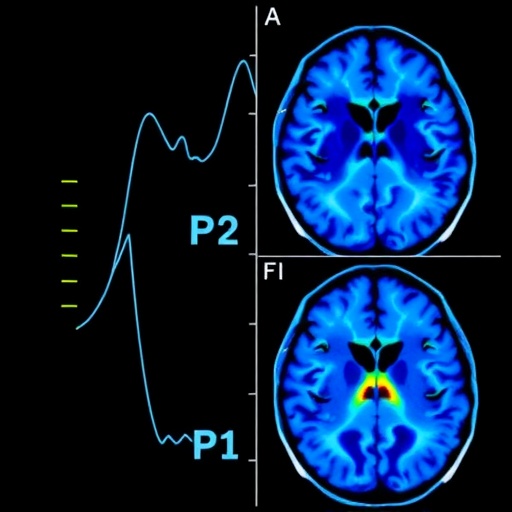
In a groundbreaking advancement that could transform our understanding of Parkinson’s disease, researchers have employed cutting-edge multimodal neuroimaging techniques to map out the intricate progression of nigrostriatal degeneration, revealing a striking posterior-to-anterior gradient that underpins the disease’s relentless march through the brain. This novel insight, as detailed by Lin, Zhang, Zhao, and colleagues in their soon-to-be-published study in npj Parkinson’s Disease, promises to redefine diagnostic criteria, therapeutic targeting, and the very framework through which scientists conceptualize neurodegeneration in Parkinson’s disease.
Parkinson’s disease (PD) is a neurodegenerative disorder primarily characterized by the progressive loss of dopaminergic neurons within the substantia nigra pars compacta, a key component of the nigrostriatal pathway. Traditionally, the pathological hallmark of PD has been associated with the early and pronounced deficits in this midbrain region, leading to the quintessential motor symptoms such as bradykinesia, rigidity, and tremor. However, the exact spatial and temporal dynamics of nigrostriatal degeneration have remained elusive, largely due to limitations in imaging modalities and the challenge of capturing subtle yet critical changes along this pathway.
Leveraging a sophisticated combination of structural MRI, diffusion tensor imaging (DTI), and advanced positron emission tomography (PET) tracers, Lin et al. have meticulously charted the trajectory of neurodegeneration from the posterior segments of the nigrostriatal circuit moving anteriorly. This posterior-to-anterior gradient suggests that degeneration initiates in more caudal territories such as the dorsal tier of the substantia nigra before progressing toward anterior regions, including the ventral striatum. Such a gradient challenges the conventional understanding that the degeneration occurs uniformly or is predominantly anterior-focused, offering a far more nuanced portrait of disease evolution.
The methodology employed in this study exemplifies the power of multimodal neuroimaging. High-resolution structural MRI was used to delineate the anatomy of the substantia nigra with unprecedented precision, while DTI enabled the tracing of microstructural white matter integrity along the nigrostriatal pathways. Complementing these were PET scans utilizing novel tracers that bind specifically to dopamine transporters and α-synuclein aggregates—pathological proteins intimately linked with PD. This integrated approach allowed for the simultaneous visualization and quantification of both anatomical degradation and pathological burden in vivo.
Crucially, the study’s longitudinal design provided dynamic insights into how nigrostriatal degeneration unfolds over the course of the disease. Participants, carefully selected across various stages of PD, underwent repeated imaging, allowing researchers to detect incremental changes and confirm the presence of the posterior-to-anterior gradient not only cross-sectionally but through real-time disease progression. Such temporal mapping is invaluable for validating biomarkers that could serve as predictive indicators of disease course and therapeutic efficacy.
One of the more profound implications of this gradient model concerns therapeutic intervention timing and targeting. Current therapies, predominantly symptomatic, focus on replenishing dopamine levels or modulating its receptors, but do not halt or reverse neurodegeneration. Understanding that degeneration advances along a directional gradient provides the opportunity to develop treatments aimed at early vulnerable zones, potentially arresting or slowing pathology before widespread cortical involvement ensues. Additionally, the identification of posterior regions as initial degeneration sites offers new targets for neuroprotective strategies.
From a clinical diagnostic perspective, this refined understanding complicates the reliance on motor symptomatology as the primary indicator of nigrostriatal impairment. The posterior-to-anterior gradient may manifest with earlier non-motor symptoms or subtle functional deficits arising from affected posterior regions. Incorporating multimodal imaging protocols into clinical practice could thus facilitate earlier diagnosis, more accurate staging, and personalized management plans tailored to the degeneration pattern specific to each patient.
Beyond the nigrostriatal circuit, the study opens intriguing avenues for exploring similar spatial gradients in other neurodegenerative diseases, potentially uncovering shared or divergent mechanisms of progression across disorders like Alzheimer’s disease or multiple system atrophy. It highlights the critical importance of integrating various imaging techniques to holistically capture the multifaceted nature of brain pathology, moving beyond the limitations of unimodal approaches.
The implications of this research also ripple into the realm of biomarker development. Identifying robust imaging biomarkers of regional nigrostriatal integrity and pathological protein accumulation facilitates clinical trial design by enabling patient stratification according to disease stage and degeneration pattern. Moreover, these biomarkers could serve as surrogate endpoints, vastly accelerating the evaluation of candidate disease-modifying therapies.
In the broader neuroscientific context, Lin and colleagues’ findings challenge existing neuroanatomical conceptualizations of the nigrostriatal pathway. The gradient model invites reconsideration of the connectivity patterns and vulnerability factors that make posterior regions more susceptible in the early disease phase. Factors such as differential mitochondrial function, oxidative stress susceptibility, or regional protein expression profiles may underlie this spatial predilection, warranting deeper molecular investigations.
Furthermore, the technical innovations in imaging protocols presented in this study establish a new standard for resolving subregional changes within small brainstem nuclei—structures notoriously challenging to visualize in vivo. The refinement of PET tracers specific to pathological aggregates and dopaminergic markers promises to revolutionize not only preclinical studies but also clinical workflows, embedding precision neuroimaging at the heart of PD management.
Overall, this research marks a pivotal juncture in Parkinson’s disease neuroscience. By elucidating the posterior-to-anterior gradient of nigrostriatal degeneration with unprecedented clarity, it paves the way for a new era of precision diagnostics and therapeutics. As research continues, the multimodal neuroimaging framework established here will likely serve as a blueprint for unraveling complex neurodegenerative processes and developing interventions that can effectively alter disease trajectories, ultimately improving quality of life for millions affected worldwide.
Cite Scienmag News
Diana Fleming. (July 1, 2026). Neuroimaging Reveals Nigrostriatal Decline Gradient in Parkinson’s. Scienmag. https://scienmag.com/neuroimaging-reveals-nigrostriatal-decline-gradient-in-parkinsons/
Diana Fleming. "Neuroimaging Reveals Nigrostriatal Decline Gradient in Parkinson’s." Scienmag, 1 July 2026, https://scienmag.com/neuroimaging-reveals-nigrostriatal-decline-gradient-in-parkinsons/. Accessed 31 August 2026.
Diana Fleming. "Neuroimaging Reveals Nigrostriatal Decline Gradient in Parkinson’s." Scienmag. July 1, 2026. https://scienmag.com/neuroimaging-reveals-nigrostriatal-decline-gradient-in-parkinsons/


