


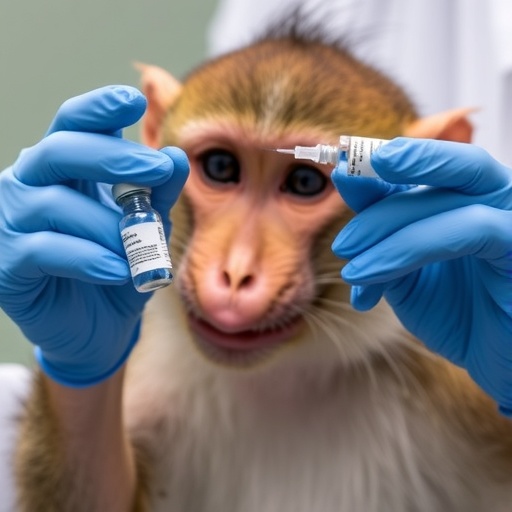
A revolutionary breakthrough in the quest for an effective HIV vaccine has emerged from an extensive 14-year scientific collaboration between the La Jolla Institute for Immunology (LJI) and Scripps Research. Recent findings published in the esteemed journal Nature have revealed unprecedented success in primate models, signaling a significant leap forward in the battle against HIV and AIDS. This novel vaccine strategy harnesses the immune system’s capacity to produce broadly neutralizing antibodies, overcoming the formidable defenses mounted by the virus.
HIV, the virus responsible for AIDS, has long evaded vaccine development efforts due to its exceptional genetic variability and sophisticated mechanisms that shield it from immune attack. Traditional vaccine approaches, which often stimulate antibodies targeting specific viral strains, have failed to provide durable or broad-spectrum protection. Recognizing these challenges, the collaborative team led by LJI’s Professor Shane Crotty, Ph.D., and Scripps Research Professor William Schief, Ph.D., embarked on an ambitious project reminiscent of monumental scientific endeavors like the Apollo moon missions, requiring iterative innovation and discovery.
The core advance presented by this new vaccine lies in its ability to elicit high titers of “broadly neutralizing antibodies” (bNAbs), a rare class of antibodies capable of recognizing and neutralizing diverse HIV variants. These bNAbs target conserved epitopes on the HIV envelope glycoproteins that remain relatively unchanged across strains, thus circumventing the virus’s antigenic variability. Historically, eliciting bNAbs through vaccination has been an elusive goal, primarily because the immune system seldom generates these antibodies naturally without chronic infection or disease progression.
The vaccine strategy utilizes an innovative immunogen design, integrating stabilized HIV envelope trimers engineered to resemble the native viral spikes. These immunogens are coupled with novel adjuvants to enhance immune activation, including synthetic molecules designed to stimulate key innate immune pathways. This sophisticated vaccine formulation primes B cells to mature along specific developmental pathways, thereby fostering the production of bNAbs with exceptional affinity and breadth.
Preclinical trials in non-human primates demonstrated the vaccine’s capacity to induce the most robust HIV-neutralizing antibody responses ever documented in these models. The animals exhibited sustained antibody titers targeting a broad range of viral strains, translating into significant protection against experimental HIV exposures. Such efficacy in primate models is an encouraging predictor for potential human application, although further clinical evaluation will be essential to confirm safety, immunogenicity, and protective efficacy.
Importantly, the vaccine’s mechanism transcends conventional immune recognition by training immune cells to see beyond HIV’s shield of glycan sugars and variable loops. By focusing immune responses on conserved structural elements hidden beneath this camouflage, the vaccine effectively unmasks the virus, guiding the immune system to mount a potent and broad defense. This approach highlights the critical interplay between immunogen design and antibody maturation processes, providing crucial insights for next-generation vaccine development.
The collaborative effort involved extensive structural biology analyses, including cryo-electron microscopy, to visualize the vaccine-targeted envelope proteins at atomic resolution. These detailed structural insights informed rational immunogen modifications aimed at stabilizing desired conformations that optimally engage the naive B-cell receptor repertoire. Concurrently, longitudinal immunogenicity studies elucidated the kinetics of antibody evolution, informing iterative vaccine boosting strategies to refine and enhance bNAb responses.
This work was supported by multiple prominent funding bodies, including the National Institute of Allergy and Infectious Diseases (NIAID), the Bill and Melinda Gates Foundation, and the International AIDS Vaccine Initiative (IAVI), demonstrating the critical role of sustained investment in high-risk, high-reward scientific endeavors. The synergy of expertise in immunology, structural biology, and vaccine design was essential for surmounting one of the most complex challenges in infectious disease prevention.
Safety considerations remain paramount as the vaccine progresses toward human trials. The current preclinical data suggest a favorable profile, with no observed adverse effects in primate subjects. However, translating these findings to humans entails rigorous phased clinical testing to evaluate potential reactogenicity, immunogenic durability, and protection against diverse HIV clades encountered in endemic regions.
Beyond HIV, the principles advanced in this vaccine platform have broader implications for vaccine science. The paradigm of eliciting broadly neutralizing antibodies through precisely engineered immunogens could inform vaccine strategies against other rapidly mutating pathogens such as influenza, hepatitis C, and emerging viral threats. This approach underscores the growing importance of tailoring immune responses at the molecular level for enhanced effectiveness.
The culmination of more than a decade of research, this study epitomizes the power of multidisciplinary collaboration and cutting-edge technology in transforming scientific possibility into practical solutions. While challenges remain before this vaccine can be widely deployed, the results kindle renewed optimism for controlling the HIV epidemic, which continues to afflict millions worldwide.
Efforts are now underway to translate these promising preclinical outcomes into human clinical trials, an essential step toward validating vaccine efficacy and ultimately curbing a global health crisis. If successful, this HIV vaccine could mark a watershed moment in infectious disease prevention, offering durable and broad protection against a virus that has long defied eradication.
In summary, the innovative HIV vaccine developed by teams at the La Jolla Institute for Immunology and Scripps Research represents a landmark achievement, demonstrating for the first time that vaccination can reliably induce broadly neutralizing antibodies in primates. This milestone paves the way for transformative advancements in HIV prevention and offers tangible hope toward the goal of ending the AIDS epidemic.
News Publication Date: 30-Jun-2026
Web References:
https://www.nature.com/articles/s41586-026-10837-5
DOI: 10.1038/s41586-026-10837-5
Cite Scienmag News
Kristina Jarvis. (June 30, 2026). Promising New HIV Vaccine Shows Remarkable Success in Primate Trials. Scienmag. https://scienmag.com/promising-new-hiv-vaccine-shows-remarkable-success-in-primate-trials/
Kristina Jarvis. "Promising New HIV Vaccine Shows Remarkable Success in Primate Trials." Scienmag, 30 June 2026, https://scienmag.com/promising-new-hiv-vaccine-shows-remarkable-success-in-primate-trials/. Accessed 31 August 2026.
Kristina Jarvis. "Promising New HIV Vaccine Shows Remarkable Success in Primate Trials." Scienmag. June 30, 2026. https://scienmag.com/promising-new-hiv-vaccine-shows-remarkable-success-in-primate-trials/


