


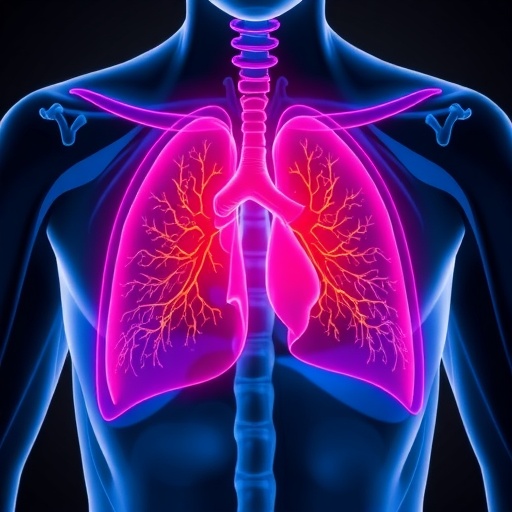
Acute respiratory distress syndrome (ARDS) stands as a dire challenge in critical care medicine, exacting a grim toll with nearly 40% mortality among those afflicted. This condition, notoriously prevalent during the COVID-19 pandemic, arises when an inflammatory onslaught, triggered by infection or trauma, breaches the lung’s delicate barriers. The infiltration of fluid into the alveoli collapses pulmonary function and sharply diminishes oxygen exchange, leading patients down a path of respiratory failure. Until now, therapeutic options for ARDS have been agonizingly limited, leaving clinicians reliant on supportive care measures while mortality remains alarmingly high.
In a groundbreaking development emerging from the University of Florida, researchers have unveiled promising findings from a phase 2A clinical trial testing a novel monoclonal antibody, ALT-100, targeted against the extracellular form of NAMPT, a pivotal master regulator of inflammatory responses. NAMPT, or nicotinamide phosphoribosyltransferase, plays a critical role in cellular metabolism and immune signaling, but when dysregulated, it drives unchecked inflammation and a cascade of cytokine storm phenomena that devastate lung tissue and precipitate multi-organ dysfunction.
The clinical trial enlisted fifteen individuals diagnosed with severe ARDS across multiple academic medical centers, including the renowned UF Health Shands Hospital. Participants were randomized to receive either a saline placebo or the ALT-100 antibody. Over the 28-day observation period, those treated with ALT-100 exhibited markedly improved outcomes including an average of 21 ventilator-free days compared to just 14 in the control group. This significant clinical metric underscores not only enhanced pulmonary recovery but also mirrors a systemic dampening of inflammatory activity.
Biomarker analyses revealed that subjects receiving ALT-100 displayed reduced levels of key inflammatory markers, paralleled by improvements in organ failure assessment scores. These findings are particularly critical given that organ failure is the principal driver of ARDS mortality. The antibody’s mechanism of action involves precisely modulating the innate immune response; rather than impairing the body’s ability to defend against pathogens, ALT-100 applies a selective ‘brake’ on excessive inflammation, effectively mitigating the destructive cytokine storms without compromising immunity.
This novel therapeutic approach traces its roots back to the late 1990s, when Dr. Joe G.N. Garcia, a pulmonary and critical care expert, began investigating gene expression patterns in critically ill ARDS patients at Johns Hopkins University. His team identified NAMPT as a central node in the inflammatory network, particularly in individuals harboring mutations that hinder the natural breakdown of this protein, fueling persistent inflammation and precipitating organ failure. Development of the ALT-100 monoclonal antibody arose from these molecular insights as a targeted intervention to intercept NAMPT’s pathogenic extracellular signaling.
What distinguishes ALT-100 from other immunomodulatory therapies is its selective targeting of extracellular NAMPT without broadly suppressing immune defenses. This precision immunotherapy paradigm may herald a new era for diseases hallmarked by dysregulated innate immunity such as cancer, fibrosis, and autoimmune conditions, where balancing inflammation control with preserving host resistance remains a formidable challenge. Indeed, preclinical studies have expanded ALT-100’s therapeutic potential across more than 20 disease models, including liver fibrosis, lupus vasculitis, and neonatal intestinal disorders.
Despite the encouraging efficacy and safety signals demonstrated in this small cohort, the investigators acknowledge the limitations imposed by sample size, attributable in part to stringent enrollment criteria requiring administration within six hours of ARDS diagnosis. These barriers constrained recruitment and underscored the urgent need for expanded trials with broader inclusion and greater statistical power. Nonetheless, the magnitude of clinical improvements and the favorable safety profile observed bolster optimism for this novel therapeutic strategy.
Looking forward, Dr. Garcia and colleagues aim to secure funding for larger, multicenter randomized controlled trials to rigorously evaluate ALT-100’s efficacy and safety in diverse ARDS populations. Moreover, regulatory approvals are underway to explore the antibody’s utility in progressive pulmonary fibrosis, a debilitating sequela seen in ARDS survivors characterized by relentless scarring and loss of lung function, further expanding its clinical impact.
Given the global burden of ARDS—affecting approximately 500,000 individuals annually in the United States alone, and an estimated two million worldwide—the advent of an effective targeted treatment would revolutionize critical care outcomes. The promise of ALT-100 illuminates a path forward, transforming what has long been a fatal diagnosis into a manageable condition, while simultaneously advancing our understanding of inflammatory regulation at a molecular level.
This pioneering study, recently published in the American Journal of Respiratory and Critical Care Medicine, not only exemplifies cutting-edge translational research but also how strategically directed monoclonal antibodies can redefine therapeutic landscapes. It embodies the synergy of molecular biology, immunology, and clinical medicine converging to address one of the most pressing unmet needs in respiratory health.
As the field anticipates further developments and expanded clinical trials, ALT-100 represents a beacon of hope for patients and families battling ARDS, signaling an era where precision immunotherapy may finally tip the scales against this devastating lung condition.
News Publication Date: 20-Jun-2026
Web References:
https://dx.doi.org/10.1093/ajrccm/aamag305
References:
American Journal of Respiratory and Critical Care Medicine, DOI: 10.1093/ajrccm/aamag305
Cite Scienmag News
Ophelia Keating. (June 30, 2026). Experimental Treatment Shows Promise in Improving Outcomes for ARDS Patients. Scienmag. https://scienmag.com/experimental-treatment-shows-promise-in-improving-outcomes-for-ards-patients/
Ophelia Keating. "Experimental Treatment Shows Promise in Improving Outcomes for ARDS Patients." Scienmag, 30 June 2026, https://scienmag.com/experimental-treatment-shows-promise-in-improving-outcomes-for-ards-patients/. Accessed 2 September 2026.
Ophelia Keating. "Experimental Treatment Shows Promise in Improving Outcomes for ARDS Patients." Scienmag. June 30, 2026. https://scienmag.com/experimental-treatment-shows-promise-in-improving-outcomes-for-ards-patients/


