


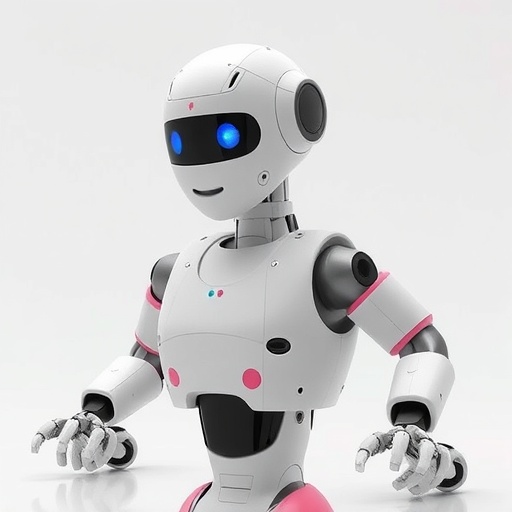
Robotics has steadily evolved from the realm of industrial heavy lifting and basic repetitive tasks to increasingly delicate and precise applications integral to everyday life and advanced fields such as medical surgery. One of the longstanding challenges in robotics has been enabling machines to replicate the subtlety and finesse fundamental to complex human actions, especially when these actions require a high degree of precision. Traditionally, the path to equipping robots with this level of dexterity has involved amassing vast datasets of human demonstrations recorded at extremely fine-grained temporal intervals. This approach, although effective to some extent, is both costly and time-consuming, placing substantial burden on data collection and training processes.
Addressing this fundamental bottleneck, a pioneering research team from the Korea Advanced Institute of Science and Technology (KAIST) has unveiled a breakthrough in robotic manipulation intelligence. Led by Professor Daehyung Park from the School of Computing, the KAIST team developed a novel method named DiSPo (Diffusion State-Space Model based Policy Learning), which allows robots to autonomously modulate their precision during task execution. Remarkably, this method achieves high-fidelity motions even when the robotic learning model is trained solely on coarse or sparsely sampled human demonstration data, sidestepping the need for traditionally intensive high-frequency data collection.
The constraints of existing methods such as Behavior Transformer and Diffusion Policy largely hinge on their reliance on fixed temporal resolutions in training data. These established frameworks necessitate densely sampled, high-frequency demonstrations to grasp the nuanced timing differences essential for tasks like screw fastening and delicate component insertion. These data-driven time constraints inherently inflate the cost of data acquisition and complicate model deployment by slowing inference speeds, both of which are significant hurdles for scaling robotics applications in real-world scenarios.
To overcome these limitations, the KAIST team ingeniously integrated two advanced machine learning constructs. Central to their approach is Mamba, a state-space model adept at predicting and adjusting for varying time intervals, thereby offering a dynamic temporal prediction capability. Complementing Mamba is a diffusion model tasked with generating rich and adaptive action representations suited for a wide continuum of manipulation requirements. This synergy empowers the DiSPo framework to perform what the researchers term “coarse-to-fine action discretization,” effectively enabling robots to decompose and refine their movements on the fly during inference.
An innovative feature embedded within DiSPo is the Step-scale factor mechanism, granting users direct control over the temporal granularity of robotic actions. This user-guided control modulates the internal time intervals the robot considers when discretizing actions, providing fine-tuned adaptability without the need for retraining. The autonomous internal subdivision of actions facilitated by this mechanism is what allows the robot to extrapolate high-precision behaviors from comparatively rough and infrequent demonstration inputs.
In benchmarking tests conducted in simulation environments, DiSPo demonstrated an impressive enhancement in task success rate, outperforming state-of-the-art models by up to 81 percent. Such a marked improvement underscores the model’s capacity to reconcile precision and efficiency in robotic task learning and execution. Beyond simulations, real-world experiments further validated DiSPo’s capabilities. Using collaborative robots (cobots), the model adeptly succeeded in challenging high-precision tasks such as maneuvering a clamp through a gap with only a 2.5-millimeter radial clearance and pressing a diminutive shutter button on a smartphone. In these real-world scenarios, DiSPo’s performance exceeded existing AI models by a factor of four, marking a significant leap forward in robotic dexterity.
This advancement heralds transformative implications across a spectrum of high-precision applications. Industries centered on precision component assembly will benefit from reduced setup times and increased operational flexibility. Similarly, medical fields such as robotic-assisted surgery stand to gain from robotics systems capable of mastering delicate human-like motions without the burden of costly data gathering. Even fields like cable connection and precision machining, where minute operational accuracy is paramount, could witness elevated reliability and efficiency powered by DiSPo’s adaptive approach.
Professor Daehyung Park highlighted the broader impact of this innovation, emphasizing its dual ability to learn sophisticated manipulations from coarse demonstrations and autonomously calibrate the precision level according to situational demands. This capability promises to dramatically curtail the data collection overhead that has long constrained robotic adoption in nuanced tasks. He envisions DiSPo becoming a versatile and foundational robot learning technology applicable not only to industrial manufacturing but also to sensitive medical applications where precision is non-negotiable.
The research team’s success is attributed, in part, to the leadership of Nayoung Oh, a master’s student at the KAIST Graduate School of AI, whose role as the first author was pivotal in advancing this cutting-edge work. Their findings were formally presented at the 2026 IEEE International Conference on Robotics and Automation (ICRA), held in Vienna, Austria, a globally recognized stage for unveiling state-of-the-art robotics research.
This achievement was realized under the auspices of South Korea’s Ministry of Science and ICT and the Institute of Information & Communications Technology Planning & Evaluation (IITP). These institutions supported the project titled “Core Software Technology Development for Complex-Intelligence Autonomous Agents,” specifically targeting the “Development of Task Procedure Generation Technology for Autonomous Execution of Complex Tasks by Autonomous Agents.” Additional funding was procured through IITP’s Global AI Frontier Lab program alongside the Ministry of Trade, Industry and Energy’s Technology Innovation Program, underscoring the national priority given to advancing autonomous robotics technologies.
The integration of diffusion models with state-space temporal prediction forms a frontier in robotics AI, reconciling the need for efficiency and precision without exhaustive data collection. DiSPo exemplifies how leveraging adaptive temporal modeling can unlock new potentials for robots to act with dexterity in complex and delicate operations. This approach not only streamlines the learning pipeline but provides a customizable interface for users hoping to balance precision and speed in task execution.
As robotics systems increasingly permeate domains demanding exceptional precision and reliability, technologies like DiSPo are poised to become indispensable tools. By reducing the reliance on costly extensive datasets and enabling flexible precision adjustment, the KAIST research marks a paradigm shift toward smarter, more efficient robotic learning and control methodologies. This innovation bridges the gap between human demonstration constraints and robotic dexterity, thereby accelerating the path towards more autonomous, capable, and adaptive robotic assistants in diverse environments.
Cite Scienmag News
Denise Maddox. (June 23, 2026). KAIST Unveils Robot Learning Technology That Accurately Mimics Imperfect Demonstrations. Scienmag. https://scienmag.com/kaist-unveils-robot-learning-technology-that-accurately-mimics-imperfect-demonstrations/
Denise Maddox. "KAIST Unveils Robot Learning Technology That Accurately Mimics Imperfect Demonstrations." Scienmag, 23 June 2026, https://scienmag.com/kaist-unveils-robot-learning-technology-that-accurately-mimics-imperfect-demonstrations/. Accessed 3 September 2026.
Denise Maddox. "KAIST Unveils Robot Learning Technology That Accurately Mimics Imperfect Demonstrations." Scienmag. June 23, 2026. https://scienmag.com/kaist-unveils-robot-learning-technology-that-accurately-mimics-imperfect-demonstrations/


