


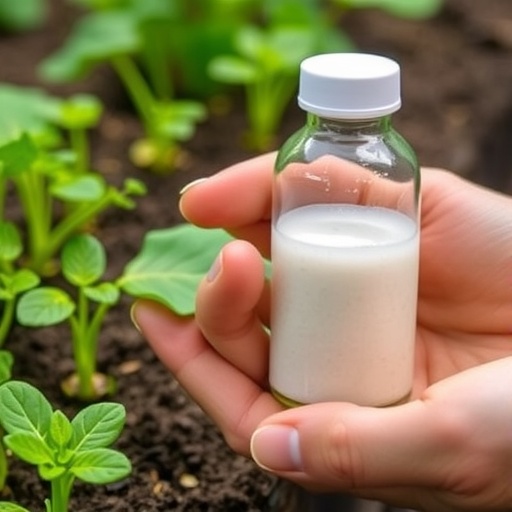
Recent advances in microbiome science are reshaping our understanding of plant health, emphasizing the critical role of microbial communities living within and around plant roots. These complex microbial ecosystems, collectively known as the root microbiome, are no longer seen merely as collections of individual microbes but as intricate networks whose interactions can profoundly influence plant resilience, nutrient uptake, and overall productivity. This evolving paradigm opens new avenues for designing targeted microbial inoculants that operate at the community level, offering promising pathways for sustainable agroecosystem management.
The analogy with human medicine is striking—just as fecal microbiota transplantation manipulates entire microbial communities to restore health, similar principles could be applied to agriculture, where tailored microbial consortiums might enhance plant performance under various stressors such as drought, nutrient deficiency, or disease pressure. However, realizing this promise requires a sophisticated ecological understanding of how root microbiomes assemble and function in response to environmental variables and plant signals.
Modern microbial inoculant design is therefore pivoting towards an integrative approach combining culture-dependent methods, high-throughput culturomics, next-generation sequencing, and advanced data analytics including network theory and machine learning. These tools help dissect the assembly processes across different soil and root compartments and identify keystone microbial taxa and their functional roles. Researchers now conceptualize synthetic communities (SynComs) that mimic core microbiome functions or target specific stressors by including both stable core members and stress-responsive microbes.
One influential conceptual framework driving this work is the “cry-for-help” hypothesis, which suggests that under abiotic or biotic stress, plants dynamically alter root exudates to recruit beneficial microbes that mitigate damage or enhance stress tolerance. By profiling how plant-associated microbial communities shift under different stress conditions—such as phosphorus limitation, pathogen attack, salinity, or drought—scientists are mapping the microbial taxa that confer adaptive benefits. This ecological insight guides the construction of SynComs tailored for particular agronomic challenges, integrating microbes aligned with plant signaling pathways to fortify the root microbiome’s resilience.
Multiple microbial inoculant development strategies have emerged based on these insights. These range from the enrichment and formulation of natural rhizosphere microbial consortia to the isolation of elite strains with proven stress-responsive traits. Synthetic communities can be minimal, targeting one or a few stress-related functions, or broader assemblies including core microbiome members to replicate essential microbial functions. Recent studies demonstrate that blending core microbiome members with stress-recruited or elite strains enhances nutrient cycling, root system vigor, and disease suppression. Still, transferring these benefits from controlled environments into the field remains a formidable challenge that demands thorough validation.
Central to this effort is the elusive concept of the “core microbiome,” defined as the suite of microbial taxa consistently associated with a plant species or genotype across diverse environments. Core taxa have garnered intense research interest because, theoretically, their consistent presence implies ecological and functional importance. Nonetheless, defining what constitutes the core microbiome is fraught with complexity; outcomes depend heavily on criteria such as prevalence thresholds, spatial and temporal scales, host developmental stages, and environmental heterogeneity. Hence, the notion of a fixed universal core microbiome is misleading—these communities are best interpreted as context-dependent ecological patterns rather than static taxonomic inventories.
A fundamental question remains whether core taxa directly contribute plant-beneficial functions or merely serve as structural backbones within the microbial network that facilitate the recruitment and activity of other beneficial microbes. Empirical evidence suggests both scenarios are plausible. Some core taxa appear to play a direct causal role in promoting plant growth and nutrient acquisition, as evidenced in experiments deploying native core-derived synthetic communities under controlled conditions. Conversely, other core members might exert their influence indirectly through maintaining community stability and facilitating beneficial inter-microbial interactions. This nuanced understanding carries substantial implications for inoculant design, highlighting the need for causally validated core members rather than relying on mere persistence as a marker of importance.
The translation of core microbiome frameworks into reliable, field-ready inoculants is complicated by several practical barriers. Core taxa assignments are highly sensitive to environmental context, and the causal connection between core membership and agronomic benefit remains limited and inconsistent. Moreover, conditionally rare or transient microbial taxa—though often overlooked—can exert outsized functional effects under specific stress conditions, challenging the assumption that core microbes are always the dominant drivers of plant phenotypes. This insight underscores the importance of considering the entire microbial community dynamics rather than focusing exclusively on a subset of persistently detected taxa.
Given these complexities, microbial ecologists regard the core microbiome as a valuable conceptual and analytical tool that guides hypothesis generation and the identification of candidate microbes but not as a definitive blueprint for microbial inoculant engineering. Moving beyond single-strain inoculants towards more complex synthetic communities (SynComs) represents a logical next step, aiming to capture the emergent properties arising from microbial interactions that single strains alone cannot provide.
Synthetic communities are meticulously designed consortia combining multiple microbial taxa selected for complementary functional traits and ecological compatibility. Their promise lies in enhancing functional breadth—improving nutrient uptake, stress mitigation, and pathogen suppression—while bolstering community resilience through cooperative microbial interactions. The inherent redundancy created by multi-strain formulations increases the odds of successful establishment under varying environmental conditions and offers a tractable model for interrogating complex plant-microbiome interactions.
Still, this increase in complexity comes with caveats. Microbial interactions within SynComs can become antagonistic under certain resource or environmental constraints, potentially undermining community stability and function. Ecological concepts such as niche overlap, competition, and priority effects are decisive factors influencing SynCom performance and persistence. Consequently, well-designed synthetic communities must align closely with local soil microbiomes, host plants, and environmental conditions to achieve reliable outcomes. SynComs thus represent an experimental framework rather than a guaranteed solution, emphasizing the necessity for ecological and functional optimization.
Current applications of SynComs primarily serve to bridge fundamental microbiome research with applied agricultural practices. By leveraging multi-omics datasets and integrative computational methods, researchers are making strides toward rational SynCom design that is both ecologically informed and context-aware. These emerging methodologies promise to circumvent some of the uncertainties brought by single-strain inoculants and simplistic community constructs by harnessing deeper understanding of microbial ecology and host-microbe signaling pathways.
Despite promising advances, the transition from controlled experimental settings to robust, scalable field applications remains a major bottleneck. Field trials demand inoculants that perform consistently across heterogeneous environments and diverse crop genotypes, a goal complicated by the inherent variability and complexity of agroecosystems. Quality control, formulation stability, and delivery mechanisms further contribute to the translational challenge. Hence, future research must prioritize long-term field validation, causal functional studies, and adaptive design principles that account for environmental variability and plant host dynamics.
In sum, the integration of microbiome ecology, plant physiology, and big-data analytics heralds an exciting frontier for developing next-generation microbial inoculants. These strategies aim to produce bioinoculants that are not only effective in promoting plant growth and resilience but also predictable, scalable, and environmentally compatible. By leveraging an ecological understanding of stress-driven microbiome assembly, rational synthetic community design, and core microbiome insights, sustainable agroecosystem management may soon benefit from microbiome-informed interventions that advance agricultural productivity in a changing world.
The path toward sustainable agriculture is increasingly intertwined with our ability to engineer and manage complex microbial consortia. While the promise of core microbiomes and synthetic communities is clear, realizing their full potential requires surmounting challenges related to ecological complexity, functional validation, and field applicability. Continued interdisciplinary research and innovation in microbial ecology, genomics, and systems biology will be essential to translate these concepts into reliable tools that empower farmers to harness the hidden power of root-associated microbiomes for global food security.
Cite Scienmag News
Morgan Morrow. (June 22, 2026). Microbial Inoculants: Boosting Sustainable Agroecosystem Health. Scienmag. https://scienmag.com/microbial-inoculants-boosting-sustainable-agroecosystem-health/
Morgan Morrow. "Microbial Inoculants: Boosting Sustainable Agroecosystem Health." Scienmag, 22 June 2026, https://scienmag.com/microbial-inoculants-boosting-sustainable-agroecosystem-health/. Accessed 3 September 2026.
Morgan Morrow. "Microbial Inoculants: Boosting Sustainable Agroecosystem Health." Scienmag. June 22, 2026. https://scienmag.com/microbial-inoculants-boosting-sustainable-agroecosystem-health/


