


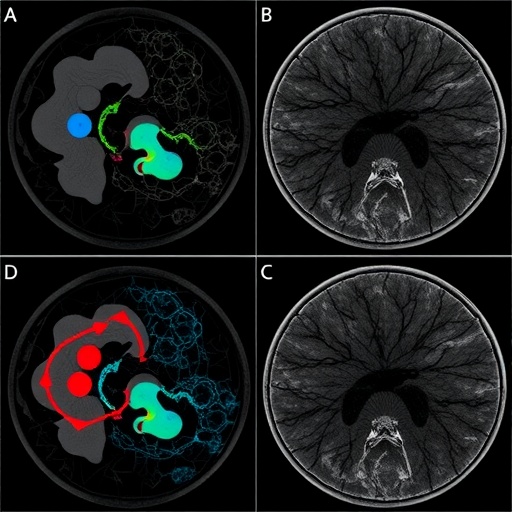
In a groundbreaking study published recently in Experimental & Molecular Medicine, researchers have unveiled critical insights into the genomic landscape and evolutionary pathway of uveal melanoma, a rare but deadly form of eye cancer. This pioneering research sheds light on the metastasis-related genetic aberrations that underlie the aggressive progression of this malignancy, revealing complex mechanisms driving its evolution and offering promising new avenues for therapeutic intervention.
Uveal melanoma, originating from melanocytes within the uveal tract of the eye, presents unique clinical challenges. Unlike cutaneous melanoma, its molecular pathogenesis is less understood, and its propensity for liver metastasis leads to poor patient prognosis with limited treatment options. The study by Nam, Kim, Youk, and colleagues represents a concerted effort to dissect the genomic alterations that fuel metastatic dissemination, targeting the heart of the disease’s lethality.
The research team employed comprehensive genomic sequencing techniques, including whole-genome and transcriptome sequencing, on patient-derived tumor samples. This multi-omics approach allowed them to capture a high-resolution portrait of mutational events, copy number variations, and gene expression dynamics that accompany uveal melanoma progression to metastasis. Their methodology entailed rigorous bioinformatics analyses, evolutionary modeling, and correlation with clinical outcomes, ensuring robust, translationally relevant findings.
Central to their findings is the identification of novel chromosomal aberrations intimately associated with metastatic potential. The study highlights frequent gains and losses in specific chromosomal regions that harbor oncogenes and tumor suppressor genes, respectively. These structural variations disrupt cellular homeostasis, promoting invasiveness and enabling tumor cells to escape local constraints, colonize distant organs, and evade immune surveillance.
Moreover, the investigators delineated the evolutionary trajectory of uveal melanoma cells through phylogenetic analyses. By comparing primary tumors with matched metastatic lesions, they reconstructed the clonal evolution and pinpointed genomic events marking crucial junctures in tumor progression. These insights challenge previous simplistic models of metastasis and suggest a multistep, branching evolutionary process that enhances tumor heterogeneity and therapeutic resistance.
A crucial aspect uncovered was the dysregulation of signaling pathways involved in cell cycle control, apoptosis, and DNA repair mechanisms. Alterations in these pathways facilitate unchecked proliferation and survival of uveal melanoma cells, contributing to their aggressive phenotype. The study underscores the importance of these pathways as potential drug targets, fostering development of precision medicine strategies against metastatic uveal melanoma.
Interestingly, the researchers also observed epigenetic modifications that interact with genetic abnormalities to shape tumor evolution. Changes in DNA methylation and chromatin accessibility were shown to influence gene expression programs that govern metastatic behavior. This epigenetic dimension adds complexity but also therapeutic opportunity, as epigenetic modifiers could potentially reverse malignant programming.
The team’s findings have profound implications for clinical practice. By defining a genetic signature predictive of metastatic risk, they pave the way for improved prognostic biomarkers that can stratify patients for surveillance and early intervention. This marker-based approach could revolutionize patient management, ensuring timely application of aggressive therapies in high-risk cases and sparing low-risk patients from overtreatment.
Furthermore, therapeutic strategies emerging from this study prioritize targeting the specific aberrations and pathways uncovered. The authors discuss several candidate agents—both existing and novel—that warrant preclinical and clinical evaluation. Targeting chromosomal instability, restoring apoptotic signaling, and modulating the epigenetic landscape represent rational approaches grounded in the tumor’s molecular etiology.
This research also opens new questions about the tumor microenvironment’s role in uveal melanoma evolution. The interplay between the immune system and cancer cells is hinted at by the observed genomic changes, particularly those facilitating immune evasion. Future investigations may explore combinatorial therapies pairing targeted agents with immunotherapies to overcome resistance mechanisms and improve patient outcomes.
Importantly, the study’s methodological rigor, involving longitudinal sampling and integrative analytics, sets a new standard for cancer genomics research. The comprehensive view of tumor evolution from initiation through metastatic spread provides a blueprint for dissecting other aggressive cancers with similarly complex metastatic behavior. This approach emphasizes the need for dynamic, temporal analyses rather than static snapshots in understanding cancer biology.
From a translational perspective, these insights directly enrich ongoing clinical trial designs. Incorporating genomic profiling into trial enrollment criteria and monitoring provides precision endpoints that can accelerate drug development. The potential to personalize therapy based on evolutionary trajectories may transform the therapeutic landscape of uveal melanoma within the next decade.
In summary, this landmark study elucidates the intricate genomic aberrations and evolutionary mechanisms propelling uveal melanoma metastasis, offering a foundation for novel diagnostic and therapeutic strategies. The convergence of genomic instability, pathway dysregulation, and epigenetic reprogramming emerges as the nexus of tumor aggressiveness. As research continues to unravel these complexities, hope rises for transforming the grim prognosis historically associated with this formidable cancer.
The contributions of Nam and colleagues exemplify the power of integrative cancer genomics to unlock the secrets of metastasis, one of medicine’s most daunting challenges. Their work not only advances scientific knowledge but also carries the promise of tangible clinical impact, heralding a new era in personalized oncology for uveal melanoma patients worldwide.
Cite Scienmag News
Nathaniel Bowman. (June 17, 2026). Tracing Metastasis and Evolution in Uveal Melanoma. Scienmag. https://scienmag.com/tracing-metastasis-and-evolution-in-uveal-melanoma/
Nathaniel Bowman. "Tracing Metastasis and Evolution in Uveal Melanoma." Scienmag, 17 June 2026, https://scienmag.com/tracing-metastasis-and-evolution-in-uveal-melanoma/. Accessed 3 September 2026.
Nathaniel Bowman. "Tracing Metastasis and Evolution in Uveal Melanoma." Scienmag. June 17, 2026. https://scienmag.com/tracing-metastasis-and-evolution-in-uveal-melanoma/


