


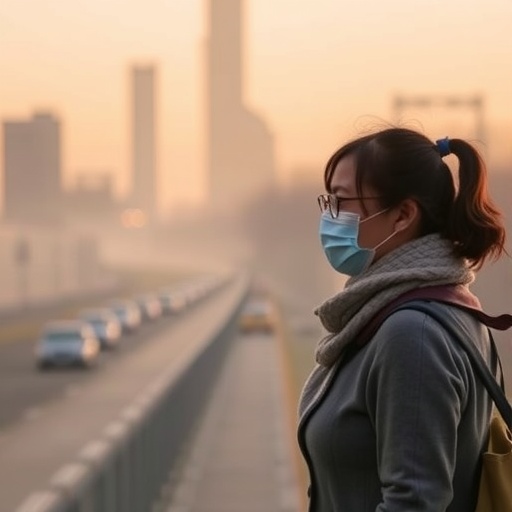
In an ambitious new study published in the Journal of Exposure Science and Environmental Epidemiology, researchers report compelling evidence linking long-term exposure to outdoor air pollution with an increased risk of ovarian and endometrial cancers. This groundbreaking investigation harnesses a large prospective cohort to unravel the intricate relationship between environmental pollutants and gynecologic malignancies, offering a critical perspective on public health implications that extend far beyond respiratory diseases.
Air pollution has long been recognized as a major contributor to cardiovascular and respiratory conditions, but its potential carcinogenic effects on reproductive organs have remained underexplored. The study conducted by Ammons, Fisher, Madrigal, and colleagues seeks to fill this gap by focusing on two of the most common gynecologic cancers – ovarian and endometrial cancer – and evaluating the impact of chronic exposure to ambient air pollutants. By analyzing data from thousands of participants over an extended period, the researchers embarked on an epidemiologic journey to quantify risks associated with particulate matter and other airborne toxins.
The cohort employed in this study includes a diverse population sampled across multiple geographic regions, allowing researchers to capture variations in pollution levels and their corresponding cancer incidences. Utilizing cutting-edge exposure assessment techniques, the team mapped pollutant concentrations at individual residences with unprecedented accuracy. These methods integrated satellite data, ground-level monitors, and atmospheric modeling to deliver robust, spatially resolved exposure metrics. Such advances surpass prior limitations inherent in ecological and self-reported exposure assessments, lending unprecedented credibility to the findings.
Delving into the biological plausibility of how air pollution could influence the pathogenesis of ovarian and endometrial cancers, the researchers propose several mechanistic pathways. Persistent exposure to fine particulate matter (PM2.5) and polycyclic aromatic hydrocarbons (PAHs) may induce systemic inflammation, oxidative stress, and hormonal dysregulation. These factors could disrupt the delicate microenvironment of reproductive tissues, promoting DNA damage, aberrant cell signaling, and ultimately malignant transformation. The findings echo mounting laboratory evidence that airborne pollutants can act as endocrine disruptors, complicating hormonal balance crucial for gynecologic health.
Statistical analyses revealed that the risk for endometrial and ovarian cancers escalates in tandem with pollutant concentration levels. Notably, women residing in urban areas with higher vehicular emissions and industrial activities exhibited significantly greater cancer risks compared to those in less polluted settings. After adjusting for known confounders such as age, BMI, smoking status, and reproductive history, the association remained robust, underscoring the independent contribution of chronic air pollution exposure to cancer pathogenesis.
Importantly, this research highlights a disproportionately higher vulnerability among subgroups, including postmenopausal women and those with pre-existing metabolic disorders. These populations may experience exacerbated inflammatory responses or impaired detoxification pathways, amplifying carcinogenic potential. Such differential susceptibility underscores the urgency for targeted interventions and personalized public health strategies to mitigate the undue burden of pollution-induced cancers.
Beyond its epidemiological insights, the study calls attention to the glaring disparities in environmental exposures driven by socioeconomic and racial factors. Marginalized communities situated near highways, factories, and waste sites confront a compounded risk landscape for gynecologic cancers due to cumulative environmental and social stressors. Addressing these inequities demands integrated policy responses encompassing urban planning, emission regulation, and healthcare accessibility.
From a preventive medicine standpoint, these findings compel a re-evaluation of current cancer risk models and screening guidelines to incorporate environmental exposure metrics. Recognizing air pollution as a modifiable risk factor opens avenues for novel primary prevention strategies including community-level emission reductions, green space expansion, and personal behavior modifications. Public awareness campaigns and healthcare provider education must integrate these environmental determinants to holistically address cancer prevention.
Moreover, the study’s prospective cohort design strengthens the causal inference between pollution and cancer development, circumventing biases typical of retrospective analyses. Continuous monitoring and follow-up of the cohort will enable future research to delineate critical exposure windows, dose-response relationships, and potential synergistic effects with other carcinogens. Such longitudinal data is vital for refining risk assessments and tailoring interventions.
The multidisciplinary collaboration driving this research showcases the essential convergence of epidemiology, environmental science, oncology, and biostatistics in addressing complex health challenges. It underscores the power of leveraging big data and sophisticated modeling to uncover subtle yet impactful health hazards lurking within everyday environments. The authors advocate for sustained funding and cross-sector partnerships to expand these investigations globally, given the universal prevalence of air pollution.
As air quality deteriorates worldwide amidst urbanization and industrial growth, this study serves as a timely warning of the hidden costs borne by women’s health. It challenges policymakers, scientists, and clinicians alike to rethink environmental determinants as integral components of cancer etiology and control. The evidence presented marks a significant stride toward recognizing air pollution not only as a respiratory threat but also as a stealthy contributor to oncologic morbidity.
Crucially, these findings could galvanize international efforts to adhere to stricter air quality standards and accelerate transitions to clean energy sources. Reducing exposure to harmful pollutants would yield multifaceted benefits including diminishing cancer risks, improving cardiovascular health, and enhancing overall quality of life. The research invites a paradigm shift wherein environmental stewardship aligns squarely with cancer prevention goals.
In conclusion, the pioneering work by Ammons and colleagues elucidates how invisible toxins permeating the air we breathe insidiously influence the development of ovarian and endometrial cancers. Their rigorous approach and comprehensive analyses illuminate a previously underrecognized dimension of cancer risk, compelling a broad re-examination of environmental health policies and clinical practices. As the global burden of cancer continues to rise, addressing modifiable environmental exposures emerges as an indispensable frontier in safeguarding women’s health for generations to come.
Cite Scienmag News
Russell Cooper. (June 16, 2026). Outdoor Air Pollution Linked to Ovarian, Endometrial Cancer. Scienmag. https://scienmag.com/outdoor-air-pollution-linked-to-ovarian-endometrial-cancer/
Russell Cooper. "Outdoor Air Pollution Linked to Ovarian, Endometrial Cancer." Scienmag, 16 June 2026, https://scienmag.com/outdoor-air-pollution-linked-to-ovarian-endometrial-cancer/. Accessed 4 September 2026.
Russell Cooper. "Outdoor Air Pollution Linked to Ovarian, Endometrial Cancer." Scienmag. June 16, 2026. https://scienmag.com/outdoor-air-pollution-linked-to-ovarian-endometrial-cancer/


