


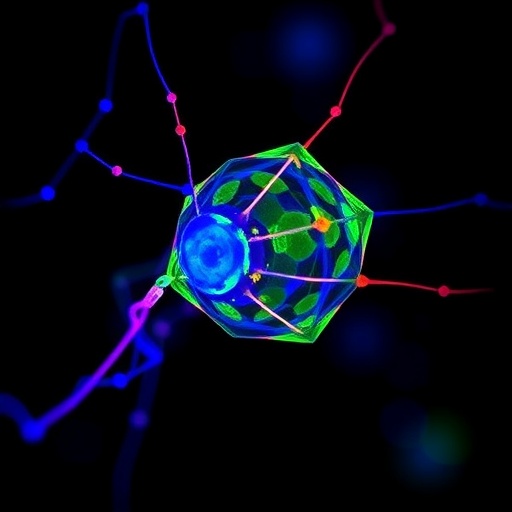
A groundbreaking fluorescent reporter enabling real-time visualization of biologically active iron and oxygen at the single-cell level inside living organisms has been developed by researchers at the Institute of Science Tokyo. This revolutionary tool, named LiON (labile iron and oxygen notifier), ushers in a new era for cellular biology by offering unprecedented insight into the dynamic interplay and distribution of these essential elements within living tissues. Published in the esteemed journal Cell Reports Methods, this innovation promises to transform the study of fundamental physiological processes and complex diseases, from oncology and liver pathology to neurodegenerative disorders and aging.
Iron and oxygen are indispensable to cellular function, acting as core contributors to energy production, metabolic regulation, and DNA synthesis. Despite their vital roles, maintaining the delicate balance and spatial distribution of labile ferrous iron and reactive oxygen species remains critical, as disruptions often lead to cellular damage and disease. Historically, the challenge has been the absence of imaging tools capable of monitoring these elements within living cells at sufficient resolution, particularly differentiating biologically active forms from inert reservoirs.
Traditional methods of detecting iron, such as histochemical staining or mass spectrometry, require fixed tissue samples, offering only static snapshots devoid of temporal context. Although advanced clinical imaging modalities like magnetic resonance imaging enable in vivo iron mapping, they lack cellular resolution and fail to discriminate between active and stored iron pools. This limitation impairs the ability to study cellular heterogeneity and microenvironmental influences critical to disease pathogenesis.
To bridge this gap, the team led by Professor Toshiro Moroishi and doctoral researcher Ayato Maeda ingeniously exploited the iron- and oxygen-sensitive regulatory domain of FBXL5, a protein known to undergo degradation in low-iron and low-oxygen conditions. By genetically fusing this domain to a red fluorescent protein while coupling it with a stable green fluorescent protein, they engineered a ratiometric biosensor. Variations in red-to-green fluorescence ratios directly reflect intracellular labile iron and oxygen levels, enabling precise, quantitative assessments at single-cell resolution in living tissues.
Generating transgenic mice expressing LiON, the investigators revealed remarkable gradients and heterogeneity in iron and oxygen distribution across various organs and within homogeneous cell populations. For instance, they identified spatially distinct iron accumulation proximal to portal veins in the liver, highlighting areas susceptible to oxidative stress and metabolic dysfunction. These nuanced observations suggest complex regulatory mechanisms governing iron homeostasis that could not previously be elucidated in vivo.
Beyond fundamental biology, the capacity to monitor labile iron and oxygen in living systems has profound clinical implications. Iron dysregulation and hypoxia are hallmarks of cancer progression, neurodegeneration, and age-related tissue decline. The ability to dynamically track these parameters within specific cell types allows for the investigation of pathophysiological processes at an unprecedented scale, facilitating the development and evaluation of targeted therapies.
Importantly, the modular genetic design of LiON enables conditional activation in defined tissues or cell populations using well-established genetic tools. This versatility empowers researchers to tailor investigations according to disease models or biological questions, drastically expanding the utility of this fluorescent reporter across scientific disciplines. It also paves the way for high-throughput screening approaches and longitudinal studies previously unattainable.
Technically, the LiON sensor leverages competitive degradation pathways mediated by FBXL5’s hemerythrin-like domain, which senses iron and oxygen availability to regulate protein stability. When iron and oxygen are sufficient, FBXL5 remains stable, maintaining the red fluorescence. Under conditions of deficiency, FBXL5 is degraded, reducing red fluorescence and shifting the fluorescence ratio. By normalizing against stable green fluorescence, this ratiometric approach cancels out confounding factors such as expression levels or photobleaching, ensuring robust quantification.
Further development of LiON may enable integration with multiphoton or super-resolution microscopy, amplifying the ability to investigate cellular metabolism and microenvironmental niches in unprecedented detail. Moreover, its application in live imaging models can accelerate translational research by offering real-time insights into therapeutic interventions and disease progression, a vital step toward precision medicine.
The researchers emphasize that understanding heterogeneity in iron and oxygen management at the single-cell level will clarify diverse cellular responses within tissues, facilitating the identification of vulnerable or resistant cell populations. This information is invaluable for unraveling mechanisms underpinning complex diseases, optimizing drug delivery, and minimizing off-target effects.
As the first fluorescent reporter capable of in vivo, single-cell resolution imaging of labile iron and oxygen, LiON represents a transformative leap forward. The integration of this tool into mainstream biomedical research has the potential to catalyze breakthroughs spanning from fundamental cell biology to clinical therapeutics, establishing a new paradigm in the visualization and understanding of elemental biology.
In the words of Professor Moroishi, “LiON opens a window into cellular microenvironments that were previously invisible, enabling us to observe and quantify critical biochemical landscapes that dictate health and disease. We anticipate that this technology will become an indispensable asset across many branches of life science research.”
With the establishment of the Institute of Science Tokyo, a visionary new institution formed through the union of Tokyo Medical and Dental University and Tokyo Institute of Technology, this breakthrough exemplifies a commitment to pioneering innovative science aimed at enhancing human well-being. The convergence of multidisciplinary expertise and cutting-edge technology exemplified by LiON underscores the promise of collaborative research to address some of the most pressing biomedical challenges of our time.
Cite Scienmag News
Nathaniel Bowman. (June 16, 2026). LiON: A Fluorescent Probe for Monitoring Iron and Oxygen Dynamics in Single Cells. Scienmag. https://scienmag.com/lion-a-fluorescent-probe-for-monitoring-iron-and-oxygen-dynamics-in-single-cells/
Nathaniel Bowman. "LiON: A Fluorescent Probe for Monitoring Iron and Oxygen Dynamics in Single Cells." Scienmag, 16 June 2026, https://scienmag.com/lion-a-fluorescent-probe-for-monitoring-iron-and-oxygen-dynamics-in-single-cells/. Accessed 4 September 2026.
Nathaniel Bowman. "LiON: A Fluorescent Probe for Monitoring Iron and Oxygen Dynamics in Single Cells." Scienmag. June 16, 2026. https://scienmag.com/lion-a-fluorescent-probe-for-monitoring-iron-and-oxygen-dynamics-in-single-cells/


