


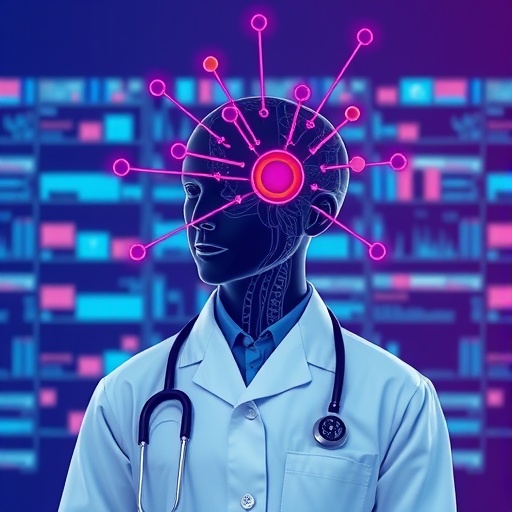
In the rapidly evolving field of healthcare technology, two recent feature stories published by JMIR Publications shed light on critical developments shaping the future of clinical decision-making and the well-being of healthcare professionals. These narratives explore the intersection of artificial intelligence, specifically large language models (LLMs), with clinical reasoning and delve into the growing phenomenon of digital fatigue among healthcare workers. Together, these pieces provide a comprehensive view of the promises and challenges faced by modern medicine as it integrates advanced computational tools and digital systems into everyday clinical environments.
The first story, penned by Shalini Kathuria Narang, addresses a pivotal question in medical informatics: Can large language models emulate the intricate clinical reasoning abilities of physicians? Drawing on a recent comparative study involving OpenAI’s o1 model and practising doctors, Narang interprets findings that demonstrate the model’s ability to match or even surpass human diagnostic accuracy across multiple care stages. Remarkably, the model exhibited its greatest advantage during the ER triage phase, where clinicians typically operate under significant informational constraints. This performance underscores the potential of LLMs to augment decision-making precisely when clinicians face the most uncertainty and pressure.
However, the story emphasizes important caveats regarding the limitations of current AI systems. The cognitive prowess exhibited by LLMs centers on text-based synthesis, whereas real-world clinical encounters hinge upon multimodal data inputs—ranging from physical examination findings to auditory and visual cues that convey patient distress, hesitation, or subtle symptoms. Adam Rodman, a hospitalist involved in the research, points out that these nonverbal components remain beyond the reach of today’s language models. He stresses that while the technology excels at integrating structured clinical information and verbal exchanges, it cannot substitute the nuanced judgment and sensory data assimilation that physicians master through bedside presence.
This nuanced viewpoint reframes the role of AI in clinical practice away from replacement toward collaboration. Narang suggests that LLMs should serve as cognitive partners, offering real-time decision support and acting as diagnostic “second opinions” to flag potential errors before they propagate. This collaborative paradigm requires rigorous prospective clinical trials to assess safety and efficacy, particularly as emergent multimodal AI architectures begin to incorporate imaging, audio, and other data streams alongside text. As this research trajectory unfolds, the alignment of human expertise with artificial intelligence may catalyze transformative improvements in diagnostic precision and patient outcomes.
Parallel to the evolution of AI-driven decision support, Sara Novak’s investigative feature turns attention to the human cost of healthcare digitalization: digital fatigue. This emerging occupational hazard reflects the cumulative physical and mental exhaustion experienced by clinicians inundated with complex electronic health records (EHRs), incessant alerts, and fragmented digital workflows. Despite the undeniable benefits of digital tools—including improved data accessibility and automation—the relentless stream of notifications and administrative tasks poses a paradoxical burden, eroding clinician well-being and potentially compromising patient care.
Novak, through interviews with leading experts including physician Hassan Bencheqroun and fatigue researchers Rachel Hoopsick and Audrey Hai, highlights systemic factors exacerbating digital fatigue. The entrenched fee-for-service reimbursement model inherently limits patient interaction time, while simultaneously expanding the administrative quota forced on providers. This creates a feedback loop; as digital system demands increase, providers fall behind, thus generating after-hours “catch-up” work that further encroaches on personal time, amplifying burnout risk.
Addressing digital fatigue requires multipronged reforms at both institutional and individual levels. Novak documents recommendations to streamline digital workflows by eliminating low-value and redundant alerts, such as warnings for non-critical allergies, which diminish signal-to-noise ratio and encourage alert fatigue. Structural adjustments to redistribute clerical workload through team-based approaches—for instance, delegating inbox management and medication refills—can curb the accumulation of uncompensated overtime. Crucially, healthcare organizations must formally recognize digital labor as integral to clinical duties, embedding appropriate time allocation and targeted training within work schedules.
On the personal front, Novak advocates for proactive strategies by healthcare workers to safeguard mental health, including scheduling “digital detox” intervals and deferring nonurgent electronic communications to designated hours. The narrative frames digital fatigue not as a mere inconvenience but as a bona fide occupational risk warranting vigilance and remedial action akin to physical hazards encountered in healthcare settings.
Together, these feature stories from JMIR Publications’ News and Perspectives section illuminate the converging trajectories of artificial intelligence advancement and digital system integration in healthcare. The promise of LLMs to enhance diagnostic reasoning heralds a new era of cognitive augmentation but necessitates careful validation and respect for the irreplaceable human elements of medicine. Simultaneously, the burgeoning awareness of digital fatigue spotlights the imperative to design health IT environments that sustain provider health and preserve the sanctity of patient care relationships.
As the digital transformation accelerates, fostering synergy between machine intelligence and human clinical wisdom remains a central challenge. Researchers and clinicians alike must navigate the delicate balance between harnessing technology’s capabilities and honoring the complexity of medical practice. The outcomes of these efforts will shape not only the future of diagnosis and treatment but also the resilience and fulfillment of the healthcare workforce entrusted with delivering compassionate care in an increasingly digitized world.
JMIR Publications’ commitment to disseminating expert-driven, rigorously researched content complements this landscape by bridging scientific discovery with practical implications. The News and Perspectives section serves as a vital forum for critical reflection and knowledge exchange amid the evolving ethos of open science and digital health innovation. By spotlighting these salient issues, JMIR Publications catalyzes informed dialogue and collective progress at the nexus of technology and medicine.
In conclusion, the interplay between large language models and clinical decision-making prowess offers tantalizing possibilities tempered by the irreplaceable richness of human sensory input and judgment. Concurrently, the recognition and mitigation of digital fatigue emerge as essential priorities in safeguarding the mental health of providers fully immersed in complex technological ecosystems. Together, these narratives underscore a pivotal moment in healthcare’s digital evolution—a moment demanding thoughtful integration, rigorous evaluation, and humane stewardship to realize the full potential of scientific and technological advances.
News Publication Date: 15-Jun-2026
References:
Narang KN. Can Human-Like Reasoning Be Replicated in LLMs for Clinical Decision-Making? J Med Internet Res 2026;28:e103526 DOI: 10.2196/103526
Novak S. How Health Care Workers Can Manage Digital Fatigue. J Med Internet Res 2026;28:e104196 DOI: 10.2196/104196
Cite Scienmag News
Ophelia Keating. (June 16, 2026). Exploring AI-Driven Clinical Reasoning and Digital Fatigue in Contemporary Healthcare. Scienmag. https://scienmag.com/exploring-ai-driven-clinical-reasoning-and-digital-fatigue-in-contemporary-healthcare/
Ophelia Keating. "Exploring AI-Driven Clinical Reasoning and Digital Fatigue in Contemporary Healthcare." Scienmag, 16 June 2026, https://scienmag.com/exploring-ai-driven-clinical-reasoning-and-digital-fatigue-in-contemporary-healthcare/. Accessed 4 September 2026.
Ophelia Keating. "Exploring AI-Driven Clinical Reasoning and Digital Fatigue in Contemporary Healthcare." Scienmag. June 16, 2026. https://scienmag.com/exploring-ai-driven-clinical-reasoning-and-digital-fatigue-in-contemporary-healthcare/


